
Regulatory and Liability Risks in Utility Stocks: The Southern California Edison Wildfire Lawsuit as a Warning Bell


 Aime Summary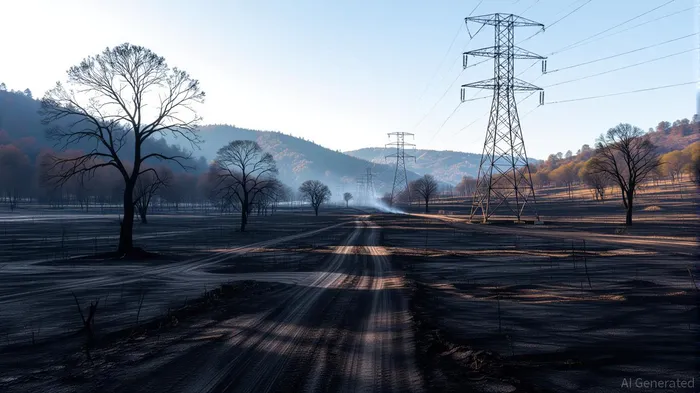
The Southern California Edison (SCE) wildfire lawsuits of 2025 have become a focal point for investors, regulators, and environmental advocates, exposing the escalating risks faced by utility companies in a climate-driven era. With the U.S. Department of Justice (DOJ) seeking over $77 million in damages for the EatonETN-- and Fairview Fires, and private litigation mounting into the tens of billions, the case underscores a seismic shift in how utilities are held accountable for infrastructure-related disasters. For investors, this is not just a legal story—it is a harbinger of systemic risks that could redefine the utility sector's financial and operational landscape for decades.
The Legal and Financial Fallout: A New Normal
The Eaton Fire, which ignited in January 2025, and the Fairview Fire of September 2022, were not isolated incidents. They were symptoms of a broader failure to adapt to climate-driven volatility. The DOJ's lawsuits, which allege negligence in maintaining power lines and equipment, are part of a growing trend of inverse condemnation claims. These allow governments to hold utilities strictly liable for fires caused by their infrastructure, regardless of negligence. This legal strategy, combined with the federal government's push to shift liability from ratepayers to utilities, has created a perfect storm of financial exposure.
SCE's response—accelerating grid modernization, replacing 500+ miles of power lines, and investing in fast-acting fuses—highlights the operational costs of compliance. However, these measures come at a time when utility balance sheets are already strained. SCE's $1 billion self-insurance account is projected to be depleted by 2026, forcing reliance on California's $21 billion Wildfire Fund. Yet, as climate models predict more frequent and severe wildfires, the sustainability of such funds is questionable.
Regulatory Pressure and the Cost of Compliance
The lawsuits against SCE are not just about past damages—they signal a regulatory pivot toward proactive accountability. California's inverse condemnation laws, once a state-level tool, are now being weaponized by federal agencies to enforce stricter infrastructure standards. This shift forces utilities to balance capital expenditures with cost recovery, a challenge exacerbated by public backlash against rising electricity prices.
For example, SCE's $1 billion+ annual wildfire mitigation budget—a figure that dwards the $800 million PG&E spent before its 2019 bankruptcy—reflects the new cost of doing business. Yet, even these investments may not be enough to insulate utilities from liability. The DOJ's lawsuits, which seek to establish a precedent for federal oversight of state-regulated utilities, could lead to nationwide regulatory harmonization, increasing compliance costs for all energy infrastructure firms.
Investment Implications: Navigating a High-Risk Sector
The SCE case offers a cautionary tale for investors. Utilities in fire-prone regions must now contend with:
1. Escalating Legal Liabilities: With insured losses from the 2025 fires exceeding $20 billion, and settlements potentially surpassing $10 billion, the financial burden on utilities is unprecedented.
2. Regulatory Uncertainty: The DOJ's aggressive stance could lead to stricter federal mandates, increasing operational costs and reducing profit margins.
3. Public and Political Backlash: Ratepayer dissatisfaction and political pressure to limit cost recovery mechanisms may force regulators to impose tighter cost controls.
For investors, the key is to differentiate between utilities that can adapt and those that will falter. Companies like SCE, which are investing heavily in grid resilience and aligning with ESG criteria, may gain a competitive edge. However, the long-term profitability of the sector remains uncertain.
The Path Forward: Risk Mitigation and Strategic Resilience
To thrive in this environment, utilities must adopt a dual strategy:
- Infrastructure Innovation: Accelerate grid hardening, undergrounding, and AI-driven risk detection to reduce ignition risks.
- Financial Prudence: Diversify liability coverage, explore reinsurance partnerships, and advocate for sustainable wildfire funds.
Investors should also monitor regulatory developments closely. The outcome of the SCE lawsuits could set a precedent for how utilities are held accountable nationwide. For instance, if the DOJ succeeds in expanding federal oversight, the ripple effects could extend to companies like Duke EnergyDUK-- (DUK) and NextEra EnergyNEE-- (NEE), which operate in wildfire-prone regions.
Conclusion: A Warning Bell for the Sector
The Southern California Edison wildfire lawsuits are more than a legal reckoning—they are a warning bell for the utility sector. As climate-driven disasters become the new normal, the financial and operational risks for energy infrastructure firms will only intensify. For investors, the lesson is clear: prioritize companies with robust risk management frameworks, transparent cost structures, and a commitment to climate resilience. Those that fail to adapt may find themselves facing not just lawsuits, but existential threats to their business models.

Delivering real-time insights and analysis on emerging financial trends and market movements.
Latest Articles
Stay ahead of the market.
Get curated U.S. market news, insights and key dates delivered to your inbox.
AInvest
PRO
AInvest
PRO



Comments
No comments yet