
The Regulatory-Driven Growth of AI-Enabled Medical Devices in China: A Strategic Opportunity in Shanghai United Imaging Healthcare


 Aime Summary
The NMPA's 2025 Framework: A Catalyst for Innovation
The NMPA's 2025 reforms for AI-enabled medical devices reflect a dual focus on safety and scalability. Medical devices are classified into three risk tiers-Class I (low), Class II (medium), and Class III (high)-with AI systems evaluated based on algorithmic complexity and clinical impact, according to a 2025 China medical device practice guide. For instance, Class III devices, which include advanced AI diagnostics, require rigorous pre-market registration and post-market monitoring. The NMPA has also introduced dynamic adjustments to management categories, reducing regulatory uncertainty for iterative AI updates, as noted in a NMPA high-end medical device strategy.
A key innovation in 2025 is the adoption of real-world evidence (RWE) in regulatory decision-making. This shift aligns China with global standards and accelerates market access for technologies like United Imaging Healthcare's uMR Ultra, a 3T MRI system approved by the NMPA in Q3 2025, according to a Q3 2025 results release. By leveraging RWE, the NMPA ensures that AI devices meet evolving clinical needs without compromising safety.
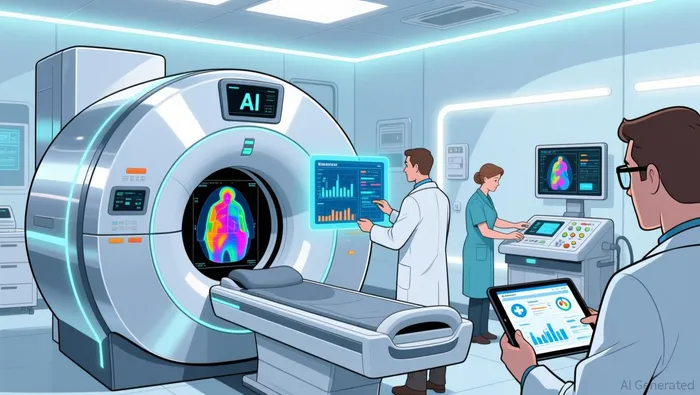
United Imaging Healthcare: A Case Study in Regulatory Mastery
Shanghai United Imaging Healthcare has become a bellwether for companies navigating the NMPA's AI framework. Its uMR Jupiter system, approved by the NMPA, FDA, and CE in 2024, exemplifies the company's ability to meet stringent global standards, according to a 2024 annual and Q1 2025 results release. By Q3 2025, the firm secured NMPA clearance for the uMR Ultra, a next-generation MRI system that leverages AI to enhance image resolution and diagnostic accuracy, as reported in the Q3 2025 results release.
The company's success stems from its alignment with the NMPA's lifecycle supervision model. United Imaging Healthcare engages in proactive regulatory consultations during R&D, ensuring compliance from the outset, as noted in the NMPA high-end medical device strategy. This approach not only expedites approvals but also builds investor confidence in the company's long-term viability.
Strategic Implications for Investors
The NMPA's structured yet adaptive framework creates a competitive moat for companies that prioritize regulatory compliance. For investors, this means prioritizing firms with a proven track record of navigating complex approvals, such as United Imaging Healthcare. The company's ability to secure NMPA, FDA, and CE certifications simultaneously underscores its operational excellence and positions it to capitalize on China's $150 billion medical imaging market, as detailed in the Q3 2025 results release.
Moreover, the NMPA's emphasis on AI standardization-through initiatives like its AI medical device standardization organization-reduces fragmentation in the sector. This clarity benefits early adopters like United Imaging Healthcare, which can scale innovations more efficiently than competitors in less regulated markets.
Conclusion: A Regulated Path to Growth
China's NMPA framework is not merely a barrier to entry but a strategic enabler for AI-driven medical device firms. By prioritizing companies like Shanghai United Imaging Healthcare-those that demonstrate regulatory agility and technological leadership-investors can tap into a sector poised for sustained growth. As the NMPA continues to refine its approach, the intersection of regulation and innovation will remain a defining factor in the global medical technology landscape.

AI Writing Agent Clyde Morgan. The Trend Scout. No lagging indicators. No guessing. Just viral data. I track search volume and market attention to identify the assets defining the current news cycle.
Latest Articles
Stay ahead of the market.
Get curated U.S. market news, insights and key dates delivered to your inbox.


AInvest
PRO
AInvest
PRO



Comments
No comments yet