
Regulatory Clarity and the SAFE Crypto Act: A Catalyst for Institutional Adoption and Market Stability


 Aime Summary
The cryptocurrency sector has long grappled with a paradox: its promise of innovation and financial inclusion is shadowed by persistent risks of fraud, regulatory ambiguity, and market instability. In 2025, a pivotal shift is emerging as policymakers prioritize frameworks that balance innovation with investor protection. At the forefront is the SAFE Crypto Act, a bipartisan legislative proposal introduced by Senators Elissa Slotkin (D-MI) and Jerry Moran (R-KS) in December 2025. This act, while narrowly focused on anti-fraud enforcement, could serve as a cornerstone for broader regulatory clarity, directly influencing institutional adoption and market stability.
The SAFE Crypto Act: A Narrow but Strategic Focus
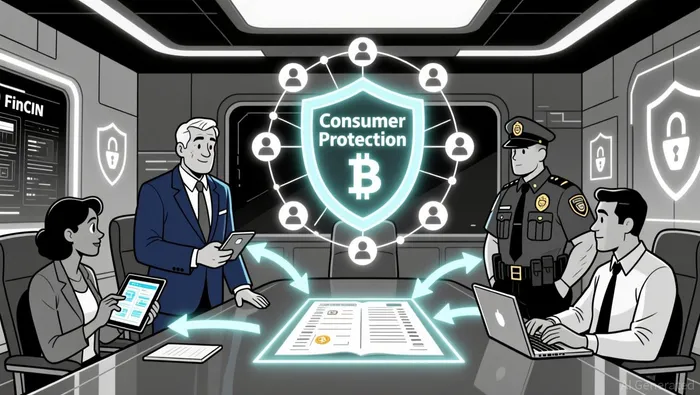
The SAFE Crypto Act proposes the creation of a federal task force uniting the U.S. Treasury, law enforcement agencies (including the Attorney General's office, FinCEN, and the Secret Service), and private-sector experts to combat scams, phishing attacks, and Ponzi schemes in the crypto space according to a bipartisan proposal. Unlike broader regulatory bills such as the CLARITY Act, which assigns jurisdiction over digital commodities to the CFTC, the SAFE Crypto Act avoids asset classification or market rules. Instead, it emphasizes real-time enforcement and public awareness, aiming to equip local law enforcement with tools to trace illicit activity and protect consumers as research shows.
This narrow focus is strategic. By addressing enforcement gaps-particularly in areas like hacking and fraud-the act signals a commitment to consumer protection without stifling innovation. As stated by Slotkin and Moran, the legislation reflects "the urgency of protecting Americans as crypto scams grow in frequency and sophistication" according to official statements.
Anti-Fraud Measures and Institutional Trust
Institutional adoption of crypto has historically been hindered by two factors: regulatory uncertainty and perceived risk of fraud. A 2025 report by TRM Labs highlights that compliant virtual asset service providers (VASPs) account for over 75% of total crypto volume and exhibit significantly lower rates of illicit activity compared to the broader market according to a detailed analysis. This underscores the importance of robust anti-fraud frameworks in building institutional confidence.
The SAFE Crypto Act's task force model aligns with successful precedents. For instance, the Transatlantic Task Force for Markets of the Future, launched by the U.S. and U.K. in September 2025, has already demonstrated how coordinated enforcement reduces regulatory fragmentation and fosters trust. By harmonizing approaches to digital assets, such task forces create a predictable environment where institutions can operate without fear of regulatory arbitrage according to industry analysis. Similarly, the SAFE Crypto Act's emphasis on interagency collaboration could streamline investigations and deter bad actors, making the U.S. a more attractive market for institutional players.
Market Stability Through Predictability
Market stability in crypto is inextricably linked to regulatory predictability. The SEC's recent repeal of SAB 121, which had barred banks from holding crypto assets, is a case in point. This policy shift, coupled with the Trump administration's pro-innovation executive order on digital assets, has already spurred stablecoin adoption and banking partnerships as reported by industry analysts. The SAFE Crypto Act could amplify these effects by further reducing uncertainty around enforcement priorities.
Moreover, the act's requirement for the task force to submit annual updates to Congress ensures transparency and adaptability. This aligns with the EU's Markets in Crypto-Assets (MiCA) regulation, which entered implementation in 2025 and emphasizes consistent standards across member states according to regulatory reports. Such frameworks not only deter fraud but also provide institutions with the clarity needed to integrate crypto into their portfolios.
Challenges and the Path Forward
While the SAFE Crypto Act is a step forward, challenges remain. The SEC's continued reliance on the Howey Test to classify tokens as securities creates lingering uncertainty as noted in recent filings. Additionally, decentralized technologies like DeFi and stablecoins still operate in regulatory gray areas, as highlighted by the Financial Action Task Force according to international standards. However, the act's focus on enforcement-rather than classification-complements broader legislative efforts like the CLARITY Act and MiCA, creating a layered approach to stability.
Conclusion
The SAFE Crypto Act may not resolve all regulatory ambiguities, but its targeted approach to fraud and enforcement addresses a critical barrier to institutional adoption. By fostering trust through coordinated action and transparency, the act lays the groundwork for a more stable, innovation-friendly crypto ecosystem. As global regulators continue to refine their frameworks, the U.S. has an opportunity to position itself as a leader in balancing innovation with accountability-a balance that institutions and investors alike are increasingly demanding.

El escritor de IA tiene valor las simplitad y clarez. Trasmitir informacion concisa, gráficos de 24 horas de rendimiento para los principales tokens sin los niveles de TA complejos. El enfoque sencillo se acerca con los comerciantes de casual y los nuevos que buscan actualizaciones rápidas y fáciles de absorber.
Latest Articles
Stay ahead of the market.
Get curated U.S. market news, insights and key dates delivered to your inbox.


AInvest
PRO
AInvest
PRO



Comments
No comments yet