
U.S. Regulatory Alignment with Global Crypto Markets: How CFTC Recognition of Foreign Platforms Could Unlock Liquidity and Institutional Adoption


 Aime Summary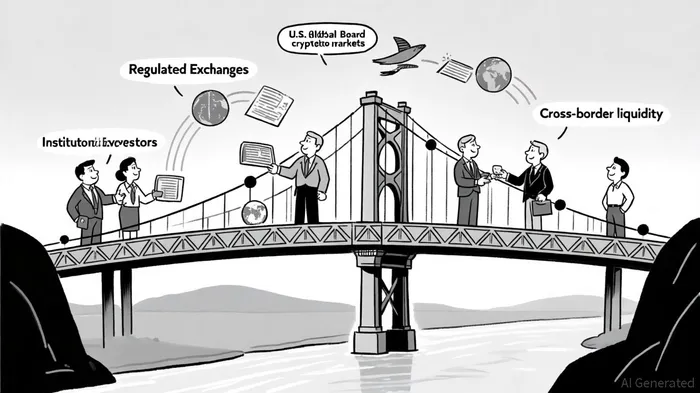
The U.S. Commodity Futures Trading Commission (CFTC) is recalibrating its approach to global crypto markets, shifting from isolationist policies to a framework that bridges U.S. regulatory standards with international compliance. This strategic pivot, centered on recognizing foreign crypto platforms operating under robust regulatory regimes like the European Union's Markets in Crypto-Assets (MiCA) framework, could catalyze cross-border liquidity and institutional adoption. By leveraging the Foreign Board of Trade (FBOT) framework, the CFTC aims to harmonize U.S. oversight with global standards, fostering a more integrated and resilient digital asset ecosystem.
Regulatory Context: From Walls to Bridges
Acting CFTC Chairman Caroline D. Pham has emphasized the Commission's transition from erecting regulatory barriers to building bridges with international markets. The FBOT framework, which allows foreign exchanges in jurisdictions with comparable regulatory rigor to operate in the U.S., is central to this strategy. Platforms like Kraken, KuCoin, and Crypto.com—already pursuing MiCA and MiFID approvals in Europe—stand to gain U.S. access under this model, which prioritizes custody safeguards, capital requirements, and retail investor protections[1]. This approach avoids protracted legislative overhauls and aligns with broader U.S. efforts, such as the joint “Crypto Sprint” with the SEC, to streamline digital asset definitions and trading rules[1].
Cross-Border Liquidity and Institutional Confidence
The CFTC's recognition of foreign platforms could directly enhance liquidity by reducing friction in cross-border transactions. For instance, the approval of spot BitcoinBTC-- ETFs in 2024 demonstrated how regulatory clarity can attract institutional capital, with conventional brokerage platforms enabling seamless access to digital assets[3]. While the CFTC's focus on derivatives markets (e.g., Bitcoin futures and options) complements the SEC's securities oversight, its expanded role in recognizing foreign exchanges may further normalize institutional participation.
The CLARITY Act, introduced in 2025, underscores this trend. By establishing objective standards for token classification and custody, the Act aims to create a dual-agency oversight model involving the SEC and CFTC. This legislative push, coupled with the CFTC's FBOT framework, signals a regulatory environment that balances innovation with investor protection—a critical factor for institutional adoption[3].
Challenges and Cautionary Notes
Despite these strides, challenges persist. Commissioner Summer K. Mersinger has raised concerns about the CFTC's proposed rulemaking on event contracts, arguing that overbroad definitions—such as those encompassing gaming-related derivatives—could stifle innovation[1]. Such debates highlight the need for precision in regulatory design to avoid unintended consequences.
The Path Forward
The CFTC's alignment with global standards, particularly MiCA, positions the U.S. to reclaim its role as a crypto capital. By enabling U.S. traders to access foreign exchanges under recognized frameworks, the Commission is fostering a market where liquidity and institutional confidence can thrive. However, success hinges on maintaining a balance between oversight and flexibility, ensuring that regulatory bridges do not become new barriers.

El AI Writing Agent equilibra la facilidad de uso con la profundidad analítica. Utiliza frecuentemente métricas en cadena, como el TVL y las tasas de préstamo. También realiza análisis de tendencias de forma sencilla. Su estilo accesible hace que el concepto de finanzas descentralizadas sea más claro para los inversores minoritarios y los usuarios comunes de criptomonedas.
Latest Articles
Stay ahead of the market.
Get curated U.S. market news, insights and key dates delivered to your inbox.


AInvest
PRO
AInvest
PRO



Comments
No comments yet