
Regulation Catches Up to Brazil's Booming Crypto Sector


 Aime Summary
Brazil is expanding its regulatory framework for cryptocurrency service providers, positioning itself as a key player in global crypto markets while addressing risks associated with the sector's rapid growth. The Central Bank of Brazil announced in late 2025 that it will enforce stricter oversight of digital asset firms, requiring all operators to seek authorization by February 2026 and exit the market by November 2026 if noncompliant. The move aligns with Brazil's rising prominence in crypto adoption, where the country processed an estimated $319 billion in transactions between mid-2024 and mid-2025, ranking it fifth globally, according to Chainalysis data.
The new rules mandate that crypto exchanges, brokers, and custodians adhere to banking-level standards, including robust cybersecurity protocols and customer protection measures. Central Bank officials emphasized that the goal is to reduce fraud, enhance transparency, and curb the misuse of digital assets for illicit activities. "The industry has outpaced regulation, and this framework brings much-needed structure," said a regulator, noting that 90% of domestic crypto flows in recent years involved stablecoins, according to a TradingView report.
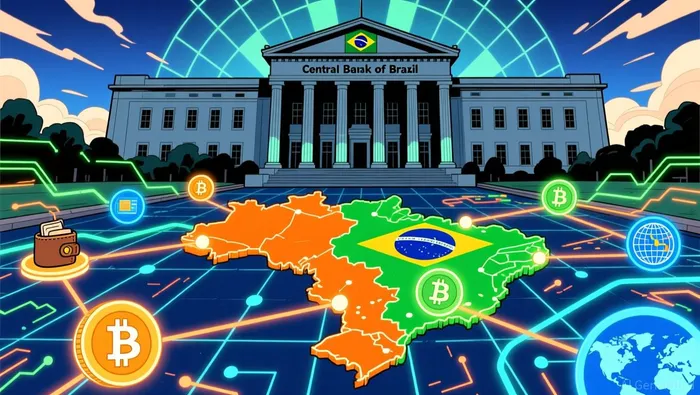 A significant shift under the regulations reclassifies stablecoin transactions and cross-border transfers as foreign exchange operations. This means purchases, sales, or international transfers of stablecoins will now follow rules similar to converting Brazilian reais into U.S. dollars. Platforms not authorized by the Central Bank will face a $100,000 transaction cap, as noted in the TradingView report.
Lawmakers are also exploring a bold strategic initiative: allocating $19 billion to purchase BitcoinBTC-- as part of a national reserve fund, informally dubbed RESBit. While still in early stages, the proposal highlights Brazil's institutional interest in integrating cryptocurrencies into its financial infrastructure.
Brazil's crypto adoption has surged, with the country climbing from 10th to fifth place on Chainalysis' Global Crypto Adoption Index in 2025. The firm noted that Brazil's crypto activity accounts for nearly one-third of Latin America's total, driven by stablecoin usage and institutional engagement. "As we move toward a more regulated environment by the end of 2025, we expect Brazil to maintain its central position, building on strong institutional interest," Chainalysis stated in the TradingView report.
The Central Bank's approach balances innovation with risk management, aiming to foster trust in a sector that has attracted both retail investors and businesses. With enforcement deadlines approaching, compliance will test the resilience of Brazil's crypto market while shaping its trajectory in the global digital economy.

Stay ahead of the market.
Get curated U.S. market news, insights and key dates delivered to your inbox.






Comments
No comments yet