
Regulated Blockchain Banking Bridges Gap with Traditional Finance


 Aime Summary
The U.S. digital asset banking landscape is undergoing a seismic shift as Telcoin secures historic regulatory approval to launch the first regulated digital asset bank in the country. On November 13, Telcoin announced final charter approval from the Nebraska Department of Banking and Finance, establishing the Telcoin Digital Asset Bank—a milestone that positions it as the first Digital Asset Depository Institution in the United States. This development marks a pivotal bridge between blockchain innovation and traditional finance, with Telcoin's flagship product, eUSD, set to become the first U.S. dollar stablecoin issued by a bank and circulating on the blockchain, according to a LookOnChain report.
The eUSD stablecoin, fully backed by U.S. bank deposits and short-term treasuries held in regulated reserves, aims to provide consumers and businesses with a secure, compliant digital cash solution for payments, remittances, and savings. Unlike unregulated or offshore stablecoins, eUSD's bank-backed structure addresses systemic risk concerns raised by regulators while leveraging blockchain's speed and transparency. Telcoin CEO Paul Neuner emphasized that the charter "proves a bank can issue on-chain Digital Cash responsibly and operate in full alignment with U.S. regulators," adding that eUSD will bring blockchain's advantages to everyday finance in a user-friendly manner, according to a Morningstar report.
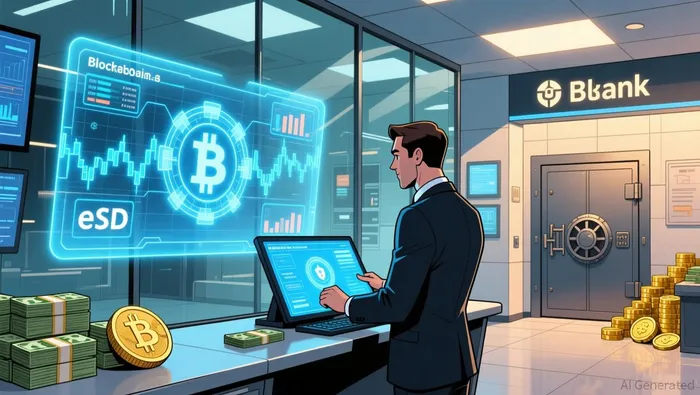 The approval coincides with the recent passage of the GENIUS Act, a federal law providing clarity for stablecoin and digital asset regulations. Telcoin's model, which integrates blockchain technology within a traditional banking framework, contrasts with other industry players seeking non-depository trust charters. By aligning digital assets with regulated banking, Telcoin aims to unlock the $4 trillion blockchain economy for mainstream finance while strengthening community bank balance sheets and modernizing payments, according to the Morningstar report.
JPMorgan Chase & Co. (JPM) is also making waves in the digital asset space with its JPM Coin (JPMD) initiative. The bank has begun rolling out deposit tokens on the Base blockchain, representing dollar deposits at JPMorgan. Unlike stablecoins, JPMD is a "deposit token" that acts as a digital claim on actual bank deposits, enabling 24/7 instant transactions. JPMorgan tested the product with firms like Mastercard and CoinbaseCOIN--, with plans to expand to other currencies, including the Euro (JPME), once regulators approve, according to a Cryptopolitan report.
JPMD's unique structure allows businesses to earn interest on their holdings while maintaining the stability of traditional deposits. This feature differentiates it from stablecoins, which typically lack yield-generating capabilities. The bank's Kinexys Digital Payments network, which already processes $3 billion daily in traditional currencies, now includes JPMD, offering institutions a low-cost, efficient alternative to legacy payment systems, according to the Cryptopolitan report.
The convergence of regulated digital assets and traditional finance is accelerating, driven by infrastructure innovations like Thunes' new Account Top Up and Withdrawal solutions. These tools enable major digital asset platforms to facilitate seamless on-ramp and off-ramp transactions, connecting blockchain users to traditional banking systems. By addressing compliance and operational barriers, Thunes aims to support the projected $10 billion growth in the digital assets market over the next year, according to a PR Newswire report.
Together, Telcoin's eUSD, JPMorgan's JPMD, and Thunes' infrastructure solutions signal a maturing ecosystem where digital assets and traditional finance coexist. As regulators continue to refine frameworks like the GENIUS Act, the stage is set for broader adoption of blockchain-powered financial tools, reshaping how money flows in the digital age.

Stay ahead of the market.
Get curated U.S. market news, insights and key dates delivered to your inbox.
AInvest
PRO
AInvest
PRO



Comments
No comments yet