
Regional Grocery Chains Outperform National Peers in Holiday Retail Resilience


 Aime Summary
The holiday retail season has long been a litmus test for consumer spending patterns and retail resilience. In 2023, regional grocery chains like Food Lion demonstrated a unique ability to outperform national competitors such as WalmartWMT-- and KrogerKR--, capitalizing on shifting consumer behaviors and localized strategies. This analysis explores how regional grocers are leveraging seasonal demand to secure market share, even as national chains face headwinds from discounters and evolving shopper expectations.
Localized Strategies and Community-Centric Offerings
Regional chains have long thrived by tailoring their product selections to the tastes and needs of their local markets. For example, Food Lion's focus on fresh, locally sourced ingredients and budget-friendly staples aligns with the preferences of price-conscious consumers in its Southeastern U.S. footprint.
According to a report by Placer.ai, regional chains like H-E-B and Meijer captured significant foot traffic in 2023, with Kroger leading the pack at nearly 19% of visits to the top 10 grocery chains. While Kroger's market share declined slightly over five years, regional players maintained their relevance by emphasizing hyper-localized inventory and community engagement.
The holiday season amplifies these advantages.
Consumers increasingly seek to prepare homemade meals, with many turning to social media for recipe inspiration. 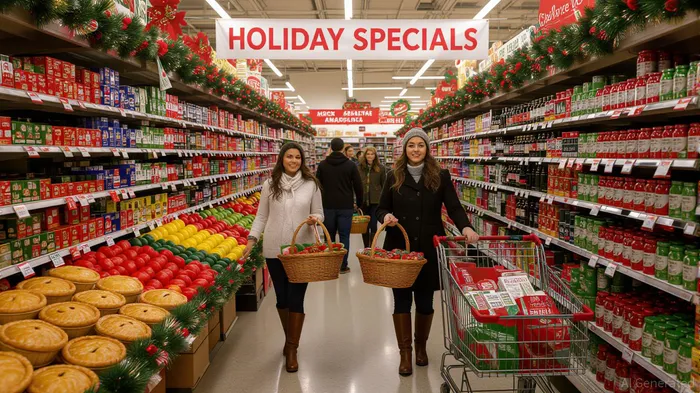 Regional grocers like Food Lion have capitalized on this trend by curating holiday-specific product lines-such as pre-cut vegetables, ready-to-bake pies, and seasonal spices-that cater to both convenience and tradition. This approach not only drives basket size but also fosters brand loyalty among shoppers who value personalized service and familiarity.
E-Commerce Integration and Supply Chain Agility
The rise of e-commerce has leveled the playing field for smaller regional grocers.
By 2025, over 70% of U.S. grocery retailers offered online ordering and delivery, a shift that has allowed regional chains to compete with national giants in digital spaces. Food Lion, for instance, has partnered with third-party platforms like Instacart to expand its delivery reach, ensuring it remains competitive in markets where Walmart and Kroger dominate physical store traffic.
Moreover, regional chains have demonstrated agility in navigating supply chain disruptions.
A case study from Circana highlights how a leading regional grocer navigated supply chain gaps by prioritizing local suppliers and adjusting inventory in real time. This flexibility is critical during the holidays, when demand surges and product availability can make or break sales.
Discounters and the Price Sensitivity Factor
While regional chains like Food Lion focus on localized offerings,
discounters such as Aldi and Grocery Outlet have gained momentum through aggressive low-price strategies.
These players have eroded market share from national chains like Kroger, which saw its share drop from 9.8% to 8.5% between 2019 and 2024. However, regional grocers have mitigated this threat by balancing affordability with curated selections that appeal to middle-income shoppers. Food Lion's emphasis on value-such as its "Everyday Low Prices" promotions-positions it as a hybrid competitor, blending the cost advantages of discounters with the personalized service of traditional grocers.
Investment Implications and Future Outlook
For investors, the resilience of regional grocery chains underscores the importance of adaptability in a fragmented market. While national chains like Walmart and Kroger continue to dominate in scale, regional players are outperforming in key metrics like foot traffic and customer retention during peak seasons. The integration of e-commerce, localized product strategies, and supply chain agility will likely remain critical differentiators in the coming years.
As the 2025 holiday season approaches, regional grocers are well-positioned to capitalize on the growing demand for personalized, community-driven shopping experiences. For Food Lion and its peers, the challenge will be to sustain these gains while addressing the broader industry shift toward omnichannel retailing.

Stay ahead of the market.
Get curated U.S. market news, insights and key dates delivered to your inbox.
AInvest
PRO
AInvest
PRO



Comments
No comments yet