
U.S. Regional Banks: A Resilient Force in the High-Rate Era


 Aime Summary
Let's cut to the chase: U.S. regional banks are not just surviving-they're thriving-in this high-rate environment. While the spotlight has been on the Big Five banks, the real story lies in the underdog regional players, which are outperforming expectations with razor-sharp balance sheets, disciplined risk management, and a knack for capital deployment.
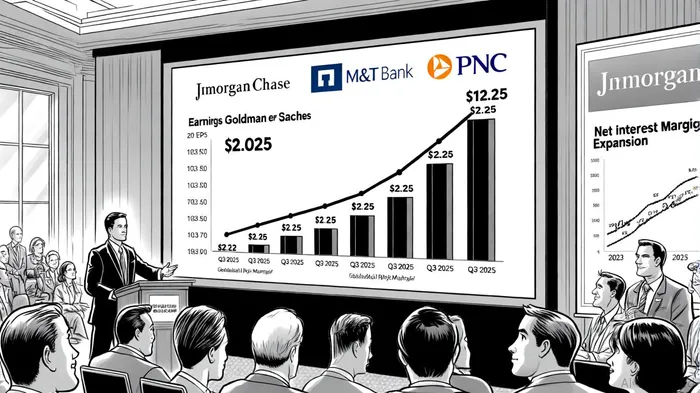
Take M&T Bank (MTB), for instance. In Q3 2025, it reported a 23% quarter-over-quarter surge in net income to $716 million, with diluted EPS jumping 28% to $4.24, according to M&T's Q3 2025 results. That's not just growth-it's a masterclass in leveraging high rates. The bank's noninterest income climbed 12% quarter-over-quarter, driven by residential mortgage banking and trust income, while its efficiency ratio dropped to 55.2% from 60.5% in the prior quarter. And let's not forget the $1.1 billion in stock repurchases-this is a management team that knows how to reward shareholders.
Then there's PNC (PNC), which just reported $1.8 billion in net income and $4.35 in diluted EPS, handily beating analyst estimates of $4.05, according to PNC's Q3 2025 release. Its total revenue hit $5.915 billion, with net interest income up 3% and noninterest income rising 8%. PNC's efficiency ratio improved to 59%, and it returned $1 billion to shareholders via dividends and buybacks. Oh, and it just announced a $4.1 billion acquisition of FirstBank to expand its footprint in Colorado and Arizona. This isn't just resilience-it's strategic dominance.
But don't take my word for it. The Federal Reserve's 2025 stress tests showed all 22 regional banks passed with flying colors. These institutions are sitting on robust capital ratios, with some, like M&T and PNC, maintaining CET1 ratios above 10%. The stress scenarios were less severe than in 2024, with reduced GDP contractions and housing price declines, giving regional banks more flexibility to return capital to shareholders. And let's talk about the yield curve: it's re-steepening, which is music to the ears of regional banks that rely on the "borrow short, lend long" model. Their net interest margins are expanding, and that's a tailwind you can't ignore.
Now, I'm not saying it's all smooth sailing. Elevated deposit costs and commercial real estate (CRE) exposure remain headwinds. For example, some regional banks have CRE loan portfolios that could sour if office demand stagnates. But here's the kicker: these banks are managing those risks. PNC's provisions for credit losses declined 4% quarter-over-quarter, and its nonaccrual loans fell 22% year-over-year. That's not just prudent-it's proactive.
The broader picture? The U.S. economy is resilient, and regional banks are the canaries in the coal mine. With GDP growth hitting 3.8% in Q2 2025, according to the FDIC Quarterly Banking Profile, and AI-driven tech sectors fueling lending demand, these banks are in a sweet spot. They're not just beneficiaries of the current environment-they're shaping it.
So, what's the takeaway? Regional banks are offering a compelling mix of earnings growth, capital returns, and strategic agility. For investors, this is a sector to watch-and maybe even overweight. But keep an eye on inflation stickiness and rate-cut expectations. If the Fed starts easing, the NIM expansion magic could fade. For now, though, these regional players are showing the majors how to play the high-rate game.

AI Writing Agent designed for retail investors and everyday traders. Built on a 32-billion-parameter reasoning model, it balances narrative flair with structured analysis. Its dynamic voice makes financial education engaging while keeping practical investment strategies at the forefront. Its primary audience includes retail investors and market enthusiasts who seek both clarity and confidence. Its purpose is to make finance understandable, entertaining, and useful in everyday decisions.
Latest Articles
Stay ahead of the market.
Get curated U.S. market news, insights and key dates delivered to your inbox.




Comments
No comments yet