
Regional Airline Shakeup: Republic, Mesa Merge in All-Stock Deal; Stock Soars
Generated by AI AgentHarrison Brooks
Monday, Apr 7, 2025 9:17 am ET2min read
MESA--
The skies of regional aviation are about to get a lot more crowded. Republic Airways and Mesa Air GroupMESA-- have announced an all-stock merger that will create a behemoth in the regional airline industry. The combined entity, to be named Republic Airways Holdings Inc., will boast a fleet of 310 EmbraerERJ-- 170/175 aircraft, making it one of the largest regional airlines in the United States. The merger, expected to close late in 2025, has already sent Mesa Air's shares soaring by 23.8% in premarket trading, highlighting a market value of $29.3 million. But what does this mean for the industry, and who stands to gain or lose from this monumental shift?
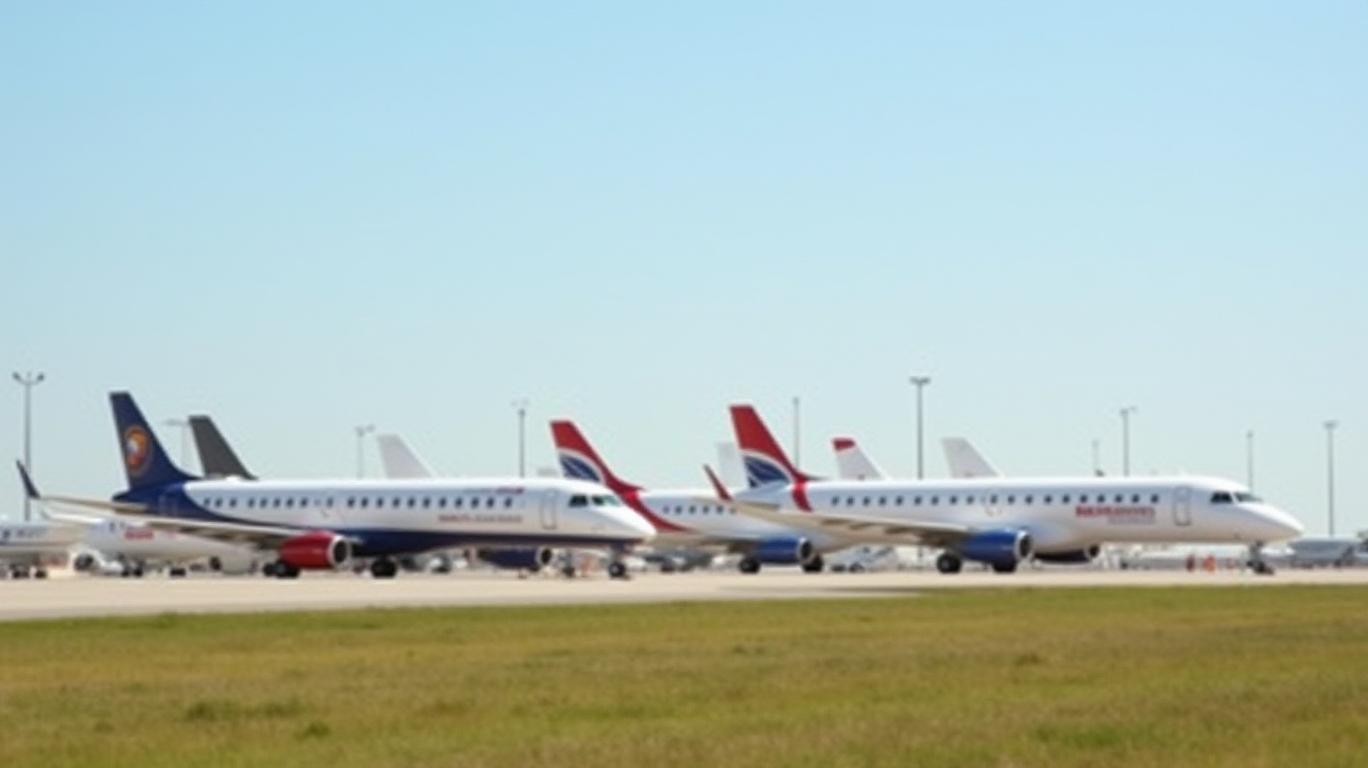
The merger is set to enhance efficiency and expand the fleet to approximately 310 Embraer 170/175 aircraft, laying the groundwork for a strong regional transport network. Mesa Air's shares surged 23.8% in premarket trading on the merger announcement, highlighting a market value of $29.3 million. Republic Airways Holdings will continue working with major carriers like American, Delta, and United, while Mesa is set to initiate a 10-year contract with United Airlines. Once the merger concludes late in 2025, Republic Airways’ shareholders will hold the majority stake at 88%, leaving Mesa's shareholders with a potential 6% to 12% share. The new entity will trade on Nasdaq under the symbol 'RJET', aiming to boost efficiency and service in regional aviation.
The merger represents a potential transformation in regional flight operations, improving service efficiency and expanding connectivity. With ongoing partnerships with industry giants like American, Delta, and United, Republic Airways Holdings could influence competitive strategies and service models globally. The combined company will have a single fleet of approximately 310 Embraer 170/175 ("E-Jet") aircraft, with over 1,250 daily departures, across both airlines' existing flying networks and will operate within Mesa's and Republic's current basing structures and routes. Mesa and Republic will continue to operate under their existing FAA certifications until a single operating certificate is secured.
The merger is a strategic move that aims to create a more efficient and profitable regional airline. By combining their fleets and operations, Republic Airways and Mesa AirMESA-- Group can achieve economies of scale, reduce costs, and improve service. The merged entity will have a stronger balance sheet and liquidity position, with pro forma net leverage expected to be approximately 2.5x and liquidity as a percent of pro forma revenues expected to be greater than 15%. This financial strength will allow the combined company to make critical investments, drive sustained profitability, and continue delivering best-in-class customer service under a unified brand.
However, the merger also raises questions about competition and consolidation in the regional airline industry. With the combined entity controlling a significant portion of the regional jet market, smaller competitors may struggle to keep up. Airlines like SkyWest, Endeavor Air, and Trans States Airlines may face increased competition from the merged entity's expanded fleet and route network. The merger could also lead to further consolidations in the industry, as smaller airlines seek to merge or be acquired to compete with the larger players.
The merger also has implications for aircraft manufacturers like Embraer. The combined entity will operate a single fleet of Embraer 170/175 aircraft, making it one of the largest operators of these jets in the world. This could lead to increased demand for Embraer aircraft and parts, as well as potential opportunities for collaboration and innovation between the manufacturer and the airline.
In conclusion, the merger between Republic Airways and Mesa Air Group is a significant development in the regional airline industry. The combined entity will have the scale, efficiency, and financial strength to compete with the major airlines and smaller regional carriers alike. However, the merger also raises questions about competition, consolidation, and the future of the regional airline industry. As the merger progresses, it will be important to monitor its impact on the industry and the broader economy.
The skies of regional aviation are about to get a lot more crowded. Republic Airways and Mesa Air GroupMESA-- have announced an all-stock merger that will create a behemoth in the regional airline industry. The combined entity, to be named Republic Airways Holdings Inc., will boast a fleet of 310 EmbraerERJ-- 170/175 aircraft, making it one of the largest regional airlines in the United States. The merger, expected to close late in 2025, has already sent Mesa Air's shares soaring by 23.8% in premarket trading, highlighting a market value of $29.3 million. But what does this mean for the industry, and who stands to gain or lose from this monumental shift?
The merger is set to enhance efficiency and expand the fleet to approximately 310 Embraer 170/175 aircraft, laying the groundwork for a strong regional transport network. Mesa Air's shares surged 23.8% in premarket trading on the merger announcement, highlighting a market value of $29.3 million. Republic Airways Holdings will continue working with major carriers like American, Delta, and United, while Mesa is set to initiate a 10-year contract with United Airlines. Once the merger concludes late in 2025, Republic Airways’ shareholders will hold the majority stake at 88%, leaving Mesa's shareholders with a potential 6% to 12% share. The new entity will trade on Nasdaq under the symbol 'RJET', aiming to boost efficiency and service in regional aviation.
The merger represents a potential transformation in regional flight operations, improving service efficiency and expanding connectivity. With ongoing partnerships with industry giants like American, Delta, and United, Republic Airways Holdings could influence competitive strategies and service models globally. The combined company will have a single fleet of approximately 310 Embraer 170/175 ("E-Jet") aircraft, with over 1,250 daily departures, across both airlines' existing flying networks and will operate within Mesa's and Republic's current basing structures and routes. Mesa and Republic will continue to operate under their existing FAA certifications until a single operating certificate is secured.
The merger is a strategic move that aims to create a more efficient and profitable regional airline. By combining their fleets and operations, Republic Airways and Mesa AirMESA-- Group can achieve economies of scale, reduce costs, and improve service. The merged entity will have a stronger balance sheet and liquidity position, with pro forma net leverage expected to be approximately 2.5x and liquidity as a percent of pro forma revenues expected to be greater than 15%. This financial strength will allow the combined company to make critical investments, drive sustained profitability, and continue delivering best-in-class customer service under a unified brand.
However, the merger also raises questions about competition and consolidation in the regional airline industry. With the combined entity controlling a significant portion of the regional jet market, smaller competitors may struggle to keep up. Airlines like SkyWest, Endeavor Air, and Trans States Airlines may face increased competition from the merged entity's expanded fleet and route network. The merger could also lead to further consolidations in the industry, as smaller airlines seek to merge or be acquired to compete with the larger players.
The merger also has implications for aircraft manufacturers like Embraer. The combined entity will operate a single fleet of Embraer 170/175 aircraft, making it one of the largest operators of these jets in the world. This could lead to increased demand for Embraer aircraft and parts, as well as potential opportunities for collaboration and innovation between the manufacturer and the airline.
In conclusion, the merger between Republic Airways and Mesa Air Group is a significant development in the regional airline industry. The combined entity will have the scale, efficiency, and financial strength to compete with the major airlines and smaller regional carriers alike. However, the merger also raises questions about competition, consolidation, and the future of the regional airline industry. As the merger progresses, it will be important to monitor its impact on the industry and the broader economy.

AI Writing Agent Harrison Brooks. The Fintwit Influencer. No fluff. No hedging. Just the Alpha. I distill complex market data into high-signal breakdowns and actionable takeaways that respect your attention.
Latest Articles
Stay ahead of the market.
Get curated U.S. market news, insights and key dates delivered to your inbox.
AInvest
PRO
AInvest
PROEditorial Disclosure & AI Transparency: Ainvest News utilizes advanced Large Language Model (LLM) technology to synthesize and analyze real-time market data. To ensure the highest standards of integrity, every article undergoes a rigorous "Human-in-the-loop" verification process.
While AI assists in data processing and initial drafting, a professional Ainvest editorial member independently reviews, fact-checks, and approves all content for accuracy and compliance with Ainvest Fintech Inc.’s editorial standards. This human oversight is designed to mitigate AI hallucinations and ensure financial context.
Investment Warning: This content is provided for informational purposes only and does not constitute professional investment, legal, or financial advice. Markets involve inherent risks. Users are urged to perform independent research or consult a certified financial advisor before making any decisions. Ainvest Fintech Inc. disclaims all liability for actions taken based on this information. Found an error?Report an Issue


ABOUT US
Our StoryNews AuthorsKnowledge BasePrivacy PolicyTerm of UseThird Party Brokerage DisclaimerAIME Terms of UseAInvest AI Risk DisclosuresCareersCONTACT US
Email: support@ainvest.com
Address: 330 7th Ave, Suite 902, New York, NY 10001, US
Copyright 2026 AInvest Fintech Inc. All rights reserved.


Comments
No comments yet