

U.S. Refining Downturn Reveals New Energy Winners
 Aime Summary
The U.S. . This drop, driven by structural shifts rather than cyclical volatility, underscores a realignment of capital, infrastructure, and demand dynamics. For investors, the implications are clear: the decline signals a narrowing of opportunities in traditional refining while opening new avenues in logistics, Gulf Coast infrastructure, and renewable energy.
The Structural Shift in Refining
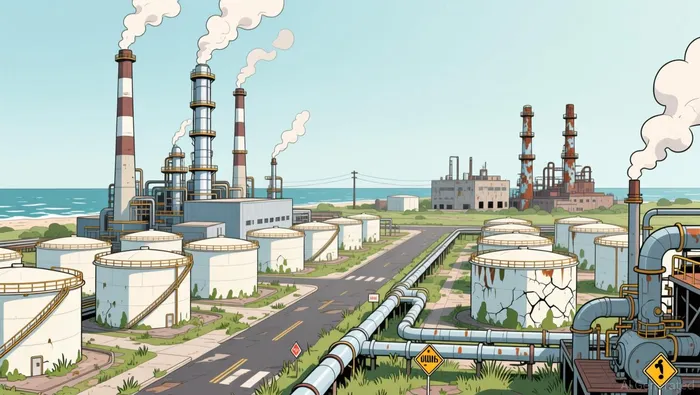
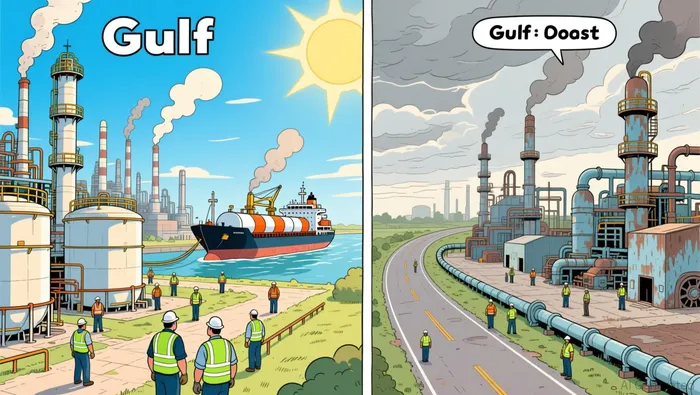
The EIA's data reveals a stark divergence in U.S. refining activity. The Gulf Coast (PADD 3), with its modern, export-oriented facilities, has maintained high utilization rates, . In contrast, the East Coast and Midwest face aging infrastructure, regulatory pressures, and declining profitability. Key closures, , have permanently reduced domestic refining capacity. These closures are not isolated events but part of a broader trend of capital reallocation toward sectors aligned with decarbonization and global export demand.
Sector-Specific Opportunities and Risks
Oil & Gas: Gulf Coast Infrastructure Outperforms
Companies with exposure to Gulf Coast refining and midstream operations are poised to benefit. Kinder MorganKMI-- (KMI) and Schlumberger (SLB) are prime examples. Kinder Morgan's pipeline and terminal networks are critical to transporting crude and refined products from the Gulf to international markets, while Schlumberger's expertise in optimizing Gulf Coast refining processes aligns with the region's export-driven model.
Investors should also consider the Energy Select Sector SPDR (XLE), which includes Gulf-focused energy infrastructure. , reflecting the sector's resilience.
Logistics: Arbitrage-Driven Growth
. and European crude prices has created a lucrative arbitrage opportunity. Logistics firms like Kirby Corporation (KEX) and Teekay Tankers (TK) are capitalizing on this gap. Kirby's inland and coastal barge operations facilitate U.S. crude exports to Europe, while Teekay's fleet of Suezmax and VLCC tankers benefits from surging freight rates.
The U.S.-Europe arbitrage is further bolstered by European sanctions on Russian crude and the closure of the U.S. Gulf–Asia arbitrage window. This has redirected flows to Europe, increasing demand for long-haul tanker services.
Trading Companies: Margin Compression and Transition Risks
Legacy refiners like LyondellBasell (LYB) and Dow (DOW) face margin compression as refining capacity declines. These firms are pivoting to low-carbon initiatives, but their transition timelines remain uncertain. For example, .
Investors should underweight traditional refiners and instead focus on companies with diversified energy portfolios. Trading firms with exposure to renewable fuels or chemical feedstocks may offer better long-term prospects.
Investment Strategy: Rebalancing Exposure
The decline in U.S. refinery crude runs demands a strategic rebalancing of sector exposure:
1. Overweight Gulf Coast Infrastructure and Renewables: ETFs like XLE and Industrial Select Sector SPDR (IYE) provide exposure to modern refining and logistics assets.
2. Underweight Legacy Refiners: Avoid firms reliant on domestic refining margins, such as ValeroVLO-- (VLO) and Marathon PetroleumMPC-- (MPC), unless they demonstrate clear decarbonization pathways.
3. Capitalize on Arbitrage Opportunities: Position in logistics firms benefiting from U.S.-Europe crude flows, including Kirby and Teekay.
Conclusion
. refinery crude runs is not a temporary setback but a structural realignment. Investors who recognize this shift can capitalize on Gulf Coast resilience, logistics growth, and the energy transition. Conversely, those clinging to traditional refining models risk underperformance in a rapidly evolving market. As the EIA's data makes clear, the future of U.S. energy lies in modern infrastructure, global trade, and sustainable innovation.

Stay ahead of the market.
Get curated U.S. market news, insights and key dates delivered to your inbox.




Comments
No comments yet