
U.S. Refinery Runs Drop 29,000 bpd — Who Benefits From the Divide?
 Aime Summary
The U.S. Energy Information Administration's (EIA) latest data reveals a 29,000-barrel-per-day (bpd) decline in refinery crude runs, a trend that signals deeper vulnerabilities in the energy sector. This drop, part of a broader structural contraction in refining activity, reflects a confluence of planned maintenance, aging infrastructure, and the accelerating energy transition. Yet, within this volatility lie opportunities for investors to capitalize on sector rotation between energy and consumer finance, as market dynamics shift toward resilience and adaptability.
Structural Weaknesses in Refining: A Tale of Two Regions
The decline in crude runs is not uniform. The Gulf Coast (PADD 3), with its modern infrastructure and export-oriented operations, has maintained relatively high utilization rates, averaging 92% in Q3 2025. By contrast, the Midwest (PADD 2) saw utilization plummet to 81% in late October 2025 due to major outages at facilities like BP's Whiting refinery (430,000 bpd offline) and Phillips 66's Wood River refinery. These regional disparities highlight a critical divide: Gulf Coast refiners, such as Marathon PetroleumMPC-- and Valero EnergyVLO--, are leveraging their export capabilities and robust logistics networks to buffer supply shocks, while legacy refiners in the Midwest face declining margins and operational inflexibility.
The EIA's data also underscores the role of planned maintenance in exacerbating short-term volatility. For instance, TotalEnergies' Port Arthur refinery and ExxonMobil's Baton Rouge facility reduced capacity by 151,000 bpd combined during Q4 2025. While such outages are cyclical, their timing—coinciding with a weak crude price environment (Brent averaging $69/b in 2025)—has amplified margin pressures. This raises questions about the long-term viability of refining assets in regions reliant on domestic demand, particularly as the energy transition accelerates.
Sector Rotation: Energy's Rebalancing and Consumer Finance's Resilience
The energy sector's vulnerabilities are not confined to refining. U.S. exploration and production (E&P) companies have also curtailed growth, with oil rigs declining from 468 to 399 by August 2025 amid sub-$70/b crude prices. This has forced a strategic pivot toward capital discipline, with firms like Diamondback Energy prioritizing debt reduction over production expansion. For investors, this signals a shift in energy sector returns from volume-driven growth to fee-based models and operational efficiency.
Meanwhile, consumer finance—particularly sectors tied to energy affordability—may benefit from the refining sector's volatility. For example, as regional fuel shortages and price spikes emerge (e.g., South Dakota's emergency declaration in October 2025), demand for alternative transportation solutions and energy-efficient technologies could surge. This creates indirect tailwinds for consumer finance firms offering green loans, EV financing, or renewable energy leasing.
Investment Implications: Where to Allocate and Where to Avoid
Energy Sector: Prioritize Infrastructure Over Refining
Gulf Coast infrastructure firms, such as Magellan Midstream Partners and Enterprise Products Partners, are better positioned to capitalize on export-driven demand and arbitrage opportunities between U.S. and European crude prices. These firms benefit from fee-based revenue streams and long-term contracts, insulating them from refining margin volatility. Conversely, legacy refiners in the Midwest and East Coast—such as PBF Energy and Andeavor—face structural headwinds from aging assets and regulatory pressures.Consumer Finance: Hedge Against Energy Price Volatility
Consumer finance ETFs (e.g., CFX) and lenders specializing in renewable energy or EV adoption may gain traction as households and businesses seek to mitigate energy costs. For instance, the rise in diesel prices during Q4 2025 could accelerate demand for EV financing, creating opportunities for fintechs and traditional lenders alike.Energy Transition: Allocate to Renewable Logistics
The decline in crude runs underscores the urgency of the energy transition. Investors should overweight renewable energy infrastructure (e.g., solar/wind farms, battery storage) and logistics firms enabling the shift to cleaner fuels. The Energy Select Sector SPDR (XLE) and Industrial Select Sector SPDR (IYE) offer exposure to this realignment.
Conclusion: Navigating the New Energy Normal
The 29,000-bpd drop in U.S. refinery crude runs is a symptom of a sector in flux. While refining margins and regional disparities remain immediate concerns, the broader trend is a reallocation of capital toward infrastructure resilience and the energy transition. For investors, this means shifting from speculative bets on legacy energy assets to strategic positions in modern infrastructure and consumer finance sectors poised to thrive in a low-carbon, high-volatility environment. As the EIA's data makes clear, the future of energy lies not in crude runs, but in adaptability.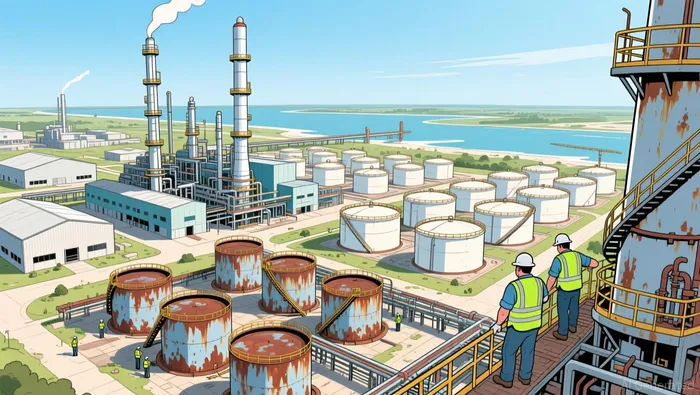

Stay ahead of the market.
Get curated U.S. market news, insights and key dates delivered to your inbox.
AInvest
PRO
AInvest
PRO



Comments
No comments yet