
U.S. Refinery Crude Runs in July 2025: Strategic Implications for Industrial and Capital Markets
 Aime Summary
The U.S. Energy Information Administration (EIA)'s July 2025 report on refinery crude runs has ignited a critical conversation about the refining sector's evolving dynamics. With crude runs plummeting to 118,000 barrels per day (b/d)—a 5.6% decline from June 2025—investors must now navigate a fragmented landscape shaped by regional disparities, geopolitical pressures, and the accelerating energy transition. This shift is not merely a statistical anomaly but a harbinger of structural realignments across industrial equipment, capital markets, and the chemical industry.
Regional Disparities and Industrial Opportunities
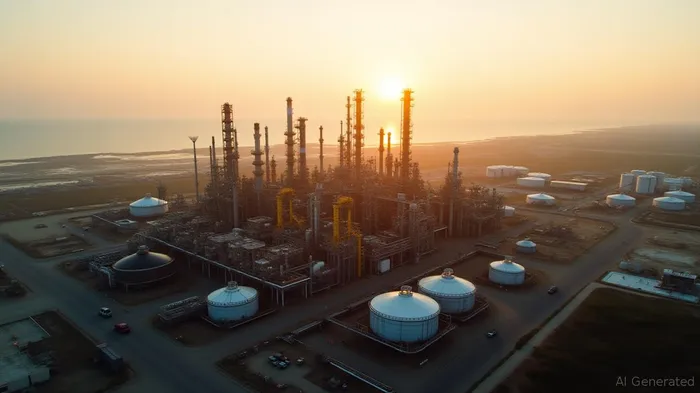
The Gulf Coast's robust 93.5% utilization rate, driven by access to low-cost crude and export infrastructure, contrasts sharply with the East Coast's anemic 59% utilization. Aging facilities like Phillips 66's Bayway refinery in New Jersey face margin pressures from stringent environmental compliance costs. This divergence creates a “refining migration” toward the Gulf, where industrial equipment demand—especially for maintenance and expansion—remains resilient. Energy service providers such as Schlumberger (SLB) and Baker Hughes (BHGE) stand to benefit from retrofitting and upgrading Gulf Coast facilities, as these regions prioritize operational efficiency to offset rising feedstock costs.
Conversely, East Coast refiners may require costly retrofits to meet compliance standards, creating a niche for firms specializing in carbon capture or low-emission technologies. Investors should monitor Carbon Capture Partners (CCP) and Plug Power (PLUG) as potential beneficiaries of this transition.
Macroeconomic and Geopolitical Crosscurrents
The EIA data intersects with broader macroeconomic trends. A sustained decline in refinery activity could ease gasoline price pressures, indirectly influencing Federal Reserve rate decisions. However, if the July slump reflects deeper economic weakness—such as the 0.3% GDP contraction in Q1 2025—investors must prepare for policy shifts. Geopolitical factors, including Red Sea shipping disruptions and OPEC+ production decisions, further complicate the outlook. West and East Coast refineries, already operating at suboptimal levels, face higher feedstock costs and reduced margins, amplifying their vulnerability to global volatility.
Chemical Industry Resilience and Transition Risks
The Gulf Coast's high utilization rate supports stable feedstock production for petrochemicals like ethylene and propylene, benefiting firms such as LyondellBasell (LYB) and Dow (DOW). However, California's planned 17% capacity reduction by 2026 threatens regional chemical demand, pushing firms toward renewable feedstocks. The surge in biomass-based diesel (D4) and ethanol (D6) RIN prices in Q1 2025 underscores this shift.
Investors should adopt a diversified strategy: balancing exposure to legacy chemical producers with emerging biofuel innovators like Renewable Energy Group (REG) and Gevo (GEVO). This approach mitigates transition risks while capitalizing on long-term growth in renewable feedstock alternatives.
Strategic Positioning for Capital Markets
The refining sector's crossroads demand a dual focus:
1. Gulf Coast Logistics and Energy Services: Prioritize firms with exposure to high-utilization regions, such as Enterprise Products Partners (EPD) and Kinder Morgan (KMI), which benefit from stable throughput and export infrastructure.
2. Hedging Fuel Price Swings: Utilize EIA data to time investments in refining stocks and futures contracts, leveraging the Gulf's resilience against East Coast underperformance.
Conclusion: Navigating the Energy Transition
The July 2025 EIA report is a clarion call for investors to recalibrate their strategies. The energy transition is no longer a distant horizon—it is a present-day reality demanding immediate adaptation. By aligning portfolios with high-utilization regions, hedging against fuel price volatility, and diversifying across legacy and renewable sectors, investors can navigate the refining sector's turbulence while capitalizing on its long-term potential.
The key takeaway is clear: in a fragmented market, strategic positioning is not optional—it is imperative.

Sumérjase en el mundo de las finanzas mundiales con Epic Events Finance.
Latest Articles
Stay ahead of the market.
Get curated U.S. market news, insights and key dates delivered to your inbox.
AInvest
PRO
AInvest
PRO



Comments
No comments yet