
The Refinance Surge: Housing Lifeline or Economic Caution Sign?
The U.S. housing market has long been a bellwether for economic health, and nowhere is this clearer than in the recent surge in mortgage refinances. While refinancing activity has climbed 25% year-over-year through June 2025, driven by FHA loans and cash-out transactions, the trend raises a critical question: Is this a sign of housing market resilience or an early warning of broader economic headwinds? The answer lies in dissecting the motivations behind refinancing, the fragility of current mortgage rates, and the ripple effects across consumer spending and banking sector profitability.
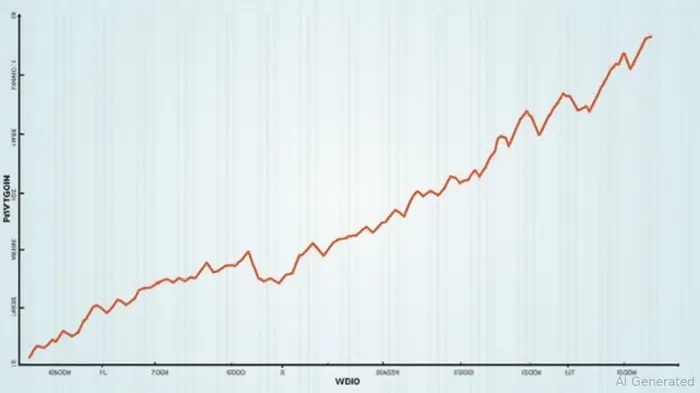
The Refinance Paradox: Growth Amid Stagnant Rates
Despite average 30-year mortgage rates remaining stubbornly above 6.5%—a threshold below which refinancing typically accelerates—applications for refinances increased by 29% compared to June 2024. This surge is not a victory for affordability but a reflection of two divergent forces:
- FHA-Driven Liquidity: Federal Housing Administration (FHA) loans, which require lower credit scores and smaller down payments, accounted for much of the growth. FHA-backed 30-year mortgages averaged 6.59% in June, attracting borrowers who might otherwise be shut out of the market. This has kept refinancing active even as conforming loan rates remain elevated.
- Cash-Out Refinance Mania: Homeowners with 20%+ equity are tapping into their assets, driving cash-out refinances to fund spending or debt consolidation. While this boosts short-term consumer spending, it risks overleveraging households if home values decline.
The reveals a worrying trend: The refinance share of total mortgage activity rose to 37.3% in June, its highest level since 2021, even as purchase loan sizes fell to $380,200—their lowest since early 2025. This signals a market where homeowners are optimizing existing equity rather than new buyers entering the market, a dynamic that could strain housing demand in the long run.
The Economic Double-Edged Sword
The refinancing boom has dual implications for the economy:
Positive Scenario: A Consumer Spending Boost
Lower monthly payments or cash infusions from refinancing can free up household budgets. For instance, a borrower reducing their 30-year rate from 7% to 6.8% on a $300,000 loan saves $60/month—a small but meaningful buffer for discretionary spending. This effect is amplified in regions with high home equity concentrations, such as California or Texas.
Negative Scenario: A Panic-Driven Hedge
The surge in cash-out refinances could reflect anxiety over future economic instability. With inflation intermittently spiking and geopolitical tensions driving oil prices toward $130/barrel, borrowers may be locking in fixed rates now to avoid worse terms later. This “insurance” behavior signals underlying uncertainty, particularly if consumer confidence metrics like the June University of Michigan Index—already at a seven-month low—continue to weaken.
Banks: Winners in the Short Run, Vulnerable in the Long
The banking sector has profited from refinancing fees, with mortgage REITs like Annaly Capital ManagementNLY-- (NLY) and AG Mortgage Investment Trust (MIT) benefiting from rate volatility. However, their fortunes hinge on Federal Reserve policy:
- Near-Term Gains: Steady demand for refinances has kept origination volumes high, bolstering fee income.
- Long-Term Risks: If rates fall significantly below 6%, prepayments could surge, devaluing mortgage-backed securities. The shows shares down 12% year-to-date as investors anticipate this risk.
Meanwhile, regional banks face a more immediate challenge: A third of U.S. homeowners still hold mortgages above 6%, limiting refinancing opportunities unless rates drop further. If the Fed delays rate cuts—currently projected to end 2025 at 4.0%-4.25%—this could prolong the refinancing boom but also delay housing market stabilization.
The Bottom Line: Monitor Rates, Not Just Refis
The refinancing surge is neither purely positive nor negative—it's a symptom of a market caught between stagnant rates and economic anxiety. Investors should focus on three key indicators:
- Fed Policy: Two rate cuts by year-end could push 30-year rates below 6.5%, reigniting a broader refinancing wave.
- Consumer Confidence: A rebound in retail sales or home purchase activity would signal sustainable demand.
- Bank Exposure: Avoid institutions heavily reliant on mortgage servicing rights (MSRs) unless rates stabilize.
For now, the safest bets are short-duration Treasuries to hedge against rate uncertainty and consumer discretionary stocks (e.g., Home DepotHD--, Lowe's) if spending from refinances materializes. However, if economic indicators worsen, prepare for a reckoning in overleveraged housing markets—and the banks that funded them.
In conclusion, the refinancing surge is a fleeting opportunity for some, a harbinger of caution for others. The path forward hinges on whether falling rates can outpace rising doubts.

Stay ahead of the market.
Get curated U.S. market news, insights and key dates delivered to your inbox.




Comments
No comments yet