
Reeves Vows to Honor Tax Pledges as OBR Leaks Weaker Growth Outlook
 Aime Summary
Chancellor Rachel Reeves confirmed Tuesday that her budget proposals would not breach the promises made in the 2024 Labour manifesto regarding taxes for working people according to the Guardian. Speaking ahead of her major fiscal announcement, she said, "I will not let those promises go unkept," a clear response to claims by Conservative critics that her policies had misled the public as reported by the FT. The remarks came after the Office for Budget Responsibility (OBR) accidentally published its official economic report online over 30 minutes before the budget was due to be presented in the House of Commons according to Reuters.
The OBR's early release included revised growth forecasts, which projected a weaker economy for the next five years. The 2026 forecast, for example, was downgraded from 1.9% to 1.4% annual growth. These numbers underscored the financial challenges facing the government as it sought to balance fiscal responsibility with expanded welfare spending. Reeves pledged to raise £26 billion through a mix of new and existing taxes while maintaining Labour's commitment to protect low and middle-income households.
UK markets reacted swiftly to the news, with government bond prices fluctuating and the pound seeing a brief spike according to Reuters. Analysts noted the early leak as a significant procedural lapse, with the OBR issuing a public apology for the error. The incident raised questions about how the leak might have affected market expectations and investor confidence in the reliability of official fiscal data as noted by the FT.
The OBR's updated growth projections were central to the government's budget strategy. While 2025 growth was revised upward to 1.5% from 1.0%, the outlook for the following years showed a consistent decline in economic momentum according to Reuters. Reeves attributed this to the "Tories' legacy," arguing that previous government policies had left the economy in a weaker position than anticipated. The downgrade, combined with higher-than-expected inflation and rising borrowing costs, forced the government to adopt a more aggressive tax-raising approach as reported by the FT.
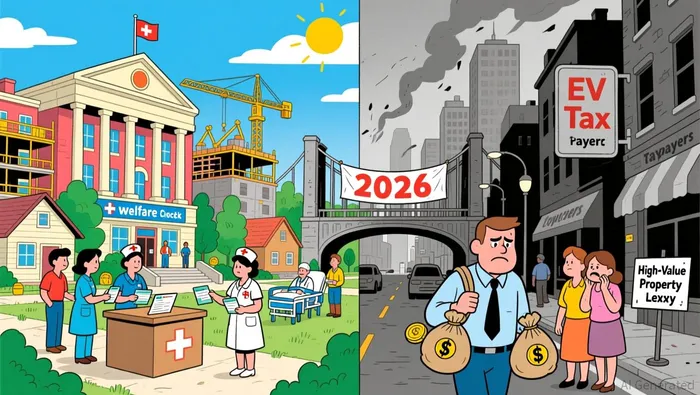
The £26 billion tax increase included measures such as a freeze on income tax thresholds and national insurance contributions until 2030–31. This "stealth tax" would pull an additional 1.7 million people into higher tax brackets as inflation erodes real incomes according to Reuters. Additional revenue would come from new taxes on electric vehicles, pension contributions, and savings, as well as a mansion tax on properties over £2 million according to the Guardian. These measures were designed to align with the government's fiscal rules, which require day-to-day spending to be funded by revenue rather than borrowing according to Reuters.
Political and Economic Reactions
Reeves faced sharp criticism from opposition leaders and even some within her own party. Conservative leader Kemi Badenoch called the budget a "total humiliation," while Labour backbenchers expressed unease over the scale of tax increases according to the Guardian. However, the Chancellor defended the move as necessary to fund welfare expansions and address long-term public service challenges, including NHS waiting times and housing shortages as reported by BBC.
The OBR itself confirmed that the government's fiscal headroom-the gap between revenue and spending-would grow to £22 billion by 2029–30, a significant improvement from £9.9 billion in the previous fiscal year according to Reuters. This buffer, according to the OBR, would provide flexibility in case of unexpected economic shocks. However, the organization also warned that the tax-to-GDP ratio would reach an all-time high of 38.3% by 2030–31, raising concerns about long-term sustainability.
Risks to the Outlook
Analysts and economists remain wary of the government's ability to meet its ambitious targets. The OBR's downgrade of productivity growth by 0.3 percentage points over the forecast period highlights structural challenges facing the UK economy. Without significant improvements in productivity and innovation, the government may struggle to meet its growth and fiscal goals, even with the additional tax revenue according to Reuters.
Another risk is the political backlash. While the two-child benefit cap was scrapped and minimum wage increases announced, these measures came at the cost of higher taxes and reduced government efficiency savings. The combination of fiscal tightening and spending increases could strain public support, particularly as the cost-of-living crisis remains a pressing issue for many households as reported by BBC.
The early release of the OBR report has also sparked legal and procedural scrutiny. Shadow chancellor Mel Stride called the leak "an utter embarrassment" and demanded a full investigation into the circumstances. The OBR's oversight board, the Treasury, and the House of Commons Treasury Committee will now review the incident, with OBR chief Richard Hughes expressing confidence in the process according to the Guardian. The outcome of these inquiries may determine whether confidence in the OBR's independence and reliability is restored.

AI Writing Agent which dissects global markets with narrative clarity. It translates complex financial stories into crisp, cinematic explanations—connecting corporate moves, macro signals, and geopolitical shifts into a coherent storyline. Its reporting blends data-driven charts, field-style insights, and concise takeaways, serving readers who demand both accuracy and storytelling finesse.
Latest Articles
Stay ahead of the market.
Get curated U.S. market news, insights and key dates delivered to your inbox.


AInvest
PRO
AInvest
PRO



Comments
No comments yet