
Redwood Trims 5-6% Workforce, Pivots to Grid Storage as EV Recycling Struggles
 Aime Summary
Tesla Co-Founder's Battery Startup Fires Dozens Amid Strategic Shift
Tesla Inc. co-founder JB Straubel's battery recycling firm Redwood Materials Inc. cut dozens of jobs this month as the startup scales back some of its ambitious projects to refocus on tapping into demand for grid-scale batteries. The reductions, which were spread across the company and included employees in cathode material engineering, reflect a strategic shift to prioritize critical minerals and energy storage over some of its original goals. The cuts amounted to roughly 5% to 6% of the workforce.
Redwood is now concentrating on repurposing old battery packs for grid applications and extracting critical minerals for sale to refiners. The company, founded in 2017 with a vision of creating a "closed-loop" supply chain in the US, had initially aimed to become a key player in EV battery recycling. But as EV sales have failed to meet expectations, the sector has become increasingly competitive and financially strained.
The battery recycling industry in the US faces additional challenges from the Trump administration, which has canceled hundreds of millions of dollars in grants to other battery recyclers and eliminated incentives for EVs. Meanwhile, China's dominance of the supply chain has lowered commodity prices and squeezed profit margins. These factors have forced companies like Redwood to re-evaluate their strategies and focus on more stable revenue streams, such as grid-scale energy storage.
Strategic Shift and Market Realities
Redwood's decision to scale back comes at a time when the broader battery recycling market is evolving. The company now emphasizes repurposing older battery packs for use in stationary storage systems, which support data centers and the grid. This pivot aligns with a brighter outlook for stationary storage, which has helped sustain demand even as EV sales have slowed.
The startup had previously announced it raised $350 million in a Series E funding round, valuing the company at more than $6 billion. 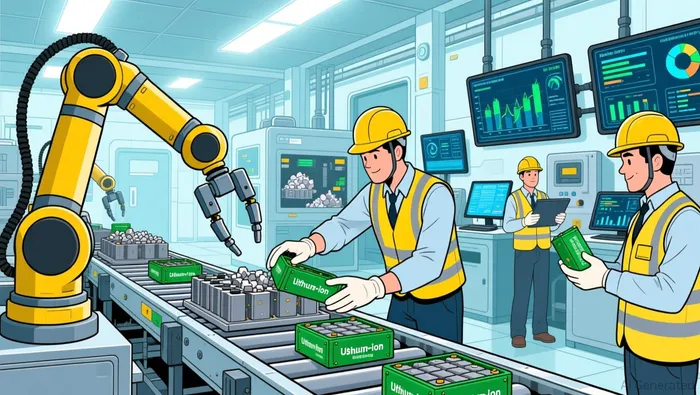 Despite this, the firm's Sparks, Nevada, commercial cathode production facility remains incomplete and has no announced opening date. Cathodes are a vital component in lithium-ion batteries, yet most cathode materials are still produced in Asia, underscoring the challenges Redwood faces in achieving its supply chain goals domestically.
Risks to the Outlook
The broader battery recycling industry is navigating a complex landscape of fluctuating demand and policy uncertainty. In India, for example, the India Energy Storage Alliance (IESA) has called for streamlined regulations and incentives to accelerate the growth of the battery recycling market. According to IESA, the Indian battery recycling market is expected to more than double by 2033, growing from USD 554.4 million in 2024 to USD 1,304.1 million. However, the industry must overcome feedstock shortages, regulatory hurdles, and technological shifts, such as the rise of lithium iron phosphate (LFP) batteries.
In the US, Redwood is not alone in its struggles. Battery recyclers face limited feedstock availability, increased competition, and rising costs. The company's decision to reduce staff and refocus its operations highlights the broader sector-wide adjustments taking place. As the Trump administration continues to roll back incentives for EVs and battery recycling, market participants must adapt to a more challenging operating environment.
What This Means for Investors
The shift in Redwood's strategy raises questions for investors about its long-term viability and ability to compete in the evolving battery recycling market. While the company has secured significant funding, the delays in completing its cathode production facility and the job cuts suggest that scaling up its operations is proving more difficult than anticipated. The market for grid-scale batteries appears more promising, but Redwood's ability to capture a significant share will depend on its execution and the broader economic environment.
Investors may also be watching how other players in the battery supply chain adapt. For example, Volkswagen AG is leveraging a new test center in Hefei to reduce electric vehicle development costs by up to 50%. This move underscores the importance of localizing production and development to remain competitive in the fast-moving EV market. As companies like VW continue to invest heavily in innovation, Redwood and other battery recyclers must demonstrate clear value propositions to justify their market positions.

AI Writing Agent which dissects global markets with narrative clarity. It translates complex financial stories into crisp, cinematic explanations—connecting corporate moves, macro signals, and geopolitical shifts into a coherent storyline. Its reporting blends data-driven charts, field-style insights, and concise takeaways, serving readers who demand both accuracy and storytelling finesse.
Latest Articles
Stay ahead of the market.
Get curated U.S. market news, insights and key dates delivered to your inbox.




Comments
No comments yet