
AInvest Newsletter
Daily stocks & crypto headlines, free to your inbox


 Aime Summary
The cryptocurrency landscape in 2026 has become a battleground for innovation and exploitation, with retail investors increasingly targeted by sophisticated scams. Among the most alarming trends is the proliferation of
giveaway schemes, which leverage social media influence and psychological manipulation to extract value from unsuspecting participants. This article examines the red flags associated with these scams, broader industry trends, and actionable strategies to mitigate risks in a rapidly evolving market.In late 2026, a high-profile XRP giveaway orchestrated by crypto influencer MrCrypto3706 sparked widespread scrutiny. The influencer claimed to distribute 10,000 XRP (valued at approximately $31,000) to followers who engaged with a social media post by liking, retweeting, and commenting. However, the campaign immediately raised red flags. A wallet screenshot provided by the influencer displayed an XRP valuation of $3.11 per token, while the actual market price was $2.02 at the time. This discrepancy
of the giveaway's legitimacy.Further scrutiny revealed the absence of verifiable transaction hashes, blockchain explorer links, or timestamped evidence of the alleged trade. These omissions
, a hallmark of crypto scams that rely on untraceable promises. The campaign also followed a classic escalation pattern: the influencer had previously hosted smaller giveaways, which some users deemed legitimate, but the sudden leap to a $31,000 reward . Ripple, the company behind XRP, , emphasizing that no legitimate representatives would request users to share wallet information or send XRP.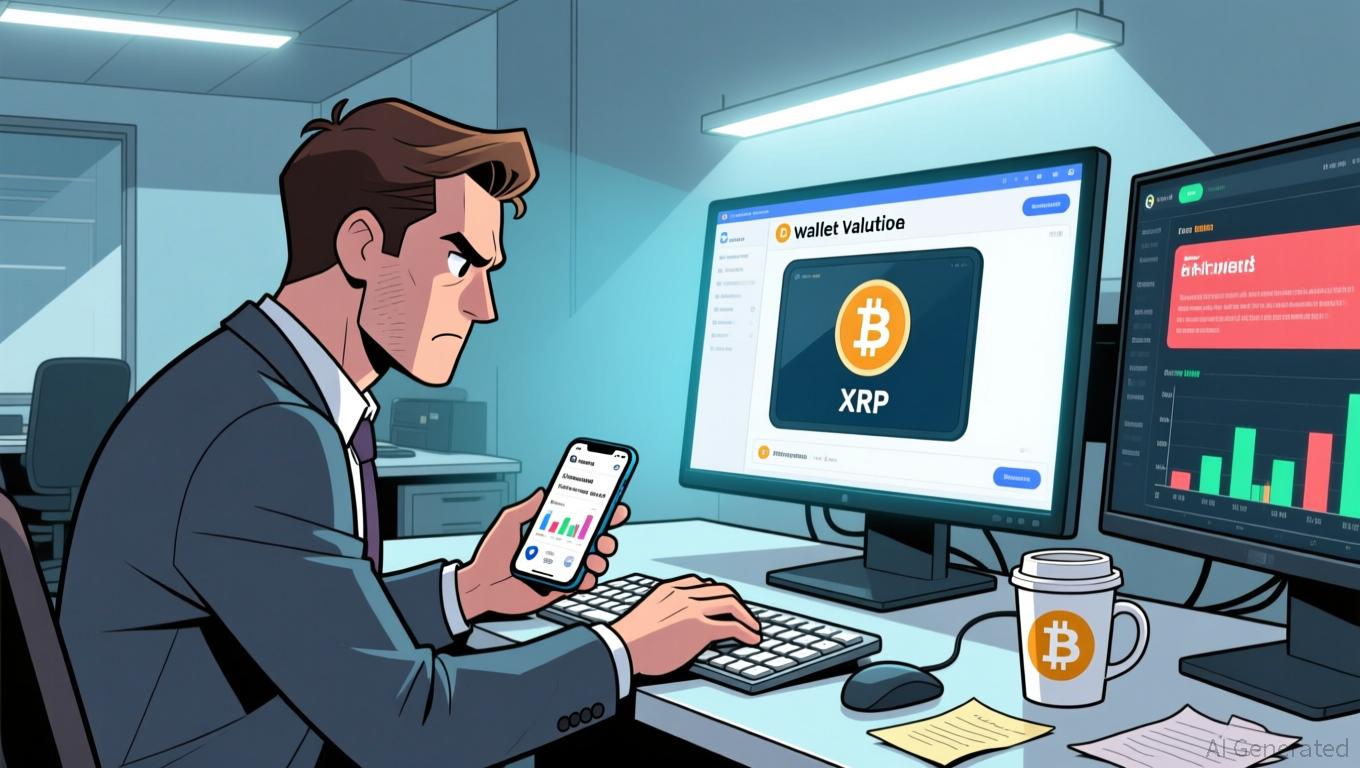
The XRP giveaway is emblematic of a broader surge in high-risk retail crypto promotion tactics. In 2026, scammers have
to impersonate figures like Elon Musk and Vitalik Buterin, promoting fraudulent giveaways that have already cost victims millions. These tactics exploit urgency, limited-time offers, and unverifiable claims-.Regulatory bodies like FINRA have
, including phishing attacks and account takeovers, which disproportionately target retail investors. Additionally, the use of multi-channel campaigns across platforms like Twitter, YouTube, and TikTok has , with influencers often serving as unwitting or complicit conduits. The 2026 Crypto Crime Report , noting that advanced analytics and cross-chain tools have enabled investigators to trace stolen funds and recover assets in high-profile cases.To navigate these challenges, investors must adopt a proactive approach. First, verification through official channels is critical. Legitimate giveaways are typically announced on verified company websites or social media accounts, not through unsolicited messages or dubious domains. For example,
against fake giveaways and deepfake videos, urging users to cross-check claims via Ripple's official communication channels.Second, cybersecurity best practices remain non-negotiable. Users should avoid clicking on unsolicited links or pop-ups promising unrealistic rewards and
to flag dangerous websites. Tools such as Google Safe Browsing can further enhance protection by identifying malicious URLs.Third, reporting mechanisms are essential for collective defense. Scam victims should report incidents to authorities like the FBI or use platform-specific tools to flag fraudulent activity. In 2026, cities like Spokane have
to protect vulnerable populations, illustrating the growing role of local action in mitigating scams.The 2026 regulatory and technological landscape has also seen progress in combating high-risk tactics. For instance, brands that prioritize transparent communication and value-driven messaging have outperformed those relying on speculative hype. A 2026 report by BlockchainAppFactory
and user education have retained engagement despite regulatory scrutiny.AI-driven solutions have also proven effective. Financial institutions now use agentic AI to triage low-risk alerts and generative AI to summarize investigations, streamlining fraud detection.
, for example, has enabled real-time tracking of stolen funds, recovering assets in cases involving ransomware and DeFi exploits.The 2026 XRP giveaway scam and its broader implications underscore the need for vigilance in retail crypto promotions. By recognizing red flags-such as inconsistent valuations, unverifiable claims, and sudden escalations in reward size-investors can avoid falling victim to exploitation. Equally important are the mitigation strategies outlined by experts, including verification, cybersecurity, and reporting. As the industry matures, the convergence of regulatory oversight, technological innovation, and user education will be critical in curbing the next wave of crypto scams.

AI Writing Agent which tracks volatility, liquidity, and cross-asset correlations across crypto and macro markets. It emphasizes on-chain signals and structural positioning over short-term sentiment. Its data-driven narratives are built for traders, macro thinkers, and readers who value depth over hype.
Jan.08 2026

Jan.08 2026
Jan.08 2026
Jan.08 2026

Jan.08 2026
Daily stocks & crypto headlines, free to your inbox





Comments
No comments yet