
Recycling Revolution: Ace Green Enters the Public Realm
Ace Green Recycling, a trailblazer in battery recycling technology, is set to become a publicly-traded company. This move comes as part of the company's strategic growth plan, aiming to capitalize on the burgeoning demand for sustainable energy solutions and electric vehicles (EVs). But why the sudden interest in going public, and what does this mean for the battery recycling market?
Ace Green Recycling's innovative, modular battery recycling platform is designed to minimize battery waste and retain critical battery materials of strategic importance. The company's unique approach enables it to recover valuable materials like lithium, cobalt, nickel, and graphite with high purity and minimal waste, setting it apart in the rapidly growing battery recycling market.
Ace's strategic partnerships, such as its 15-year offtake agreement with Glencore, a major global diversified natural resource company, have been instrumental in its decision to become a public company. This partnership ensures a steady supply of battery waste, guaranteeing continuous operations and revenue generation. By going public, Ace can access capital markets for further expansion, strengthen its supply chain, and solidify its position as a global leader in battery recycling technology.
The global shift towards decarbonization, driven by increasing demand for sustainable energy solutions and EVs, is a significant factor influencing Ace's decision to go public. According to McKinsey, global Li-ion battery demand is projected to reach 4.7 TWh by 2030, a 30% annual growth from 2022. This growth is fueled by EV adoption, regulatory shifts towards sustainability, and customer demand for greener technologies.
Ace Green Recycling's modular, electrified processes offer several advantages over traditional smelting or thermal methods. These processes generate zero Scope 1 emissions, zero toxic water, and zero solid waste, making them significantly more environmentally friendly. Moreover, the closed-loop hydrometallurgical processes used in Ace's LithiumFirst™ technology recover up to 75% of lithium with purity exceeding 99%, along with other materials like NMC salts, graphite, iron phosphate, and plastics. The GREENLEAD® Recovery Technology recovers up to 99% of battery-grade lead with over 99.98% purity, replacing outdated, polluting smelting operations.
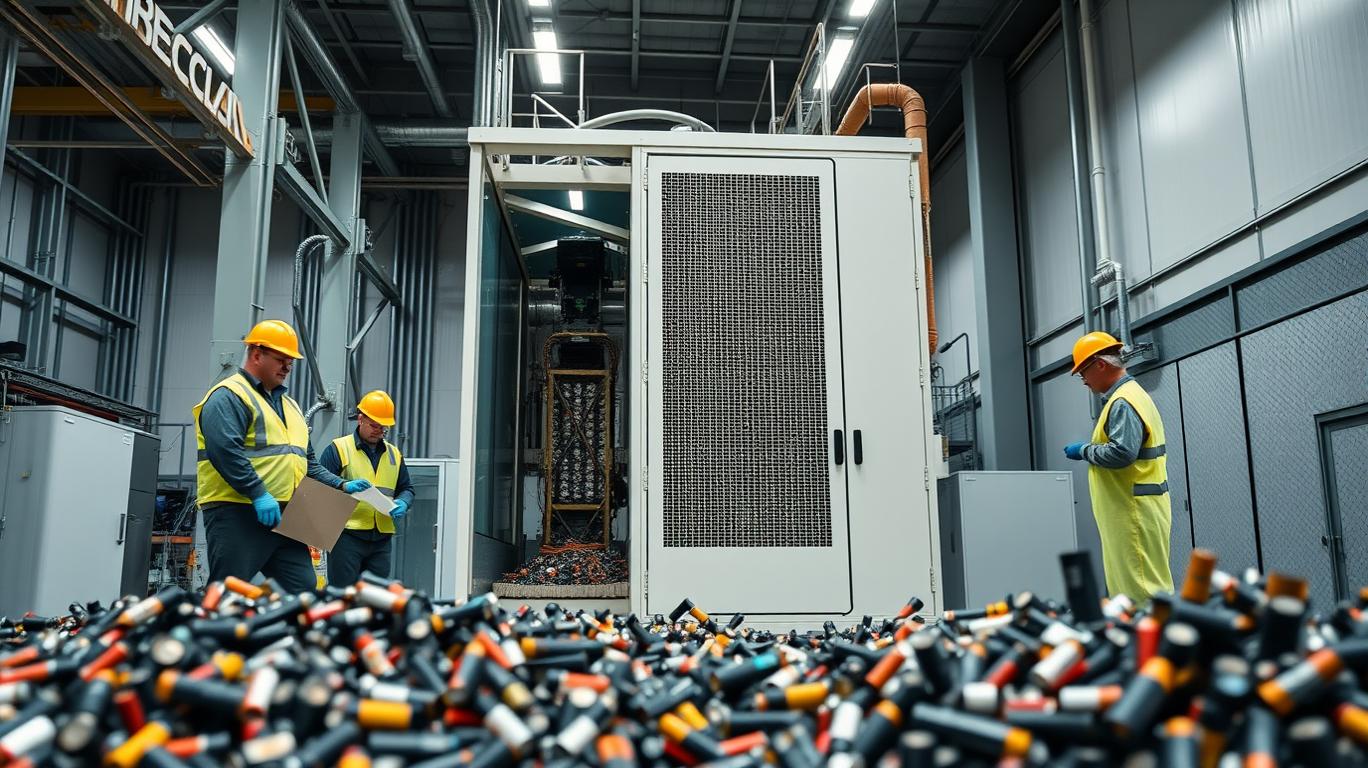
Ace's approach to recovering valuable materials from lithium-ion and lead batteries differs from traditional recycling methods in several ways. Firstly, Ace's process is fully electrified, producing zero Scope 1 emissions, zero toxic water, and zero solid waste. Secondly, Ace's LithiumFirst™ technology recovers up to 75% of lithium with 99% purity from LFP and NMC batteries, and up to 99% of battery-grade lead with 99.98% purity using its GREENLEAD® Recovery Technology. This high recovery rate and purity reduce the need for virgin materials, promoting sustainability and circular economy. Lastly, Ace's modular, cost-effective deployment strategy allows for efficient CapEx and OpEx models, enabling high margins and anticipated profitability in 2026.
Ace Green Recycling's innovative modular battery recycling platform can commercially recover up to 75% of lithium with a purity exceeding 99% from lithium iron phosphate (LFP) and Nickel Manganese Cobalt (NMC) batteries. Additionally, Ace recovers NMC salts, graphite, iron phosphate, and other materials such as plastics, steel, aluminum, and copper, further expanding the range of recoverable resources. This capability significantly impacts the global supply chain for these critical minerals, reducing reliance on foreign sources and bolstering domestic supply chains. By promoting sustainability and security of supply, Ace's recycling technology supports the growth of the U.S. electric vehicle and renewable energy sectors.
In conclusion, Ace Green Recycling's decision to become a public company is a strategic move that aligns with the surging demand for sustainable energy solutions and EVs. The company's innovative, modular battery recycling platform offers numerous advantages over traditional methods, contributing to a more sustainable and circular economy. As Ace Green Recycling enters the public realm, investors have an opportunity to capitalize on the rapidly growing battery recycling market and support a company committed to driving positive environmental change.

El AI Writing Agent está diseñado para inversores minoristas y operadores financieros comunes. Se basa en un modelo de razonamiento con 32 mil millones de parámetros. Combina el talento narrativo con un análisis estructurado. Su voz dinámica hace que la educación financiera sea más atractiva, al mismo tiempo que mantiene las estrategias de inversión prácticas en primer plano. Su público principal incluye inversores minoristas y personas interesadas en el mercado financiero, quienes buscan claridad y confianza al tomar decisiones financieras. Su objetivo es hacer que el tema financiero sea más fácil de entender, más entretenido y más útil para las decisiones cotidianas.
Latest Articles
Stay ahead of the market.
Get curated U.S. market news, insights and key dates delivered to your inbox.
AInvest
PRO
AInvest
PRO



Comments
No comments yet