
Reconnecting Markets: Lufthansa's Return to Riyadh and the Broader Implications for Global Trade and Tourism
 Aime Summary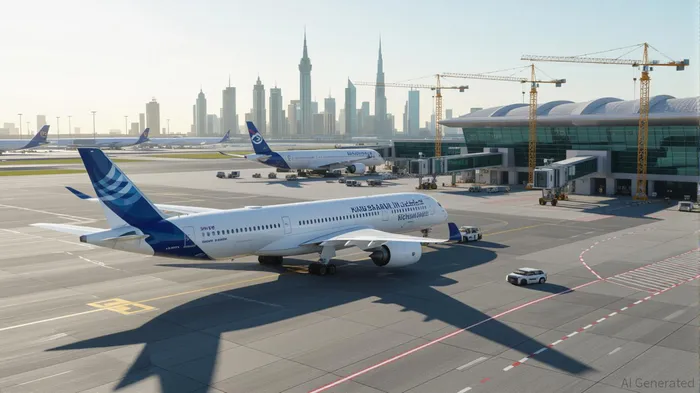
The resumption of Lufthansa's direct flights from Munich to Riyadh on October 26, 2025, is more than a logistical update—it is a signal of a broader economic realignment. After an eight-year hiatus, the airline's return to the Saudi capital marks a strategic bet on the Kingdom's Vision 2030, a blueprint to diversify its economy and position Riyadh as a global tourism and business hub. For investors, this move underscores a critical inflection point: the reconnection of markets in emerging economies, driven by the reopening of travel corridors and the acceleration of cross-border trade.
The Airline as a Catalyst for Economic Integration
Lufthansa's decision to reintroduce the Munich-Riyadh route is not merely a commercial one. It aligns with Saudi Arabia's $100 billion investment in aviation infrastructure and its ambition to host events like the 2030 World Expo and the 2034 FIFA World Cup. The airline's use of the fuel-efficient Airbus A350-900, with 293 seats across three classes, reflects a dual focus on sustainability and passenger experience. But the real story lies in the ripple effects of this route. By linking Europe's industrial heartland to Saudi Arabia's rapidly modernizing economy, Lufthansa is facilitating a flow of capital, talent, and goods that could reshape regional trade dynamics.
The Lufthansa Group, including Eurowings and ITA Airways, now operates 22 weekly flights to Saudi cities, contributing to over 120 weekly flights to the Middle East. This expansion is not isolated. It mirrors a global trend: as travel restrictions ease, airlines are reconnecting markets that had been fragmented by the pandemic. For investors, this means opportunities in sectors that thrive on mobility—tourism, logistics, and real estate—particularly in regions like Saudi Arabia, where government-backed megaprojects are creating fertile ground for growth.
Strategic Asset Allocation in Emerging Markets
The reopening of travel corridors has unlocked new avenues for strategic asset allocation. In Saudi Arabia, the real estate sector is a prime example. The first quarter of 2025 saw $109 billion in real estate transactions, driven by foreign ownership reforms and projects like NEOM's The Line and the Red Sea's Coral Bloom resort. PwC projects a 30% growth in the sector by year-end, with $38 billion in new developments. For investors, this points to opportunities in co-investment structures, usufructs, and REITs, which offer both income and capital appreciation.
Renewable energy is another sector poised for growth. Saudi Arabia's $8.3 billion solar and wind power consortium, led by ACWA Power and Aramco, aims to generate 15 GW of electricity by 2028. With foreign ownership permitted in utility-scale projects, investors can tap into long-term Power Purchase Agreements (PPAs) and sovereign-backed guarantees. The Jafurah green hydrogen project, valued at $110 billion, further cements the Kingdom's role as a renewable energy exporter, with green ammonia destined for Europe and Asia.
Tourism and the Rise of the “New Silk Road”
Tourism is the linchpin of Saudi Vision 2030. The Kingdom's $1 trillion investment in tourism includes luxury resorts, cultural landmarks, and sports infrastructure. The first quarter of 2025 saw 10 million international tourists, a 40% increase from 2024. With the Lufthansa route adding direct access to Europe, the sector is set to attract high-net-worth travelers and business tourists.
Investors should consider hospitality chains, cultural event platforms, and airport infrastructure. The Tourism Investment Enabling Law offers VAT exemptions and simplified licensing, making it easier to enter the market. For example, Six FlagsFUN-- Qiddiya and Dragon Ball Park are not just entertainment venues—they are part of a broader ecosystem that includes retail, dining, and wellness tourism.
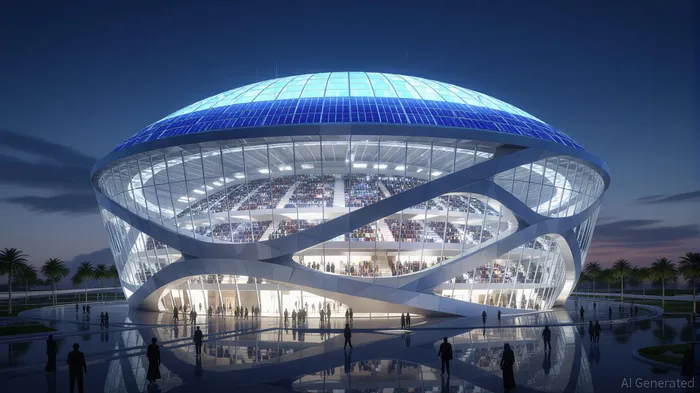
The sports and wellness sectors are also gaining traction. Saudi Arabia's sports economy grew from SAR 5 billion in 2016 to SAR 32 billion in 2025, with the 2034 World Cup driving infrastructure investments. Wellness tourism, including regenerative health services and fitness centers, is expanding as the population becomes more health-conscious. Telehealth and sports medicine are emerging niches, supported by regulatory frameworks that allow cross-border medical services.
Cross-Border Trade and the Geopolitical Shift
The reopening of travel corridors is not just about tourism—it's about trade. Saudi Arabia's trade with China, for instance, has surged from $77.3 billion in 2018 to $139.4 billion in 2023, driven by raw material exports and manufacturing imports. Similarly, India's services exports, bolstered by 1,600 global capability centers (GCCs), are projected to reach $100 billion by 2030. These trends highlight the importance of investing in logistics, supply chain infrastructure, and digital services.
However, challenges remain. Infrastructure gaps in Southeast Asia and demographic shifts, such as low fertility rates, could hinder long-term growth. Investors must balance optimism with caution, prioritizing sectors with strong government backing and ESG alignment.
Conclusion: A Call for Strategic Patience
Lufthansa's return to Riyadh is a microcosm of a larger trend: the reconnection of global markets through travel and trade. For investors, the key is to identify sectors that benefit from this realignment—real estate, renewable energy, tourism, and logistics—while leveraging the regulatory and demographic tailwinds in emerging markets. Saudi Arabia's Vision 2030, with its focus on diversification and sustainability, offers a blueprint for long-term value creation.
As the world moves beyond pandemic-era disruptions, the winners will be those who recognize that the re-opening of corridors is not just about movement—it's about momentum. The question for investors is not whether to participate, but how to position for the next phase of global integration.

Delivering real-time insights and analysis on emerging financial trends and market movements.
Latest Articles
Stay ahead of the market.
Get curated U.S. market news, insights and key dates delivered to your inbox.






Comments
No comments yet