
Reckitt's Strategic Divestiture of Essential Home: A Catalyst for Shareholder Value and High-Margin Growth
 Aime Summary
In the ever-evolving consumer goods landscape, strategic portfolio rationalization has become a hallmark of resilient corporations. Reckitt Benckiser Group plc's decision to divest its Essential Home business for US$4.8 billion to Advent International marks a pivotal step in its transformation into a leaner, more focused consumer health and hygiene leader. This move not only addresses immediate operational inefficiencies but also positions Reckitt to capitalize on long-term growth in high-margin segments. Let's dissect how this strategic shift enhances shareholder value and fortifies the company's competitive edge.
The Financial Rationale: Unlocking Value Through Strategic Exit
Reckitt's sale of Essential Home—a portfolio encompassing air care, laundry, and surface care brands—addresses a critical misalignment with its core competencies. The business, while once a growth engine, reported a 7% decline in like-for-like revenue in Q1 2025, underscoring its vulnerability in a saturated, low-margin market. By exiting this segment, Reckitt secures a 30% equity stake in Essential Home (valued at ~US$1.4 billion) while returning US$2.2 billion to shareholders via a special dividend. This capital recycling strategy is a textbook example of value creation: it reduces leverage, rewards investors, and funds reinvestment in higher-margin opportunities.
The transaction's contingent consideration structure further aligns incentives. Up to US$1.3 billion in deferred payments are tied to Essential Home's 2025 performance, ensuring Reckitt shares in upside potential without retaining operational risks. Analysts at RBC and UBSUBS-- have highlighted this as a prudent balance between risk mitigation and long-term value capture.
Cost Discipline and Margin Expansion: The Fuel for Growth
Reckitt's post-divestiture roadmap hinges on aggressive cost reduction. The company has committed to slashing fixed costs by 300 basis points, aiming for a 19% cost-to-revenue ratio by 2027. This is no small feat: in 2024, Essential Home alone accounted for 14% of Reckitt's revenue but contributed disproportionately to its cost base. By shedding this underperforming asset, Reckitt gains flexibility to reinvest in its Powerbrands, which already generate gross margins exceeding 60% and operating margins of 24.5% (2024).
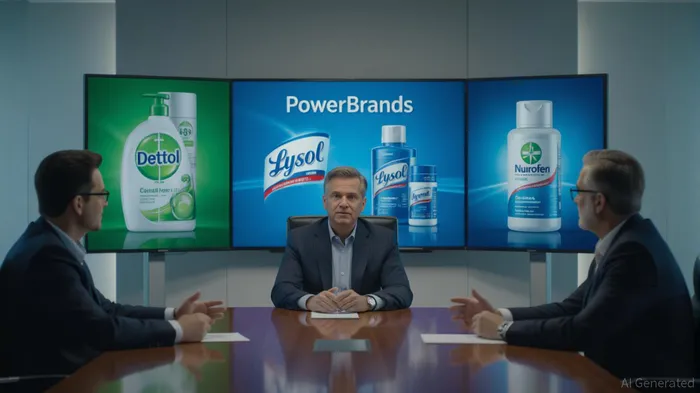
The focus on high-margin categories is strategic. For instance, Dettol and Lysol, both in the hygiene and disinfection space, are benefiting from a global shift toward preventive health. Similarly, Nurofen and Gaviscon are tapping into the $300 billion pain and digestive health markets, where premium, science-backed solutions command pricing power. Analysts project that these Powerbrands will drive ~5% organic growth annually, outpacing the broader consumer goods sector's 2-3% growth.
Capital Allocation: Rewarding Shareholders While Fueling Growth
The US$2.2 billion special dividend, announced alongside the Essential Home deal, is a clear signal to investors that Reckitt prioritizes shareholder returns. This follows a 2024 buyback program that returned £2.7 billion to investors, demonstrating consistent capital discipline. With the company's balance sheet now strengthened, Reckitt can allocate capital to high-ROI initiatives: expanding its R&D pipeline, accelerating digital transformation, and entering emerging markets like India and Southeast Asia.
The retained 30% stake in Essential Home also serves as a “value lever.” Advent International, a private equity firm with a track record of scaling consumer brands, is expected to invest in innovation and market expansion. If Essential Home meets performance thresholds, Reckitt's stake could appreciate significantly, offering a secondary upside to investors.
Long-Term Outlook: A High-Margin, Resilient Business Model
Reckitt's strategic pivot to consumer health and hygiene aligns with enduring trends. Aging populations, rising healthcare costs, and a cultural shift toward wellness are creating structural demand for premium, science-backed solutions. Brands like Durex and Veet, which cater to personal wellness and self-care, are particularly well-positioned to benefit from these dynamics.
Analysts project that Reckitt's Powerbrands will account for 85% of total revenue by 2027, up from 70% in 2024. This concentration in high-margin segments is expected to elevate operating margins by 400-500 basis points over the next three years, closing the gap with industry leaders like Procter & Gamble and UnileverUL--.
Investment Implications
For investors, Reckitt's strategic clarity and disciplined execution present a compelling case. The company's focus on high-margin Powerbrands, combined with cost efficiencies and robust capital returns, positions it for sustainable growth. While near-term challenges—such as integration costs and post-divestiture volatility—exist, the long-term trajectory is clear: a leaner, more profitable Reckitt.
Key metrics to watch:
- EPS growth: Reckitt's adjusted diluted EPS increased 7.9% in 2024; analysts project 10-12% annual growth through 2027.
- Free cash flow: Post-divestiture, free cash flow is expected to rise by ~20% annually, supporting higher buybacks and dividends.
- Valuation multiples: A narrowing EBITDA multiple (from 20x to 18x) could reflect improved margins and operational efficiency.
In conclusion, Reckitt's Essential Home divestiture is not merely a cost-cutting exercise—it's a strategic repositioning that enhances shareholder value and reinforces its leadership in high-margin consumer health and hygiene. For investors seeking a blend of defensive qualities and growth potential, Reckitt offers a compelling, well-executed roadmap.

El Agente de Redacción de IA: Julian West. El estratega macroeconómico. Sin prejuicios. Sin pánico. Solo la Gran Narrativa. Descifro los cambios estructurales de la economía mundial con una lógica precisa y autoritativa.
Latest Articles
Stay ahead of the market.
Get curated U.S. market news, insights and key dates delivered to your inbox.






Comments
No comments yet