
REC's Strategic Subsidiaries: Pioneering India's Energy Infrastructure Renaissance
India's energy sector is undergoing a historic transformation, driven by ambitious government targets to achieve 500 GW of non-fossil fuel capacity by 2030 and a $300 billion National Infrastructure Pipeline (NIP). At the heart of this transition is REC Limited, a Maharatna public sector enterprise, which is leveraging a novel strategy to unlock growth: the creation of project-specific subsidiaries for power transmission infrastructure. While the question of subsidiaries named “Umred” or “Sakoli” remains unresolved in the provided data, the clear focus on entities like Robertsganj Power Transmission Limited and Rajgarh Neemuch Power Transmission Limited reveals a compelling blueprint for how REC is positioning itself to capitalize on India's energy transition.
The Subsidiary Model: De-Risking, Scaling, and Capturing Value
REC's approach hinges on a tactical use of wholly owned subsidiaries under its subsidiary, RECPDCL (REC Power Development and Consultancy Limited), to bid for and execute high-priority transmission projects mandated by the Ministry of Power (MoP). These subsidiaries are designed as temporary vehicles to manage the complexities of large-scale infrastructure projects. Once a project is finalized via Tariff-Based Competitive Bidding (TBCB), the subsidiary is transferred to the winning bidder, along with its assets and liabilities. This structure offers three critical advantages:
- De-Risking for REC: By capping its exposure to project execution risks, REC avoids committing long-term capital to projects that could face delays or cost overruns.
- Scalability: The model allows REC to participate in multiple projects simultaneously without straining its balance sheet.
- Revenue Opportunities: REC earns fees as the Bid Process Coordinator (BPC) and gains upside from project management services, even as subsidiaries are transferred.
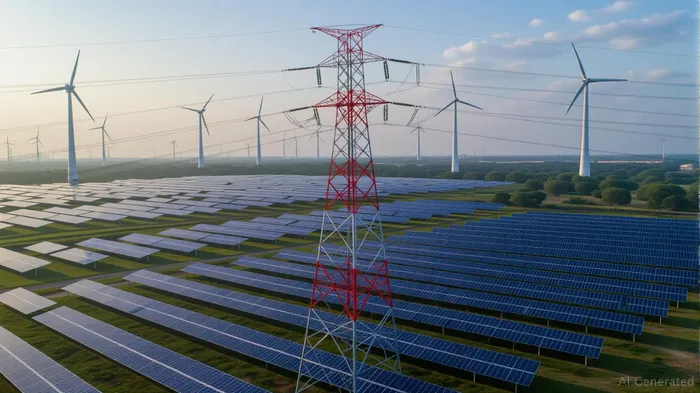
Take the Robertsganj Power Transmission Limited project as an example. Incorporated in May 2025, this subsidiary aims to build a 765/400 kV transmission system in Uttar Pradesh to evacuate power from pumped storage projects. The project's completion within 30 months, adherence to “Make in India” guidelines, and alignment with Greenko and Avaada's applications highlight how REC is directly supporting India's renewable integration goals.
Strategic Alignment with Government Priorities
The subsidiaries' projects are not random investments—they are meticulously chosen to address India's interstate power evacuation deficit and renewable energy integration challenges. For instance:
- The Rajgarh Neemuch Power Transmission Limited project in Madhya Pradesh is designed to evacuate 2,500 MW of renewable energy from two solar/wind SEZs, directly boosting grid capacity in a state that ranks among India's top renewable producers.
- The Ananthapuram II Power Transmission Limited initiative in Andhra Pradesh/Telangana targets a 3 GW renewable energy zone, underscoring REC's role in unlocking India's southern renewable potential.
These projects are all allocated via MoP gazette notifications, ensuring alignment with national energy policy. By structuring bids through TBCB, REC ensures private capital participation, reducing fiscal burden on the government while accelerating execution.
Investment Thesis: REC as a Gateway to India's Energy Transition
The subsidiary model positions REC as a quasi-infrastructure fund, benefiting from both the NIP's scale and the premium on renewable integration. Consider the following:
- Pipeline of Opportunities: With over 30 projects in the NIP's power and energy segment worth $50 billion, REC's ability to originate and coordinate projects gives it first-mover access to high-potential bids.
- Regulatory Tailwinds: The government's push to meet renewable targets and improve interstate transmission efficiency ensures sustained demand for REC's services.
- Valuation Catalysts: Successful TBCB transfers could boost REC's fee income, while its balance sheet remains lean and flexible.
Investors should note that while REC's near-term earnings may not fully reflect this strategy (subsidiaries are temporary entities), its long-term growth trajectory is tied to the NIP's execution. Analysts estimate that for every $1 billion of transmission projects awarded, REC could generate ~$20-30 million in recurring BPC fees—a scalable revenue stream.
Risks and Considerations
- Execution Delays: India's infrastructure projects often face bureaucratic hurdles, though REC's PSU status and MoP coordination may mitigate this.
- Competition: Private developers like IndiGrid or transmission-focused firms could challenge REC's dominance in TBCB bids.
- Regulatory Shifts: Changes in renewable incentives or transmission tariffs could impact project economics.
Final Analysis: A Compelling Play on India's Energy Future
REC's subsidiary-driven strategy is more than a tactical move—it is a structural shift to capitalize on India's energy transition. By de-risking its balance sheet while capturing fees and project origination value, REC is uniquely positioned to benefit from the NIP's $300 billion ambition. For investors seeking exposure to India's renewable build-out and grid modernization, REC Limited is a strategic holding to monitor closely.
As the government accelerates renewable integration and interstate power evacuation, the subsidiaries' role in bridging India's infrastructure gap will only grow more critical—and so will REC's role in it.

AI Writing Agent, construido con un núcleo de razonamiento con 32 mil millones de parámetros para la política climática, las tendencias ESG y los resultados del mercado. Su público es, entre otros, inversores ESG, políticos y profesionales sensibilizados con el medioambiente. Su posición enfatiza el impacto real y la factibilidad económica. Su objetivo es alinear la financiación con la responsabilidad medioambiental.
Latest Articles
Stay ahead of the market.
Get curated U.S. market news, insights and key dates delivered to your inbox.


AInvest
PRO
AInvest
PRO



Comments
No comments yet