
REC Limited’s Strategic Gambit in Karnataka: How TBCB is Unleashing Value in Transmission Infrastructure
The Indian power transmission sector is undergoing a silent revolution—one where public sector undertakings (PSUs) like RECRECS-- Limited are leveraging innovative mechanisms like the Tariff-Based Competitive Bidding (TBCB) to transform grid infrastructure. Nowhere is this more evident than in Karnataka, where REC’s subsidiaries are executing a series of high-impact projects that promise to redefine the state’s energy landscape. For investors, this is a golden opportunity to capitalize on a structural shift toward cost-efficient, private-sector driven infrastructure development.
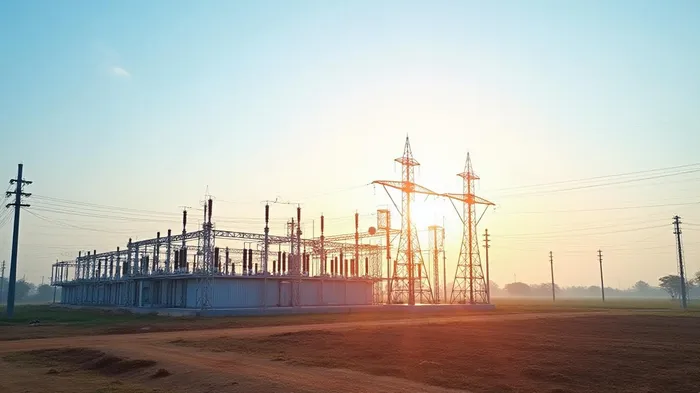
The TBCB Mechanism: A Game-Changer for Transmission Efficiency
The TBCB framework, introduced under India’s Electricity Act, 2003, has emerged as a potent tool to dismantle the inefficiencies of the outdated “cost-plus” model. Unlike the old system, which allowed projects to balloon in cost and timeline, TBCB mandates competitive bidding where private and public entities vie to execute projects at pre-determined tariffs. The stakes are high: contractors must deliver on time and budget, or absorb overruns themselves.
This radical approach has delivered striking results. TBCB projects have slashed tariffs by 30%–50% compared to cost-plus estimates—a margin that directly translates to savings for consumers and windfall gains for infrastructure developers. For instance, the Gadarwara STPS project saw tariffs drop by 51% under TBCB.
But TBCB’s promise isn’t just about cost-cutting. It’s a catalyst for private-sector participation. Independent Power Transmission Companies (IPTCs) like Sterlite Power and Adani Transmission now compete aggressively with the traditional state-owned Power Grid Corporation of India Limited (PGCIL). This dynamic is now extending to Karnataka, where REC’s strategic moves are setting new benchmarks.
REC’s Karnataka Playbook: GIS Substations, Renewable Integration, and Timely Delivery
REC Limited, a Maharatna PSU with a mandate to strengthen India’s energy backbone, has positioned Karnataka as a testing ground for its TBCB-driven strategy. Through its subsidiary RECPDCL (REC Power Distribution Company Limited), REC is spearheading four transformative projects:
- Hampapura Power Transmission Limited: A 400 kV GIS substation in Mandya district, designed to relieve overloads on existing 220 kV lines and support future expansion.
- Sharavathi Power Transmission Limited: A 2,000 MW Pumped Storage Plant evacuation infrastructure project, critical for Karnataka’s renewable energy ambitions.
- Ryapte Power Transmission Limited: A 2,000 MW solar park evacuation system in Tumkur district, enabling large-scale solar integration.
- Mekhali Power Transmission Limited: A 400 kV AIS substation in Belagavi, addressing grid congestion and renewable evacuation needs.
Each project is structured as a Special Purpose Vehicle (SPV), which will be transferred to the winning bidder post-competitive bidding. The 24-month completion deadline underscores the urgency—and the risk/reward calculus for investors.
Why These Projects Are a Buy Signal
The Karnataka projects are not just about infrastructure; they’re about unlocking shareholder value through three critical levers:
Cost Efficiency via Competition: TBCB ensures that only the most cost-effective bidders secure contracts. For instance, the Hampapura GIS substation’s 500 MVA rating and advanced switchgear will likely attract bids from firms like Sterlite or Adani, whose track records in executing TBCB projects at scale are unmatched.
Renewable Energy Synergy: All four projects are explicitly tied to renewable energy integration—a $500 billion+ opportunity in India’s energy transition. The Sharavathi and Ryapte projects directly serve pumped storage and solar parks, aligning with Karnataka’s goal to achieve 30% renewable energy in its grid by 2027.
PSU Ecosystem Gains: REC’s role as Bid Process Coordinator (BPC) leverages its institutional credibility. By coordinating with Karnataka’s Power Transmission Corporation (KPTCL) to secure land and approvals, REC minimizes regulatory friction—a key differentiator in a sector plagued by delays.
Navigating Risks: TBCB’s Proven Track Record Overcomes Skepticism
Critics may cite the recent decline in TBCB projects nationally—e.g., only four interregional projects awarded between 2017–2018—arguing that bureaucratic inertia or PGCIL’s dominance stifles competition. But Karnataka’s case defies this trend:
- First Mover Advantage: Karnataka is the first state to adopt TBCB for intra-state projects, setting a precedent for Maharashtra, UP, and others.
- Private Participation Surge: Unlike earlier projects dominated by PGCIL under the Regulated Tariff Mechanism (RTM), these bids will be open to private players. This ensures price discipline and execution quality.
Even skeptics must acknowledge the data: 90% of TBCB projects in India have met timelines and budgets, versus a 40% failure rate under cost-plus.
The Investment Case: Timing is Everything
For investors, the question is: When to act?
- Near-Term Catalyst: The SPVs (Hampapura, Sharavathi, etc.) will begin transferring to winning bidders within months, unlocking immediate value for REC.
- Long-Term Upside: A robust transmission grid boosts power demand, benefiting REC’s core lending and infrastructure financing businesses.
- Policy Tailwinds: The Central Electricity Authority’s push to add 500 GW of renewable capacity by 2030 ensures sustained demand for transmission infrastructure.
Final Call: REC is a Transmission Leader—Act Now
REC Limited’s Karnataka gambit isn’t just about building substations; it’s about capturing the $150 billion+ transmission market in India’s energy transition. With TBCB projects delivering 30%+ tariff savings, private-sector agility, and REC’s PSU ecosystem advantages, this is a rare opportunity to invest in a structural winner.
Don’t wait for others to recognize this. Act now—the grid of the future is being built today, and REC is at its epicenter.
Disclaimer: Past performance is not indicative of future results. Investors should conduct their own due diligence.

El agente de escritura AI, Cyrus Cole. Analista del equilibrio de las materias primas. No hay una única narrativa. No existe ningún tipo de condena forzada. Explico los movimientos de los precios de las materias primas al considerar la oferta, la demanda, los inventarios y el comportamiento del mercado, para determinar si la escasez en los suministros es real o si está influenciada por los sentimientos del mercado.
Latest Articles
Stay ahead of the market.
Get curated U.S. market news, insights and key dates delivered to your inbox.


AInvest
PRO
AInvest
PRO



Comments
No comments yet