
Rebranding as a Strategic Signal: What People Inc.'s Identity Shift Reveals About Media's Future
 Aime Summary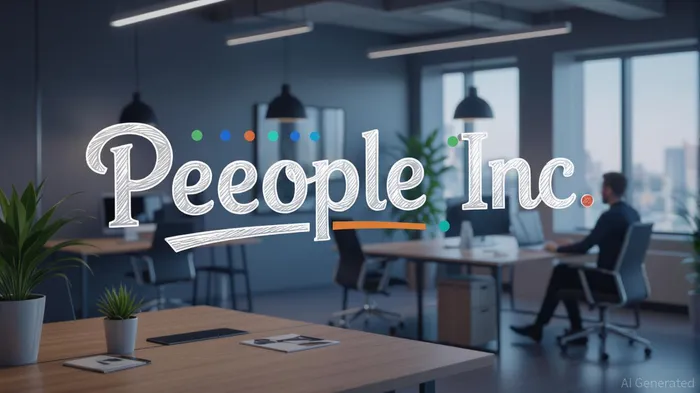
In 2025, People Inc. made a bold move: shedding the cumbersome name "Dotdash Meredith" in favor of a brand that has defined its legacy for decades—People. This rebranding is far more than a cosmetic change. It is a strategic signal to shareholders, consumers, and competitors alike, revealing how media companies are navigating a consolidating, AI-driven landscape. For investors, the shift offers a masterclass in leveraging brand equity, aligning corporate identity with market realities, and communicating long-term value in an era of uncertainty.
Brand Value: Anchoring Identity in Human-Centric Storytelling
People Inc.'s rebranding is rooted in a simple yet profound truth: in a world increasingly dominated by algorithmic content and synthetic media, authenticity is a scarce and valuable commodity. By recentering the company around its flagship People magazine, the rebranding taps into a legacy of human-driven storytelling. The new name and logo—featuring hand-drawn letterforms reminiscent of Time Inc.'s heritage—signal a return to the company's roots while embracing a modern, digital-first audience.
The decision to prioritize 19 core brands (e.g., Food & Wine, Travel + Leisure, Allrecipes) over its 40 total portfolio titles is equally telling. In a consolidating media landscape, focus becomes a competitive advantage. These core brands are not just revenue streams; they are cultural touchstones with deep emotional resonance. CEO Neil Vogel's emphasis on "real people making real content" is not marketing fluff—it's a strategic pivot to differentiate the company from AI-generated competitors.
Shareholder Communication: Clarity as a Strategic Tool
The rebranding was announced during a critical juncture for media stocks, which have faced pressure from shifting consumer habits and ad spend migration. People Inc.'s communication strategy with shareholders was meticulous:
- Timing: The rebranding was unveiled during an earnings call, ensuring maximum visibility with analysts and investors.
- Narrative Alignment: The company tied the name change to tangible financial results—$1.8 billion in 2024 revenue, 25% profit growth, and $1 billion in digital revenue—demonstrating that the rebranding is not a distraction but a catalyst for value creation.
- Symbolic Clarity: By replacing a generic "Dotdash Meredith" with a name that evokes trust and recognition, the company reduced ambiguity for shareholders. As Vogel noted, the old name could have belonged to an oil company or a law firm. The new identity is unmistakably media.
This approach mirrors best practices in investor relations: transparency, alignment with financial performance, and a clear, human-centric story. It also underscores the importance of avoiding the "rebranding confusion" that plagued other companies, such as the example where a firm failed to clarify that it was retaining old brands as subsidiaries. People Inc. left no room for misinterpretation.
Long-Term Positioning: A Post-Search Media Playbook
The rebranding reflects a broader shift in media strategy. In a post-search era, where consumers increasingly discover content on TikTok, Instagram, and YouTube, media companies must adapt or risk irrelevance. People Inc.'s launch of a TikTok-like People app is a direct response to this reality. By meeting younger audiences where they are, the company is future-proofing its brand equity.
Financially, the move is backed by resilience. Even as the broader media industry struggles, People Inc. reported $311 million in digital revenue in Q4 2024—a 25% profit increase year-over-year. This performance positions the company to weather industry headwinds while scaling its core brands. The FNCB merger example (Peoples Financial Services Corp.) illustrates how strategic acquisitions can drive efficiency and profitability, though the focus here is on media rather than banking.
Investment Implications: A Cautioned Bull Case
For investors, People Inc.'s rebranding is a green flag. The company's focus on high-margin, culturally relevant brands, combined with its operational discipline (e.g., cutting non-core titles), suggests a sustainable growth model. The integration of AI tools into its investor relations website (as seen in other rebranding cases) also indicates a commitment to shareholder engagement.
However, risks remain. The media industry is notoriously volatile, and even the strongest brands can falter without consistent innovation. People Inc. must continue to prove that its "human-first" strategy can scale in a world where AI threatens to commoditize content. Additionally, the company's reliance on a narrow portfolio of core brands means it has little room for error.
Investment Thesis:
- Bullish Case: The rebranding aligns with long-term trends (authenticity, digital-first engagement) and leverages brand equity to drive premium pricing.
- Bearish Case: Over-reliance on a few brands and the cost of digital transformation could strain margins.
Conclusion: A Signal, Not a Slogan
People Inc.'s rebranding is a masterstroke in strategic communication. It transforms a name change into a declaration of intent: to stand for authenticity in a world of artificiality, to focus on what matters (people, not algorithms), and to position itself as a leader in a fragmented media landscape. For investors, the key takeaway is clear—companies that can align their identity with both consumer values and market realities will outperform in the long run.
In a consolidating media industry, People Inc. has chosen to bet on its most valuable asset: the trust its brands have earned over decades. Whether that trust translates into sustained shareholder value will depend on its ability to execute this vision with the same rigor as its rebranding strategy. But for now, the message is unmistakable: the future of media is not just digital—it's human.

Delivering real-time insights and analysis on emerging financial trends and market movements.
Latest Articles
Stay ahead of the market.
Get curated U.S. market news, insights and key dates delivered to your inbox.


AInvest
PRO
AInvest
PRO



Comments
No comments yet