
Rebounding Auto Sales and Consumer Spending Signal a Resilient Recovery
 Aime Summary
The U.S. auto sector has defied expectations in 2025, with Q2 sales rising 1.7% year-over-year despite a high-interest-rate environment and a slowing labor market. This resilience, driven by a last-minute rush to purchase battery electric vehicles (BEVs) before federal incentives expire in September 2025, underscores a critical question: Can consumer demand for cars and other durable goods sustain itself in a prolonged high-rate environment?
The Paradox of Resilience: Auto Sales in a High-Cost World
Auto sales in July 2025 hit a seasonally adjusted annual rate (SAAR) of 15.9 million units, up from 15.3 million in June. This rebound was fueled by two key factors:
1. Policy-Driven Purchases: The looming expiration of BEV tax credits created urgency, with consumers accelerating purchases to lock in savings.
2. Sectoral Shifts in Employment: Growth in healthcare and social assistance jobs—accounting for 94% of July's job gains—boosted demand for reliable transportation, particularly in rural areas.
However, this optimism is tempered by risks. The One Big Beautiful Bill Act (OBBBA), which could reshape BEV incentives, and rising interest rates (which increased auto loan costs by 7.22% in Q2 2025) threaten to disrupt this momentum.
Consumer Spending: Prioritizing Essentials Over Discretionary Items
Consumer behavior has shifted toward essential spending. With real wage growth at 1.4% (despite 3.9% nominal gains), households are allocating budgets to high-value purchases like cars and groceries. This trend benefits big-box retailers like WalmartWMT-- and AmazonAMZN--, which leveraged promotions to sustain demand. Walmart's “Who Knew?” campaign boosted in-store traffic by 8.9%, while Amazon expanded same-day delivery to 4,000 cities.
Yet, the broader picture is mixed. Total household debt hit $18.39 trillion in Q2 2025, with auto loan balances rising by $13 billion. The U.S. personal savings rate, at 4.50% in May 2025, remains below its long-term average of 8.41%. This suggests households are spending more than they save, a precarious balance in a high-rate environment.
Historical Context: Interest Rates and Auto Loan Trends
From 2020 to 2025, 60-month new car loan rates surged from 3.85% to 7.91% in February 2024 before stabilizing at 7.23% by May 2025. The Federal Reserve's rate cuts in late 2024 provided some relief, but subprime borrowers still face rates above 13%.
The data reveals a critical insight: vehicle prices and loan sizes have a greater impact on monthly payments than interest rates. For example, a 1% increase in loan size leads to a 1% rise in monthly payments. This means affordability is increasingly driven by vehicle costs, not just borrowing rates.
Consumer Confidence and Automaker Strategies
Consumer confidence in auto purchases rebounded in May 2025, rising 6.1% as gas prices fell and EV tax credits loomed. Automakers are adapting by:
- Tightening Dealer Incentives: OEMs are reducing low-interest financing offers to protect margins amid tariffs and high borrowing costs.
- Promoting Leasing: With new vehicle loan rates at 9.62%, leasing is gaining traction as an alternative to ownership. Leasing penetration is expected to rise to 30% by 2027.
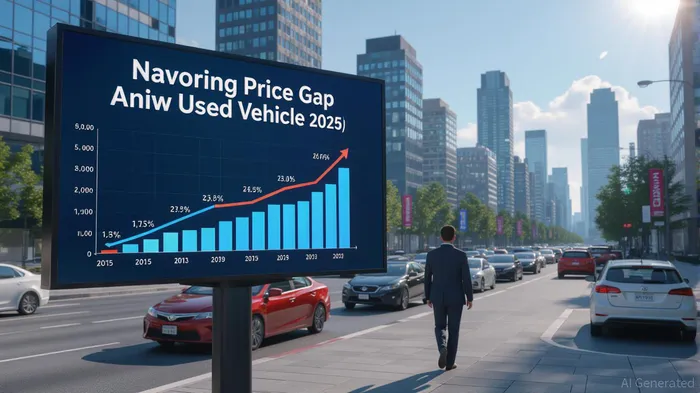
- Narrowing New-Used Price Gaps: The gapGAP-- between new and used vehicles has shrunk to $17,059, encouraging consumers to prioritize new purchases.
Investment Implications: Navigating the High-Rate Environment
For investors, the auto sector's resilience highlights opportunities and risks:
1. EV Manufacturers: Companies like TeslaTSLA-- and RivianRIVN-- may benefit from the BEV rush, but policy shifts under the OBBBA could disrupt incentives.
2. Big-Box Retailers: Walmart and Amazon's ability to sustain demand through promotions positions them well in a fragmented retail landscape.
3. Auto Finance Arms: Lenders like Ally FinancialALLY-- and Capital OneCOF-- face higher delinquency risks (auto loan delinquencies at 2.93% in Q2 2025), but noninterest income from investment banking could offset losses.
The Road Ahead: Balancing Optimism and Caution
While auto sales and consumer spending show resilience, the durability of this trend depends on three factors:
1. Federal Reserve Policy: Further rate cuts in late 2025 could ease borrowing costs, but long-term rates remain elevated.
2. Vehicle Affordability: Manufacturers must absorb tariffs and pass costs to consumers, risking affordability challenges.
3. Credit Risk Management: Lenders must navigate rising delinquencies, particularly among subprime borrowers.
In conclusion, the auto sector's rebound in 2025 reflects a blend of policy-driven urgency, sectoral employment shifts, and strategic retail promotions. For investors, the key is to balance optimism about near-term demand with caution about long-term risks. As the OBBBA debate unfolds and interest rates stabilize, the sector's ability to innovate and adapt will determine its trajectory in the coming years.

Stay ahead of the market.
Get curated U.S. market news, insights and key dates delivered to your inbox.
AInvest
PRO
AInvest
PRO



Comments
No comments yet