
Rebalancing for Resilience: Fixing Common Portfolio Pitfalls


 Aime Summary
In the ever-shifting landscape of investing, the most enduring portfolios are not those that chase the latest trend but those that adapt with discipline and foresight. Over the past year, market volatility and rapid technological change have exposed common pitfalls: overexposure to company stock or cash, underallocation to bonds, and a lack of strategic diversification. Yet, high-achieving founders and investors have navigated these challenges by leveraging honed through adversity. Their frameworks offer a blueprint for rebalancing portfolios to build resilience and avoid costly missteps.
The Mental Models of Resilience
At the heart of successful portfolio management lies a set of mental models that prioritize adaptability, humility, and long-term thinking.
(Growth, R&D, Innovation, Trust)
This qualitative lens, popularized by investors in 2024, evaluates companies based on compounding potential. Growth is measured through revenue and market share expansion, while R&D-to-revenue ratios above 5% signal a commitment to reinvention. Innovation is assessed via cultural agility—patents, product pipelines, and stakeholder engagement—while Trust reflects governance transparency and ESG alignment. For example, Microsoft's Satya Nadella institutionalized a “learn-it-all” culture, . Investors who prioritize such traits often find companies better positioned to weather crises.First Principles Thinking
By deconstructing assumptions to their core truths, investors can identify undervalued opportunities. Elon Musk's TeslaTSLA-- exemplifies this: by analyzing the fundamental cost of battery production, . This approach encourages investors to question conventional wisdom and focus on scalable, defensible business models.Lean Startup Methodology
Iterative experimentation and customer feedback loops are critical for agility. Slack's pivot from a gaming platform to a workplace communication tool highlights the value of rapid pivots. Investors who back companies with lean, customer-centric cultures often see higher returns in uncertain environments.(80/20 Rule)
Focusing on high-impact levers—whether in business operations or portfolio allocation—can amplify returns. In SaaS, . Similarly, concentrated bets on high-conviction assets (e.g., .
for a Resilient Portfolio
Armed with these mental models, investors can adopt disciplined rebalancing strategies to address overexposure and underallocation:
Set target allocations and tolerance bands for each asset class. For instance, if equities exceed 35% of a portfolio (vs. a 30% target), sell a portion and reallocate to bonds. This method prevents emotional overtrading and maintains risk alignment.
Quarterly or annual reviews ensure systematic adjustments. In 2024, U.S. , , smoothing volatility.(CPPI)
This dynamic strategy adjusts risk exposure based on a “floor” value. If equities overperform, more capital is allocated to them; if they decline, safer assets like bonds are prioritized.
Divide the portfolio into time horizons: short-term (cash/bonds), medium-term (dividend stocks), and long-term (growth equities). This approach allows for frequent rebalancing in shorter buckets while preserving growth potential.
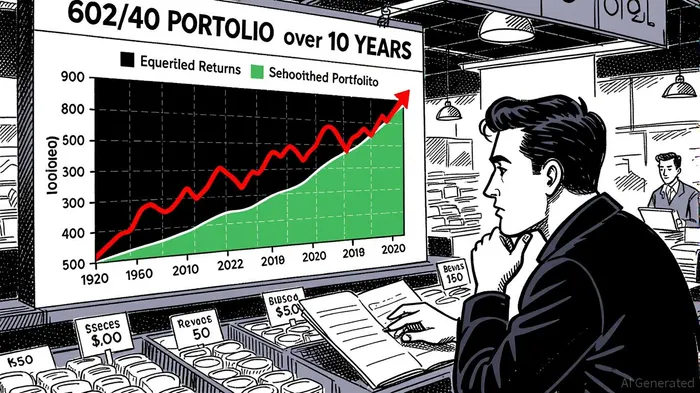
With traditional 60/40 portfolios struggling due to rising interest rates, investors are turning to long/short equity funds (e.g., BDMIX) and multi-strategy fixed-income funds (e.g., BIMBX) to diversify returns.
- Tesla's First Principles Success: By analyzing battery costs at the component level, Tesla reduced production expenses and scaled vertically. .
- Microsoft's GRIT-Driven Growth: Nadella's focus on R&D (Microsoft's R&D-to-revenue ratio hit 14% in 2024) and trust-building through ESG initiatives positioned Azure for dominance.
The 2024 Market Lesson: Discipline Over Hype
Despite early-year warnings, U.S. equities defied expectations in 2024, . However, non-U.S. markets and bonds lagged, underscoring the need for diversification. , disciplined rebalancing.
Actionable Advice for Investors
- Audit Your Allocation: Use the GRIT framework to assess your holdings. Are you overexposed to a single stock or sector?
- : Set up calendar-based or corridor-based triggers to avoid reactive decisions.
- Embrace Alternatives: Allocate 10–20% to uncorrelated assets like long/short funds or real estate.
- : Use capital loss harvesting and tax-advantaged accounts to minimize costs.
Conclusion
Rebalancing is not merely a technical exercise—it is a mindset. By adopting the mental models of high-achieving founders and investors, you can transform portfolio management from a reactive process into a proactive strategy. Discipline, humility, and a focus on compounding growth will not only correct current imbalances but also build a foundation for long-term resilience. As markets evolve, the most successful portfolios will be those that adapt with purpose, not panic.

Stay ahead of the market.
Get curated U.S. market news, insights and key dates delivered to your inbox.




Comments
No comments yet