
Rebalancing Portfolios Ahead of Market Volatility: A Strategic Shift from Speculative Assets


 Aime Summary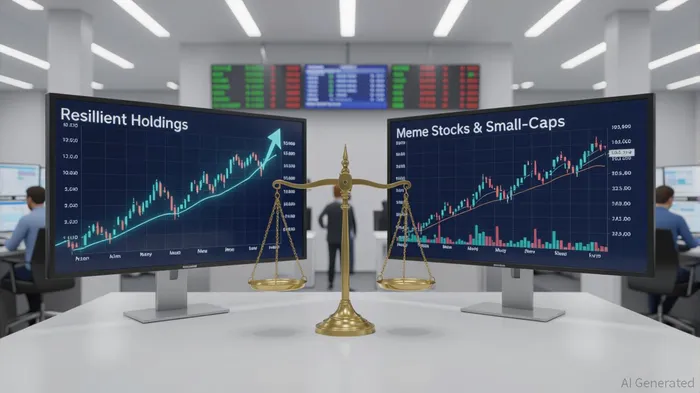
The market's recent erratic swings have reignited debates about risk management, with major institutions like Morgan StanleyMS-- sounding alarms over speculative assets. While small-cap stocks and meme-driven darlings have long been touted as "opportunistic" plays, their volatility now poses a clear threat to portfolio stability. As investors brace for potential corrections, the strategic pivot from high-risk, low-conviction assets to fundamentally sound holdings is no longer optional—it's imperative.
The Morgan Stanley Warning: Small-Caps and Meme Stocks in the Crosshairs
Morgan Stanley's recent cautionary stance on small-cap and meme stocks underscores a critical shift in market dynamics. Historically, small-cap stocks have offered growth potential, but their underperformance against large-cap benchmarks in 2025 highlights structural challenges. , , weighed down by liquidity crunches and earnings disappointments.
Meme stocks, meanwhile, remain a ticking time bomb. Companies like Bed Bath & BeyondBBBY-- and GameStopGME--, once propelled by social media hype, now trade at fractions of their 2023 peaks. Their survival hinges on speculative flows, not earnings. Morgan Stanley's analysts have explicitly flagged these stocks as "high-beta, low-utility" assets—ideal for short-term gambles but disastrous for long-term capital preservation.
Lisa Shalett's Blueprint for Resilience
, Chief Investment Strategist at Morgan Stanley, has long emphasized the importance of "defensive positioning" in volatile climates. Her recent commentary reinforces this, urging investors to prioritize quality over momentum. "The market is entering a phase where earnings matter more than narratives," she stated, a sentiment echoed by a growing chorus of strategists.
Shalett's framework for rebalancing focuses on three pillars:
1. : Shifting toward sectors with durable cash flows, such as healthcare, utilities, and consumer staples.
2. : Reducing exposure to highly leveraged small-cap companies and speculative ETFs.
3. Liquidity Buffers: Increasing cash reserves to capitalize on buying opportunities during dips.
Sector Trends and Strategic Adjustments
The current landscape favors companies with pricing power and stable demand. For instance, healthcare stocks like UnitedHealth GroupUNH-- and pharmaceutical giants have shown resilience amid rate hikes, while utilities such as NextEra Energy benefit from infrastructure spending and energy transition tailwinds. would illustrate this divergence.
Conversely, sectors like retail and consumer discretionary remain vulnerable. Meme stocks, often concentrated in these areas, face margin pressures and shifting consumer habits. Investors should scrutinize balance sheets and free cash flow generation before committing capital.
Actionable Steps for Capital Preservation
- Audit Your Holdings: Identify speculative assets with weak fundamentals. Use tools like to flag overvalued names.
- Rebalance Gradually. Prioritize companies with strong ESG metrics and consistent dividend histories.
- Hedge Against Corrections.
- Avoid Overleveraging: Liquidate margin debt and reduce exposure to leveraged ETFs, which amplify losses during downturns.
The Road Ahead
Market volatility is inevitable, but preparedness is a choice. By heeding warnings from institutions like Morgan Stanley and adopting Shalett's disciplined approach, investors can transform uncertainty into opportunity. The key lies in balancing growth aspirations with risk mitigation—a strategy that rewards patience and prudence.
As the market navigates this inflection point, remember: resilience isn't about avoiding storms but building a ship sturdy enough to sail through them.

Stay ahead of the market.
Get curated U.S. market news, insights and key dates delivered to your inbox.


AInvest
PRO
AInvest
PRO



Comments
No comments yet