
Rebalancing in a Low-Earnings Era: Sector Rotation Strategies for 2025
 Aime Summary
The U.S. labor market in 2025 has entered a twilight zone of stagnation. , outpacing inflation, , while production and nonsupervisory workers saw no change. , the benefits are increasingly concentrated among top earners and large-cap tech stocks. For investors, the challenge lies in navigating a low-earnings environment where traditional sector allocations must adapt to shifting macroeconomic signals.
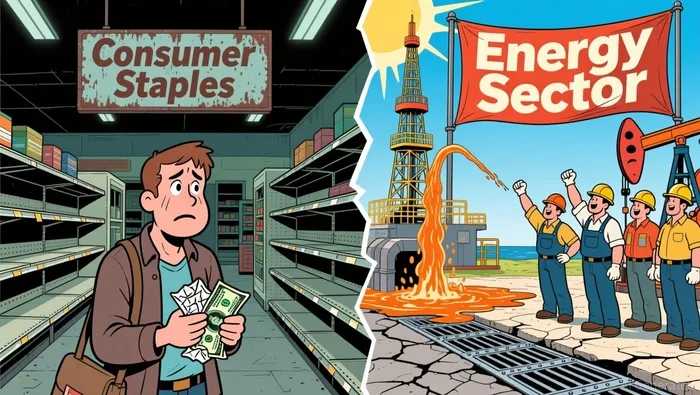
The Divergence: Consumer Staples vs. Energy
The third quarter of 2025 exposed a stark contrast between the Consumer Staples and Energy sectors. Consumer Staples, a historically defensive sector, , marking its worst performance among S&P 500 sectors. This underperformance reflects a strategic rotation by investors toward growth-oriented equities, particularly in technology and communications. Meanwhile, , . This recovery was fueled by a combination of factors: industrial demand rebounding post-pandemic, supply adjustments, and geopolitical tensions (e.g., Israel-Iran dynamics) driving short-term .
Historically, Consumer Staples and Energy have thrived during inflationary periods. For example, , these sectors outperformed due to their and inelastic demand. However, 2025's macroeconomic landscape is different. , energy prices remain volatile due to rather than broad inflation. Consumer Staples, meanwhile, .
Macro Signals and Sector Rotation Logic
. This shift has amplified the importance of sector rotation strategies. Defensive sectors like Consumer Staples, which historically benefit from rising inflation, now face headwinds as investors prioritize growth in a low-interest-rate environment. Conversely, Energy's performance is increasingly decoupled from broad inflation and tied to geopolitical and .
Backtested data from 2022–2025 reveals a critical insight: Energy's returns are more sensitive to oil price volatility and OPEC+ decisions than to U.S. inflation trends. For instance, . In contrast, , .
Strategic Portfolio Adjustments
For investors, the 2025 environment demands a nuanced approach to . Here are three actionable steps:
Reduce Overexposure to Consumer Staples: While the sector remains a haven in high-inflation environments, . , the sector's defensive appeal is waning. Consider trimming positions in food and household goods companies to rebalance toward sectors with stronger .
Increase Energy Sector Exposure with a Hedging Strategy: Energy's rebound in Q3 2025 was driven by short-term , not . To capitalize on this, adopt a hedging approach: allocate to (e.g., XLE) while using options to mitigate downside risk from potential OPEC+ or U.S. surges.
Monitor Inflation and Interest Rate Signals. Investors should closely track the and labor market data (e.g., . A return to rate hikes could reignite demand for like Consumer Staples, while may favor Energy.
Conclusion: Navigating the New Normal
The U.S. , . For investors, the key to long-term success lies in dynamic —shifting capital toward Energy amid supply shocks while remaining agile in response to macroeconomic signals. As the Fed's policy path remains uncertain, a balanced portfolio that blends growth and defensive assets will be essential to weather the volatility of a low-earnings era.

Stay ahead of the market.
Get curated U.S. market news, insights and key dates delivered to your inbox.


AInvest
PRO
AInvest
PRO



Comments
No comments yet