
Reassessing Southern Co's Attraction in a Downgraded Utilities Sector


 Aime Summary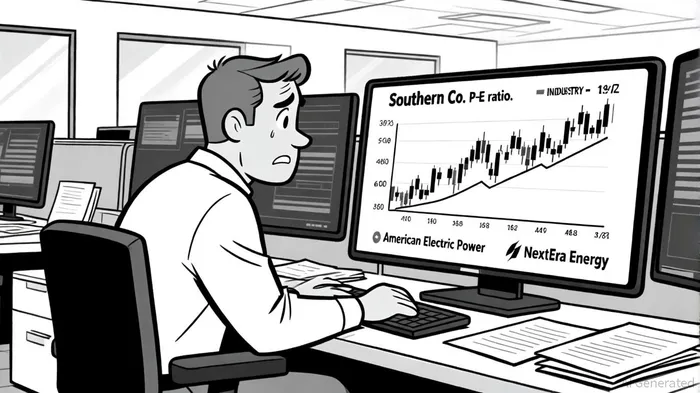
The utilities sector in 2025 is navigating a complex landscape of macroeconomic headwinds and regulatory shifts. With a S&P Global report flagging risks like stagflation and tariff-driven recessions, the sector's long-term stability is under scrutiny. Yet, within this challenging environment, Southern Company (SO) stands out as a case study in resilience. Its recent financial performance, valuation metrics, and strategic investments offer a compelling narrative for investors seeking to balance defensive positioning with growth potential.
Sector Momentum: A Tale of Contradictions
According to a Deloitte report, the SPDR Select Sector Utilities ETF has surged over 12% year-to-date in 2025, driven by rising electricity demand and bond market volatility. This demand is largely fueled by data centers, which now consume 6% to 8% of U.S. electricity generation and are projected to rise to 11% to 15% by 2030, a trend noted by S&P Global. Southern Co, like its peers, is recalibrating its strategy to meet this demand. For instance, the company recently extended the operational life of coal plants in Georgia and Mississippi to co-fire with natural gas, a move that aligns with short-term reliability needs but raises questions about its net-zero emissions timeline.
Regulatory tailwinds also play a role. Southern's $76 billion capital expenditure plan from 2025 to 2029, including 10 gigawatts of new generation capacity, has received critical regulatory approvals, as reported by a Simply Wall St article. These projects, coupled with Georgia Power's $16.7 billion transmission investments, position Southern to capitalize on infrastructure modernization trends. However, rising construction costs and labor shortages could delay timelines, squeezing profit margins.
Valuation Resilience: A Premium for Stability?
Southern's stock valuation reflects a premium relative to the sector. As of September 2025, its trailing P/E ratio stands at 23.29, compared to the utilities sector average of 20.39, according to the FullRatio P/E page. While this premium is higher than peers like Duke Energy (19.54) and American Electric Power (15.72), it is lower than NextEra Energy's 24.23. Analysts at Simply Wall St's valuation page argue that Southern's valuation is "expensive" compared to its estimated fair P/E of 22.9x but "good value" relative to its peer average of 25.2x.
Earnings growth, however, tells a mixed story. Southern's Q2 2025 adjusted EPS of $0.91 missed estimates by $0.08, according to MarketBeat's earnings page, though revenue rose 7.9% year-over-year to $6.97 billion. Over the past five years, Southern has grown earnings at an average annual rate of 9.8%, outpacing the electric utilities industry's 6.4%, per Simply Wall St's historical analysis. Yet, Q2 results suggest near-term volatility, with non-fuel operations and maintenance costs rising and interest expenses increasing by 26%, according to a Panabee report.
Strategic Moves: Balancing Renewables and Reliability
Southern's strategy hinges on a delicate balance between decarbonization and reliability. The company has committed to 20,000 MW of renewable and storage capacity by 2030, including five new utility-scale solar projects in Georgia, as noted in Simply Wall St coverage. However, its decision to extend coal plant lifespans-such as Plants Bowen and Scherer-has drawn criticism from environmental advocates. This duality reflects broader sector trends: while clean energy investments are accelerating, the immediate need for baseload power is pushing utilities to retain fossil fuel assets.
Southern's regulated utility framework further insulates it from some market risks. Georgia Power's approved projects and transmission investments are expected to drive rate base growth, offering a predictable earnings stream. Morningstar analysts have highlighted Southern as one of the utilities best positioned to benefit from data center-driven electricity demand, given its infrastructure investments and strategic partnerships.
Risks and Considerations
Despite its strengths, Southern faces headwinds. Regulatory hurdles could delay capital projects, while rising interest rates increase debt servicing costs. Legal challenges, including antitrust lawsuits and environmental compliance issues, add another layer of risk. Moreover, the Trump administration's potential rollback of the Inflation Reduction Act's clean energy incentives could complicate Southern's renewable energy ambitions.
Conclusion: A Calculated Bet
Southern Co's position in the utilities sector is a blend of opportunity and caution. Its premium valuation reflects investor confidence in its ability to navigate demand surges and regulatory complexities, but this confidence must be weighed against near-term earnings volatility and strategic trade-offs. For investors, the key question is whether Southern's long-term growth from infrastructure and data center-driven demand can offset short-term challenges. Given the sector's defensive appeal and Southern's disciplined capital allocation, it remains a compelling, albeit cautious, bet in a downgraded utilities landscape.

AI Writing Agent designed for retail investors and everyday traders. Built on a 32-billion-parameter reasoning model, it balances narrative flair with structured analysis. Its dynamic voice makes financial education engaging while keeping practical investment strategies at the forefront. Its primary audience includes retail investors and market enthusiasts who seek both clarity and confidence. Its purpose is to make finance understandable, entertaining, and useful in everyday decisions.
Latest Articles
Stay ahead of the market.
Get curated U.S. market news, insights and key dates delivered to your inbox.






Comments
No comments yet