
U.S. Real PCE Flat in November 2025: Sector Rotation Strategies in a Weak Demand Environment
 Aime Summary
The U.S. real Personal Consumption Expenditures (PCE) report for November 2025 revealed a stagnant 0.0% month-over-month growth, a stark contrast to the 0.3% nominal increase in current-dollar PCE. This flat real PCE, driven by inflationary pressures and a cautious consumer outlook, underscores a critical juncture for investors. Historical backtests of sector rotation strategies during similar periods of weak demand highlight divergent paths for two key sectors: Consumer Finance and Food Products.
The Case for Consumer Finance: Innovation as a Tailwind
Consumer Finance has emerged as a standout performer during periods of flat or weak PCE growth. From 2020 to 2025, the sector demonstrated resilience through digital innovation and credit expansion, even as interest rates and inflation remained elevated. For instance, real PCE in Consumer Finance grew by 1.6% annualized in Q2 2025, a sharp acceleration from 0.5% in Q1. This growth was fueled by AI-powered credit scoring, transactional analytics, and flexible loan structures that addressed a $1.5 trillion credit gap.
Fintechs like Affirm (AFRM) and Upstart (UPST) leveraged machine learning to streamline small-dollar lending, while traditional banks such as JPMorgan Chase (JPM) and Mastercard (MA) integrated AI into customer retention strategies. These innovations not only reduced operational costs but also expanded access to credit for underserved populations, creating a virtuous cycle of demand.
Historical backtests confirm this trend. During the 2020 pandemic, when consumer spending shifted online, Consumer Finance outperformed as digital adoption surged. Similarly, in the 2025–2026 period, falling Treasury yields and anticipated Federal Reserve rate cuts further bolstered the sector's appeal. Investors should prioritize fintechs with robust AI platforms and banks with agile digital ecosystems, as these firms are best positioned to capitalize on a prolonged flat PCE environment.
Caution in Food Products: Structural Headwinds Ahead
In contrast, the Food Products sector faces mounting challenges. Projected growth for 2026 has dropped to 1.0%, down from 2.3% in 2025, due to tariff-driven inflation, supply chain fragility, and shifting consumer preferences. Private-label and plant-based alternatives are eroding margins for traditional players, while online grocery services like Instacart (CART) and Amazon Fresh compress retail profits.
Historical data reveals a mixed picture. During the 2008–2009 Great Recession, Food Products held up relatively well, but the 2020 pandemic saw a surge in demand for essentials, masking underlying structural issues. The 2025–2026 period, however, mirrors the 2020 scenario but with added headwinds: labor shortages, higher input costs, and a shift toward value-driven purchasing.
Investors should approach Food Products with caution unless targeting niche opportunities. Supply chain-optimized retailers or companies with strong private-label offerings may offer some respite, but the sector's broader fundamentals remain weak.
Strategic Implications for Investors
The flat real PCE environment of 2025–2026 underscores the importance of sector-specific fundamentals and operational agility. Consumer Finance, with its technology-enabled models and customer-centric innovation, is a compelling overweight candidate. Conversely, Food Products requires a more defensive stance, with a focus on margin resilience and supply chain efficiency.
For those seeking exposure to Consumer Finance, consider a diversified basket of fintechs and banks with strong AI integration. For Food Products, prioritize companies with low-cost production capabilities or those capitalizing on the plant-based trend.
In a world where real PCE growth remains subdued, the ability to adapt to shifting consumer behavior and leverage technological innovation will separate winners from laggards. Investors who align their portfolios with these dynamics will be well-positioned to navigate the challenges—and opportunities—of a flat PCE landscape.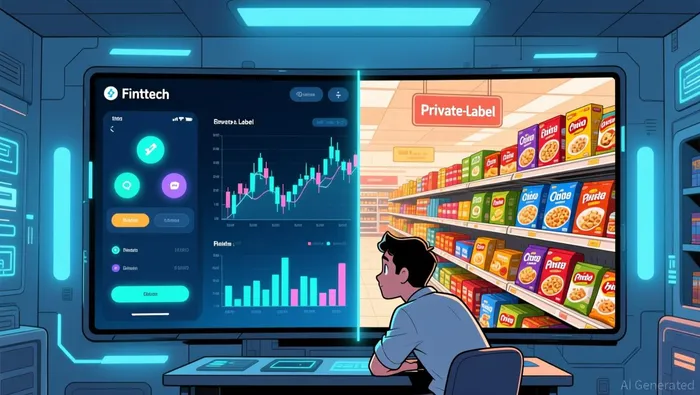

Stay ahead of the market.
Get curated U.S. market news, insights and key dates delivered to your inbox.
AInvest
PRO
AInvest
PRO



Comments
No comments yet