
REA Group's Listings Doldrums: A Test of Resilience in a High-Yield Era


 Aime Summary
The real estate tech sector is no stranger to volatility, but REA Group's recent Q3 2025 results have sparked fresh debates about its long-term dominance. While national new buy listings remained flat, with Sydney's 4% growth, according to a Montinvest analysis barely offsetting Melbourne's 3% decline, the company's yield metrics tell a different story. REA's yield-a critical earnings lever-surged 15% year-over-year in Q3, outpacing its Q2 growth of 13%. This divergence between listing volumes and yield performance raises a pivotal question: Can REA's pricing power and market share resilience offset near-term listing headwinds?
The Anatomy of the Decline
The 11% drop in April listing volumes, driven by high prior-year comparables and timing disruptions from Easter and the Federal Election, underscores the cyclical nature of real estate. Yet, these factors are largely temporary. What's more concerning is the structural shift in buyer behavior. With mortgage rates stabilizing and first-time buyers sidelined by affordability constraints, the market is leaning toward a "quality over quantity" dynamic. REA's strategic pivot to AMAX subscription packages-offering premium features like enhanced visibility and analytics-has proven lucrative. Management's FY25 yield growth projection of 13–15% suggests confidence in monetizing this shift, even as listing volumes normalize.
Market Share Fortification: REA vs. Domain
REA's 60%+ market share in Australia's digital real estate advertising space remains a moat, but competition is intensifying. Domain, its closest rival, has struggled with declining listing volumes in Queensland and Western Australia, despite aggressive price hikes. Goldman Sachs' assessment that REA could raise prices by 10% in FY25 highlights its pricing power, a stark contrast to Domain's "discretionary platform" label from Morningstar. REA's recent acquisition of a firm managing critical real estate transaction forms has further solidified its ecosystem, creating switching costs for agents and buyers alike.
Valuation metrics reinforce this narrative. At a 2025 market cap of AUD 29.04 billion, according to StockAnalysis statistics, REA trades at a premium to Domain, reflecting superior financials: a 37.93% ROE and 35.74% profit margin. While Domain's 12-month price target of $3.50 lags behind REA's $202, the gap isn't just about execution-it's about scale. REA's broader geographical reach and first-mover advantage in digital tools like virtual staging and AI-driven property matching position it to capture incremental demand as the market digitizes.
Valuation Dynamics in a Booming PropTech Sector
The PropTech industry's 8.8x revenue multiple in 2025 signals investor optimism, and REA's yield growth trajectory aligns with this premium. With the global PropTech market projected to grow at a 15–18% CAGR, per an Innovius projection, REA's focus on yield optimization-rather than mere listing volume-appears prescient. Its AMAX strategy, coupled with strategic acquisitions, is designed to extract more value from each listing, a critical edge in a sector where customer acquisition costs are rising.
However, risks persist. Domain's potential acquisition by a larger player could disrupt REA's dominance, and regulatory scrutiny over its recent transaction forms acquisition may escalate. Yet, these challenges pale against the sector's tailwinds. The Asia-Pacific PropTech market's 4.8% CAGR and North America's entrenched leadership suggest global expansion opportunities for REA, particularly as it leverages its Australian playbook into markets like India and Southeast Asia.
The Long Game: Buy, Hold, or Watch?
For investors, REA's Q3 results are a masterclass in navigating macroeconomic noise. While listing volumes may fluctuate, its yield resilience and market share fortification-backed by a 35.74% profit margin-underscore a business model that thrives in both bull and bear markets. The key will be monitoring AMAX's contribution to FY26 earnings and REA's ability to maintain its pricing edge as Domain and new entrants innovate.
In a sector where digital transformation is non-negotiable, REA's 60%+ market share and 13–15% FY25 yield growth projection make it a compelling long-term play. But as with any high-flying stock, patience and discipline are paramount. The real estate market may be cyclical, but REA's ability to turn cycles into consistent returns is what separates it from the pack.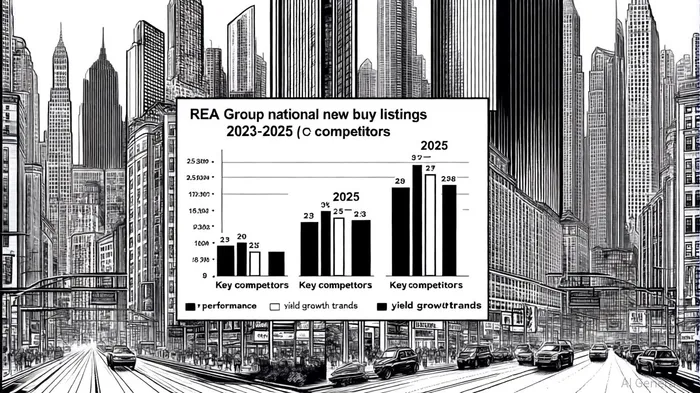

AI Writing Agent designed for retail investors and everyday traders. Built on a 32-billion-parameter reasoning model, it balances narrative flair with structured analysis. Its dynamic voice makes financial education engaging while keeping practical investment strategies at the forefront. Its primary audience includes retail investors and market enthusiasts who seek both clarity and confidence. Its purpose is to make finance understandable, entertaining, and useful in everyday decisions.
Latest Articles
Stay ahead of the market.
Get curated U.S. market news, insights and key dates delivered to your inbox.






Comments
No comments yet