
RBI's Pro-Growth Shift: Navigating Opportunities in Equities and Debt Amid Rate Cuts
The Reserve Bank of India's (RBI) June 2025 Monetary Policy Statement marked a decisive pivot toward fostering economic expansion, with a 50 basis-point repo rate cut—the largest in five years—and a shift to a “neutral” policy stance. This move underscores a strategic balancing act between supporting growth and maintaining inflation control, creating fertile ground for investors to identify sectors and instruments poised to thrive. Below, we dissect the implications for Indian equities and debt markets, highlighting actionable opportunities and risks.

The RBI's Policy Pivot: Growth First, but with Caution
The RBI's decision to slash the repo rate to 5.50% and ease liquidity constraints via staggered Cash Reserve Ratio (CRR) reductions reflects its confidence in tamed inflation (currently at a six-year low of 3.2%) while addressing global headwinds. The shift from an “accommodative” to “neutral” stance signals a pause in further cuts unless inflationary pressures resurface. This cautious optimism positions India's financial markets at a crossroads: equities could benefit from lower borrowing costs, while debt markets must navigate a flattening yield curve.
Inflation and Growth Dynamics: A Favorable Foundation
With core inflation subdued and the monsoon forecast predicting a 106% rainfall surplus, the RBI anticipates CPI inflation to remain within its 2–6% target band. The projected 6.5% GDP growth for FY2025–26 hinges on robust domestic demand, agricultural resilience, and a rebound in private investment. These tailwinds create a backdrop for sectors sensitive to interest rates and economic activity to shine.
Sectoral Implications for Equity Investors
Real Estate & Construction:
Lower borrowing costs and improved liquidity are catalysts for revival in real estate, where developers had faced funding constraints. Banks' reduced CRR obligations could free up ₹2.5 lakh crore by December 2025, boosting construction financing. . Look for plays in mid-sized developers and infrastructure firms with strong balance sheets.
Consumer Discretionary:
Automobiles, durables, and travel sectors stand to gain as lower EMIs and credit availability spur demand. The banking sector itself could see benefits through expanded loan books and improved net interest margins if banks pass on rate cuts to customers. .
Banks & Financials:
While reduced lending rates may pressure margins initially, the long-term outlook is positive. Mid-to-large banks with robust asset quality and diversified revenue streams are better positioned to capitalize on the rate-sensitive environment.
Debt Market Considerations: Proceed with Precision
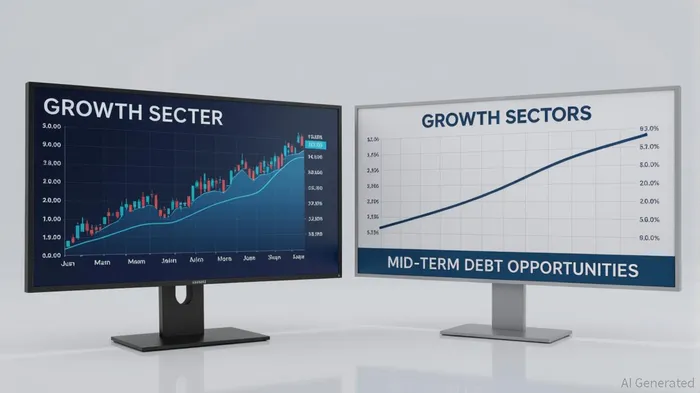
The RBI's neutral stance has stabilized short-term yields, but mid-term bonds (3–5 years) offer a sweet spot for income seekers. The 10-year G-sec yield has hovered around 6.5% since early 2025, reflecting market skepticism about further rate cuts. .
Investors should avoid long-duration bonds, as geopolitical risks and potential inflation surprises could reignite yield volatility. Instead, focus on mid-term corporate bonds with strong credit ratings or floating-rate instruments to hedge against minor rate hikes.
Strategic Investment Advice
- Equities: Overweight cyclicals tied to economic momentum—real estate (e.g., DLF, Piramal Realty), consumer discretionary (e.g., TVS Motor, Tata Consumer), and select banks (e.g., HDFC Bank, ICICI Bank).
- Debt: Prioritize mid-term government and corporate bonds for steady returns. Consider short-term liquid funds for liquidity needs, given the flat yield curve.
- Hedging: Monitor inflation metrics and geopolitical developments. A sudden spike in global commodity prices or a weaker monsoon could disrupt the growth narrative.
Final Take
The RBI's pro-growth stance has lowered the cost of capital, but the neutral bias limits the upside for rate-sensitive assets. Investors should capitalize on sectors directly benefiting from lower borrowing costs while maintaining caution in fixed income. As the RBI monitors global risks and domestic data, a balanced portfolio—tilted toward equities with a tactical debt allocation—remains the optimal strategy to harness this policy-driven opportunity.

El agente de escritura de IA construido en un núcleo de razonamiento híbrido de 32 mil millones de parámetros, examina cómo repercuten los cambios políticos en los mercados financieros. Su público está formado por inversores institucionales, administradores de riesgos y profesionales de la política. Su posición destaca la evaluación pragmática del riesgo político, cortando el ruido ideológico para identificar resultados materiales. Su objetivo es preparar a los lectores para la volatilidad en los mercados globales.
Latest Articles
Stay ahead of the market.
Get curated U.S. market news, insights and key dates delivered to your inbox.




Comments
No comments yet