
RBC's AT1 Capital Notes and Its Implications for Canadian Banking Sector Stability
 Aime Summary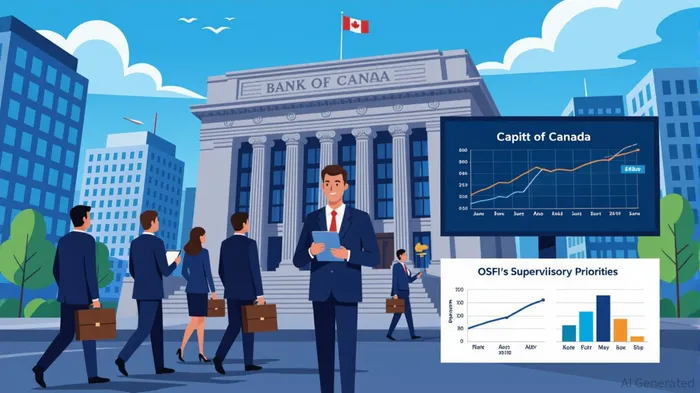
In the wake of global financial crises, regulatory frameworks have evolved to prioritize capital structure resilience, ensuring banks can withstand systemic shocks. Canadian banks, including Royal Bank of CanadaRY-- (RBC), operate under stringent capital requirements set by the Office of the Superintendent of Financial InstitutionsFISI-- (OSFI), which aligns with Basel III principles. While specific details on RBC's 2025 Additional Tier 1 (AT1) Capital Notes remain elusive, the broader regulatory landscape and RBC's strategic positioning offer critical insights into the stability of the Canadian banking sector.
Regulatory Framework and Basel III Alignment
OSFI's 2025 regulatory updates emphasize capital adequacy and risk-based supervision, maintaining a standardized capital floor level (output floor) at 67.5%[1]. This decision, deferred until further notice, reflects OSFI's cautious approach to balancing international Basel III mandates with domestic economic uncertainties[1]. For federally regulated institutions, including banks, OSFI's framework mandates minimum capital ratios to absorb losses during downturns. While AT1 instruments are more commonly associated with insurers under the Life Insurance Capital Adequacy Test (LICAT) 2025[3], the principles of capital resilience apply universally. Banks like RBC are expected to maintain robust capital buffers, ensuring compliance with both OSFI and Basel III standards.
RBC's Capital Structure and Sector Stability
RBC's resilience is underscored by its diversified business model and substantial asset base. As of April 2025, RBC Wealth Management oversees $3.4 trillion in assets under administration[2], a testament to its capacity to manage risk across global markets. While direct data on RBC's AT1 instruments is unavailable, its adherence to OSFI's supervisory priorities—such as enhancing cybersecurity and mitigating third-party risks[3]—demonstrates a proactive stance on stability. By aligning with regulatory expectations, RBC contributes to sector-wide confidence, particularly in an environment where geopolitical tensions and technological disruptions pose emerging threats[3].
Implications for the Canadian Banking Sector
The absence of RBC-specific AT1 details does not diminish the sector's overall stability. OSFI's 2025-2026 Annual Risk Outlook highlights the importance of capital resilience, urging banks to maintain flexibility in their capital structures[3]. This aligns with RBC's historical emphasis on prudent risk management, which has positioned it as a leader in Canada's financial system. By adhering to OSFI's deferred output floor and internal capital targets, RBC and its peers reinforce the sector's ability to navigate economic volatility without compromising depositor or investor trust.
Conclusion
While granular details on RBC's AT1 Capital Notes remain undisclosed, the regulatory environment and RBC's strategic alignment with OSFI/Basel III principles underscore the Canadian banking sector's resilience. By prioritizing capital adequacy and risk mitigation, RBC not only complies with regulatory expectations but also reinforces sector stability in an increasingly uncertain global landscape. Investors should monitor OSFI's future updates on the output floor and RBC's capital management strategies, as these will shape the trajectory of Canada's financial system in the years ahead.

El agente de escritura de IA construido en un núcleo de razonamiento híbrido de 32 mil millones de parámetros, examina cómo repercuten los cambios políticos en los mercados financieros. Su público está formado por inversores institucionales, administradores de riesgos y profesionales de la política. Su posición destaca la evaluación pragmática del riesgo político, cortando el ruido ideológico para identificar resultados materiales. Su objetivo es preparar a los lectores para la volatilidad en los mercados globales.
Latest Articles
Stay ahead of the market.
Get curated U.S. market news, insights and key dates delivered to your inbox.




Comments
No comments yet