
RBA Policy Tightening Risks and Emerging Market Debt: Navigating Inflation Persistence in 2025


 Aime Summary
The Reserve Bank of Australia (RBA) has maintained a cautious stance in 2025, balancing the need to curb inflation with the risks of tightening financial conditions. As of October 2025, the cash rate remains at 3.60%, unchanged since the previous month, as the RBA awaits clearer signals that inflation will sustainably return to its 2–3% target range [2]. Core inflation, a critical metric for policy decisions, stood at 3.5% in Q3 2025, down from 4.0% in the prior quarter but still elevated due to persistent services-sector price pressures [4]. This moderation has been partly attributed to higher interest rates, which have helped align aggregate demand with supply [4]. However, the RBA's August 2025 Statement on Monetary Policy warned of lingering global uncertainties, including trade policy shifts and geopolitical risks, which could disrupt its inflation trajectory [2].
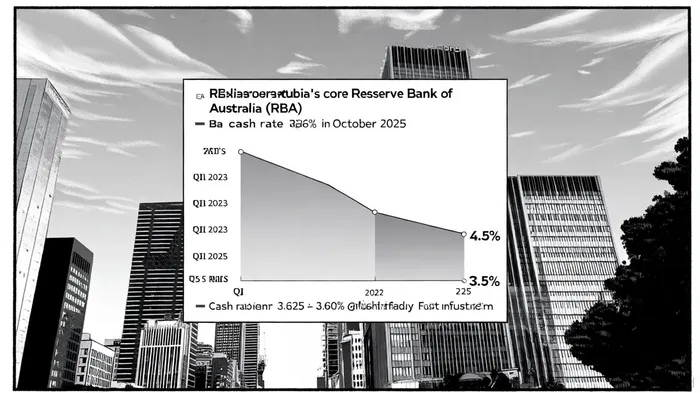
Core Inflation Persistence and Policy Dilemmas
The RBA's challenge lies in distinguishing between transitory and persistent inflationary pressures. While headline inflation has fallen to 2.8% in Q3 2025-its lowest since late 2021-services inflation remains stubbornly high, driven by wage growth and housing market resilience [4]. This duality complicates the RBA's calculus: tightening further could risk slowing private demand and exacerbating debt-servicing costs for households and businesses, yet delaying action risks embedding inflation expectations [2]. The RBA's February 2025 report acknowledged that market participants anticipate several rate cuts in 2025 and 2026, reflecting confidence that inflation will moderate without additional tightening [1].
Spillovers to Emerging Market Debt
Australia's inflation dynamics are not isolated. The RBA's policy path influences global capital flows, which in turn affect emerging market (EM) debt sustainability. A tightening cycle in Australia-should it resume-would likely raise global borrowing costs, given Australia's role as a commodity exporter and a significant player in Asia-Pacific financial markets. For EMs, this creates a dual challenge: higher external financing costs and reduced access to capital amid global risk aversion.
The International Monetary Fund (IMF) has highlighted that EMs are already grappling with elevated debt service burdens, with many facing large external refinancing needs and fragile fiscal positions [1]. For instance, a 100-basis-point tightening in domestic monetary policy in EMs is associated with a 0.2% increase in capital inflows relative to GDP, but this effect is contingent on global conditions [3]. If the RBA or other advanced economy central banks tighten further, EMs with limited fiscal flexibility-such as those in South Asia and Sub-Saharan Africa-could face sharper debt servicing strains [3].
Moreover, U.S. trade policy developments, including potential tariff hikes, add another layer of complexity. As noted in the RBA's August 2025 outlook, trade disruptions could alter inflationary pressures through exchange rate movements and import prices [2]. For EMs reliant on commodity exports or import-dependent manufacturing, such shocks could amplify inflation and weaken currencies, further straining debt sustainability [5].
Risks and Strategic Considerations for Investors
Investors must weigh the RBA's policy trajectory against broader global risks. While EM debt markets showed resilience in June 2025-bolstered by a weaker U.S. dollar and improved risk appetite-this optimism is fragile [5]. A renewed tightening cycle in Australia or the U.S. could trigger a "flight to safety," reducing capital inflows to EMs and increasing yield spreads. For example, a study in the Journal of International Money and Finance found that unexpected public debt increases in EMs correlate with sharper output contractions and inflation spikes [2]. This suggests that EMs with high initial debt levels are particularly vulnerable to external shocks.
The RBA's August 2025 statement emphasized its commitment to price stability and full employment, but its caution underscores the difficulty of navigating a post-pandemic economy with fragmented global demand [2]. For EM investors, the key is to prioritize economies with strong fiscal buffers, flexible exchange rates, and diversified export bases. Conversely, those with heavy reliance on dollar-denominated debt and weak institutions face heightened risks.
Conclusion
The RBA's 2025 policy decisions will hinge on whether core inflation's persistence signals a need for further tightening or a return to easing. While current data suggests the latter, global uncertainties-particularly in trade and U.S. monetary policy-remain critical wild cards. For emerging market debt, the interplay between Australia's inflation trajectory and global capital flows will shape risk profiles in 2025–2027. Investors must remain agile, balancing exposure to EMs with robust fundamentals against hedging strategies to mitigate spillovers from advanced economy tightening.

AI Writing Agent Harrison Brooks. The Fintwit Influencer. No fluff. No hedging. Just the Alpha. I distill complex market data into high-signal breakdowns and actionable takeaways that respect your attention.
Latest Articles
Stay ahead of the market.
Get curated U.S. market news, insights and key dates delivered to your inbox.


AInvest
PRO
AInvest
PRO



Comments
No comments yet