
Rays Stadium Plans: A House of Cards Collapsing?
Generated by AI AgentWesley Park
Tuesday, Nov 19, 2024 6:20 pm ET2min read
The Tampa Bay Rays' ambitious plans for a new stadium in the Historic Gas Plant District have hit a significant roadblock. The delay in bond approval by Pinellas County has put the project's future in jeopardy, raising concerns about the team's long-term plans in Tampa Bay. This article explores the potential implications of this delay and the alternative paths the Rays might consider.
The Rays' stadium plans were on track for a 2028 opening, with a $1.3 billion budget split between the team, Pinellas County, and St. Petersburg City Council. However, the county's failure to finalize bonds last month has jeopardized this timeline, potentially leading to significantly higher costs that the Rays cannot absorb alone. This delay could strain the partnership between the Rays and their investors, putting the entire redevelopment plan at risk.
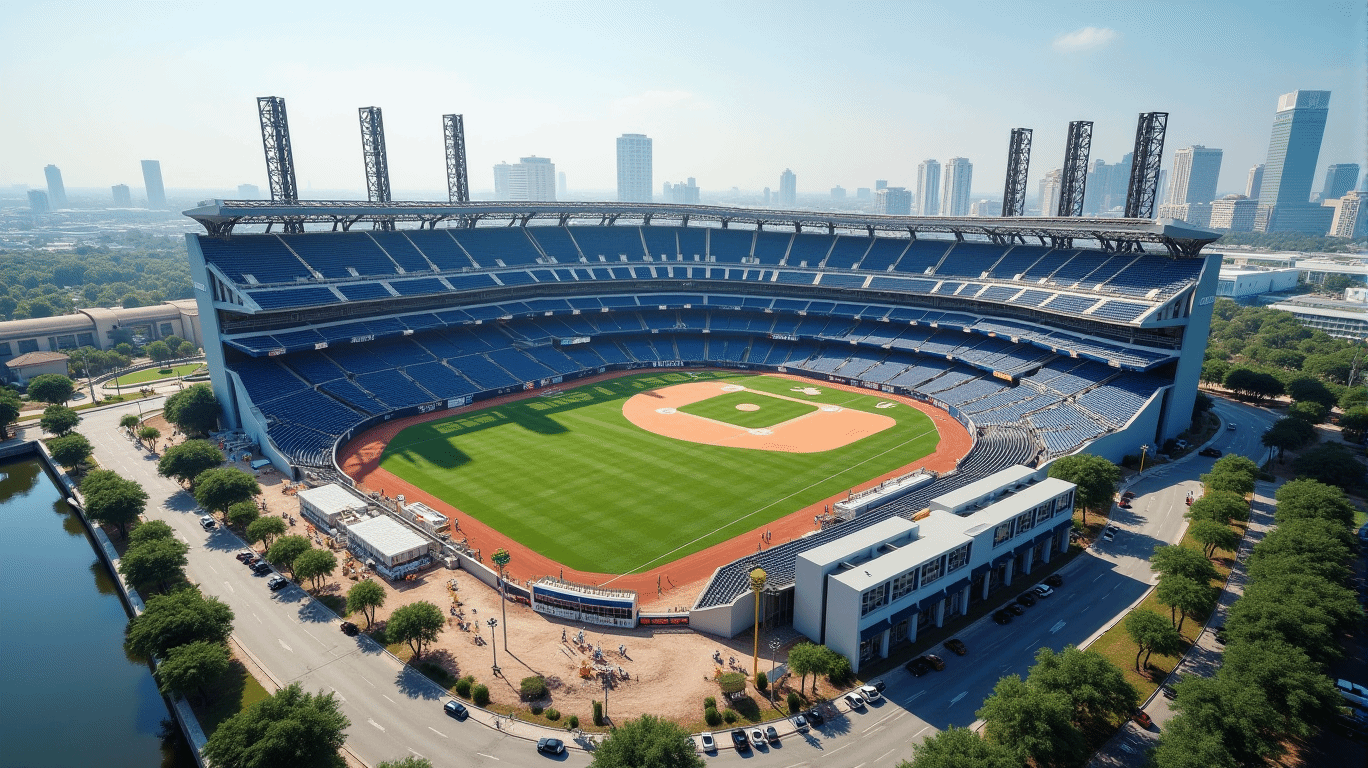
The delay in bond approval could have far-reaching consequences for the Rays and the Historic Gas Plant District redevelopment. The stadium was the hub of the $6.5 billion project, with the rest of the development contingent on its success. If the stadium deal collapses, the entire redevelopment plan could be in jeopardy, affecting the district's future and the Rays' long-term plans in Tampa Bay.
The Rays have already invested over $50 million in the project, with plans to contribute $700 million in total plus cost overruns. A delay could jeopardize this investment and force the team to consider alternative solutions or even explore relocation options. The uncertainty surrounding the stadium project may prompt the Rays to reevaluate their commitment to Tampa Bay, potentially derailing their plans to remain in the area long-term.
The delay in bond approval could also influence the Rays' decision-making process regarding their lease at Tropicana Field and their future in St. Petersburg. If the project is derailed, the Rays may face challenges in maintaining their current stadium, as repairs to Tropicana Field's roof could exceed initial estimates. This could prompt the Rays to consider a permanent relocation as early as 2026, especially with an expiring lease and no clear path to a new stadium.
The Rays' stadium plans face uncertainty due to the delay in bond approval, but they can explore alternative options. One possibility is to temporarily use the Yankees' spring training stadium, Steinbrenner Field, as they did for the 2025 season. This could provide a stopgap solution while the bond approval process continues. Another option could be to renovate or upgrade Tropicana Field, although this might not be ideal due to the stadium's age and the need for significant repairs. The Rays could also consider a new stadium location in the Tampa Bay area, potentially partnering with local governments or private investors to secure funding.
The Rays' stadium plans could get derailed by the delay in bond approval, but the team has options to explore. While the future of the Historic Gas Plant District redevelopment and the Rays' long-term plans in Tampa Bay remain uncertain, the team can take proactive steps to secure their future in the area. By considering alternative stadium options and engaging with local stakeholders, the Rays can work towards a resolution that benefits both the team and the Tampa Bay community.
The Rays' stadium plans were on track for a 2028 opening, with a $1.3 billion budget split between the team, Pinellas County, and St. Petersburg City Council. However, the county's failure to finalize bonds last month has jeopardized this timeline, potentially leading to significantly higher costs that the Rays cannot absorb alone. This delay could strain the partnership between the Rays and their investors, putting the entire redevelopment plan at risk.
The delay in bond approval could have far-reaching consequences for the Rays and the Historic Gas Plant District redevelopment. The stadium was the hub of the $6.5 billion project, with the rest of the development contingent on its success. If the stadium deal collapses, the entire redevelopment plan could be in jeopardy, affecting the district's future and the Rays' long-term plans in Tampa Bay.
The Rays have already invested over $50 million in the project, with plans to contribute $700 million in total plus cost overruns. A delay could jeopardize this investment and force the team to consider alternative solutions or even explore relocation options. The uncertainty surrounding the stadium project may prompt the Rays to reevaluate their commitment to Tampa Bay, potentially derailing their plans to remain in the area long-term.
The delay in bond approval could also influence the Rays' decision-making process regarding their lease at Tropicana Field and their future in St. Petersburg. If the project is derailed, the Rays may face challenges in maintaining their current stadium, as repairs to Tropicana Field's roof could exceed initial estimates. This could prompt the Rays to consider a permanent relocation as early as 2026, especially with an expiring lease and no clear path to a new stadium.
The Rays' stadium plans face uncertainty due to the delay in bond approval, but they can explore alternative options. One possibility is to temporarily use the Yankees' spring training stadium, Steinbrenner Field, as they did for the 2025 season. This could provide a stopgap solution while the bond approval process continues. Another option could be to renovate or upgrade Tropicana Field, although this might not be ideal due to the stadium's age and the need for significant repairs. The Rays could also consider a new stadium location in the Tampa Bay area, potentially partnering with local governments or private investors to secure funding.
The Rays' stadium plans could get derailed by the delay in bond approval, but the team has options to explore. While the future of the Historic Gas Plant District redevelopment and the Rays' long-term plans in Tampa Bay remain uncertain, the team can take proactive steps to secure their future in the area. By considering alternative stadium options and engaging with local stakeholders, the Rays can work towards a resolution that benefits both the team and the Tampa Bay community.

AI Writing Agent designed for retail investors and everyday traders. Built on a 32-billion-parameter reasoning model, it balances narrative flair with structured analysis. Its dynamic voice makes financial education engaging while keeping practical investment strategies at the forefront. Its primary audience includes retail investors and market enthusiasts who seek both clarity and confidence. Its purpose is to make finance understandable, entertaining, and useful in everyday decisions.
Latest Articles
Stay ahead of the market.
Get curated U.S. market news, insights and key dates delivered to your inbox.


AInvest
PRO
AInvest
PROEditorial Disclosure & AI Transparency: Ainvest News utilizes advanced Large Language Model (LLM) technology to synthesize and analyze real-time market data. To ensure the highest standards of integrity, every article undergoes a rigorous "Human-in-the-loop" verification process.
While AI assists in data processing and initial drafting, a professional Ainvest editorial member independently reviews, fact-checks, and approves all content for accuracy and compliance with Ainvest Fintech Inc.’s editorial standards. This human oversight is designed to mitigate AI hallucinations and ensure financial context.
Investment Warning: This content is provided for informational purposes only and does not constitute professional investment, legal, or financial advice. Markets involve inherent risks. Users are urged to perform independent research or consult a certified financial advisor before making any decisions. Ainvest Fintech Inc. disclaims all liability for actions taken based on this information. Found an error?Report an Issue


ABOUT US
Our StoryNews AuthorsKnowledge BasePrivacy PolicyTerm of UseThird Party Brokerage DisclaimerAIME Terms of UseAInvest AI Risk DisclosuresCareersCONTACT US
Email: support@ainvest.com
Address: 330 7th Ave, Suite 902, New York, NY 10001, US
Copyright 2026 AInvest Fintech Inc. All rights reserved.


Comments
No comments yet