
Rate Cut Timing Shift: Navigating Equity and Fixed-Income Markets in the New Fed Cycle
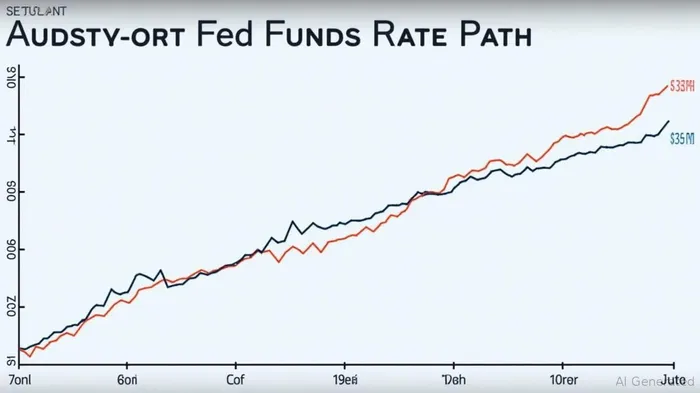
The Federal Reserve's monetary policy path has taken a pivotal turn, with Goldman SachsGS-- revising its forecast to project three 25-basis-point rate cuts beginning in September 2025—a timeline accelerated by fading inflation pressures and a cooling labor market. This shift, driven by reduced tariff-driven inflation and disinflationary momentum, presents both opportunities and risks for investors. Here's how to position portfolios for the changing landscape.
The Case for Earlier Rate Cuts: Tariffs, Wages, and the Fed's New Playbook
Goldman's revised forecast hinges on three key factors:
1. Tariff Effects: While Trump-era tariffs initially spiked prices in sectors like automotive, their impact on monthly inflation proved temporary. The Fed now views these as “one-time level shifts” rather than sustained threats to price stability.
2. Disinflationary Momentum: Core inflation, measured by the Fed's preferred PCE metric, has declined faster than expected. Rent inflation is easing, and wage growth has slowed to 4% year-on-year—a sign of labor market softness.
3. Labor Market Risks: While job creation remains resilient, GoldmanGS-- anticipates weaker payroll growth driven by structural factors like immigration shifts. The Fed's shift toward “insurance cuts” aims to preempt recession risks, accelerating its pivot from tightening to easing.
Equity Markets: Sector Rotations and Historical Precedents
Historical rate-cut cycles suggest equities could rally, but sector dynamics will depend on economic conditions.
Defensive and Quality Plays Dominate Early
During initial uncertainty, sectors with stable cash flows and strong balance sheets—such as healthcare, utilities, and consumer staples—typically outperform. For example, during the 2020 pandemic rate cuts, healthcare stocks rose 25% in the 12 months post-cuts as investors prioritized safety.
Cyclical Rebound as Certainty Grows
Once the Fed's easing path is clear, cyclical sectors like financials, industrials, and consumer discretionary often rebound. The 2019 mid-cycle rate cuts saw consumer discretionary stocks surge 18% in 12 months as lower borrowing costs boosted consumer spending.
Tech and Innovation: A Dual-Edged Sword
Tech stocks, particularly those in AI and cloud computing, may benefit from lower rates but face headwinds if valuations remain stretched. The S&P 500's current forward P/E of 19x suggests caution in overvalued segments.
Fixed-Income Strategies: Capitalizing on Yield Curve Flattening
The Fed's pivot favors long-duration bonds and select credit sectors.
Treasuries: The Long End Wins
Goldman forecasts the 10-year Treasury yield to drop to 3.2% by year-end, making longer-dated maturities (e.g., 10-year notes) attractive. Investors should consider buying the IPEX ETF, which tracks long-term Treasuries.
Investment-Grade Corporates: Pick the Right Sectors
Focus on utilities and healthcare corporates, which offer stable cash flows. Avoid wage-sensitive sectors like airlines, where labor costs could rebound. The VCLT ETF, targeting long-dated investment-grade bonds, is a prudent choice.
TIPS: A Hedge, Not a Growth Play
While inflation-linked bonds (e.g., TIP ETF) hedge against price shocks, their yields are now lower than nominal Treasuries. Allocate 5–10% to this segment for diversification.
Risks and Portfolio Caution
- Labor Market Resilience: A stronger-than-expected jobs report could delay cuts, pressuring bonds and rate-sensitive equities.
- Geopolitical Volatility: Oil supply disruptions or trade tensions could reignite inflation, undermining the Fed's disinflation narrative.
- Credit Quality Concerns: Cyclical industries like energy or manufacturing may face spread widening if economic growth falters.
Actionable Investment Advice
- Equity Allocation:
- Increase stakes in healthcare (e.g., HMO) and utilities (e.g., XLU).
- Rotate into cyclical sectors like financials (XLF) once rate-cut certainty grows.
Avoid overvalued tech names with stretched multiples; focus on AI-driven firms with tangible revenue growth.
Fixed-Income Shifts:
- Rebalance 10–15% of fixed-income allocations to long-duration Treasuries (IPEX).
Add 5–10% to TIPS (TIP) as a risk hedge.
Risk Management:
- Monitor the nonfarm payroll report (July 2025) for signs of labor market softness.
- Track oil prices and geopolitical developments to gauge inflation risks.
Conclusion: Position for a Flattening Yield Curve and Selective Equity Gains
The Fed's shift to earlier rate cuts marks a turning point for markets. While equity investors should prioritize stability now, cyclical opportunities will emerge as the Fed's path solidifies. Fixed-income players must favor duration and quality, balancing growth with inflation hedging. As history shows, the initial months of a rate-cut cycle are rarely linear—but those who align with these trends stand to gain.

Stay ahead of the market.
Get curated U.S. market news, insights and key dates delivered to your inbox.




Comments
No comments yet