
Rate Cut Expectations and Labor Market Weakness: Are We at an Inflection Point for Equities?


 Aime Summary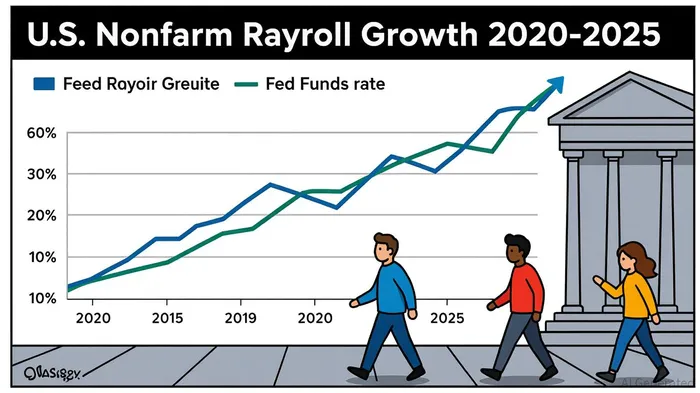
The U.S. labor market is showing signs of strain that cannot be ignored. August 2025 data reveals a stagnant job market, . Meanwhile, the 's policy signals are growing increasingly dovish, with markets pricing in an 88% probability of a 25-basis-point at the September 17 meeting. Yet, the broader equity market remains complacent, underestimating the magnitude of this shift. History suggests that such dislocations—where weak labor data precedes Fed easing—create contrarian opportunities for investors willing to act ahead of the crowd.
The Labor Market: A Canary in the Coal Mine
The August jobs report paints a picture of a labor force in transition. , deeper metrics tell a different story. . , . These trends, .
The Fed's dual mandate—price stability and maximum employment—now faces a delicate balancing act. While inflation remains stubbornly above 2%, the labor market's fragility is forcing the central bank to prioritize employment. This dynamic mirrors the 2019 and 2007 easing cycles, where rate cuts in non-recessionary environments spurred equity gains. For instance, . If history repeats, equities could see a similar boost in 2025.
Market Psychology: The Underestimated Pivot
Investor sentiment, as measured by the VIX and put/call ratio, suggests a calm market. The VIX, , 2025, , . However, these metrics mask a critical blind spot: the market is underpricing the Fed's pivot.
The Fed's communication has shifted from inflation hawkishness to a more dovish tone. Chair 's Jackson Hole speech in August hinted at a “patient but proactive” approach, and the recent appointment of to the Fed's governing board—a vocal advocate for easing—has further tilted the scales. Yet, the market remains anchored to a narrative of prolonged high rates. This disconnect creates a fertile ground for contrarian positioning.
Sector Rotation: Where to Allocate
The current inflection pointIPCX-- demands a selective approach to sector allocation. Historically, —particularly in technology and AI-linked industries—have outperformed during easing cycles. The “Magnificent 7” (Apple, MicrosoftMSFT--, AmazonAMZN--, Alphabet, MetaMETA--, TeslaTSLA--, , but their valuations remain justified by their dominance in AI-driven innovation.
Meanwhile, traditional sectors like industrials and consumer discretionary are undergoing a quiet transformation. AI integration is reshaping supply chains, logistics, and customer engagement, making these sectors more resilient to macroeconomic headwinds. For example, companies like StantecSTN-- and Republic ServicesRSG-- are leveraging AI to optimize operations, .
The Contrarian Play: Positioning for the Pivot
The key to profiting from this inflection point lies in timing and selectivity. Investors should consider overweighting sectors poised to benefit from lower rates and AI-driven productivity gains. Technology and industrials offer compelling opportunities, while defensive sectors like utilities and consumer staples may lag in a risk-on environment.
However, caution is warranted. The Fed's pivot is not guaranteed to offset inflationary pressures, and external shocks—such as the lingering effects of —could complicate the outlook. A diversified portfolio with exposure to both growth and value sectors, hedged against volatility, is essential.
Conclusion
The U.S. labor market is at a crossroads, and the Fed's response will shape the next chapter of the equity market. While the broader market remains complacent, history and current data suggest that a rate-cutting cycle is on the horizon. For contrarian investors, the time to act is now—before the market fully recognizes the shift. By allocating selectively to AI-linked sectors and industrials, investors can position themselves to capitalize on the Fed's pivot and the inevitable rally that follows.

Stay ahead of the market.
Get curated U.S. market news, insights and key dates delivered to your inbox.






Comments
No comments yet