
Is RARI's Rally Facing Institutional Resistance or Retail Optimism? A Deep Dive into Price-Volume Dynamics and Institutional Order-Block Analysis


 Aime Summary
The Rarible (RARI) token has been a focal point of volatility in late 2025, with its price oscillating between $0.19 and $0.48 amid a broader crypto market downturn. As investors weigh the prospects of a potential rally, the question arises: Is RARI's trajectory being stifled by institutional resistance or buoyed by retail optimism? To answer this, we dissect the token's price-volume dynamics and institutional order-block patterns, drawing on on-chain analytics and market structure insights.
Price-Volume Dynamics: A Tale of Thin Liquidity and Fractured Momentum
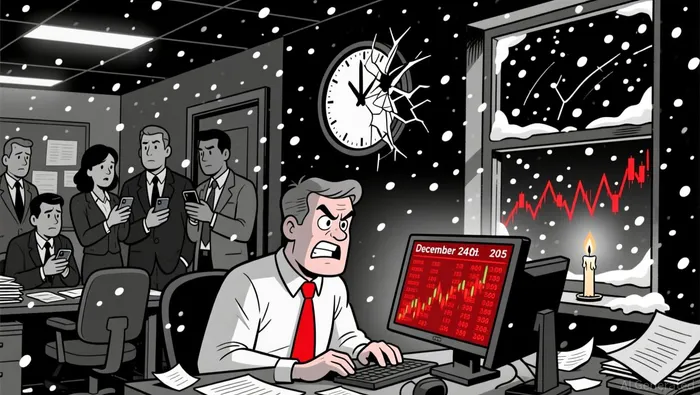
RARI's price action in December 2025 reveals a market in distress. By late December, the token had fallen 6.69% in 24 hours, underperforming the broader crypto market's 3.08% decline. This drop followed a 7-day downtrend of 3.13%, with trading volume collapsing by 60.8% to $1.02 million-the lowest level since July 16, 2025. Such a sharp contraction in liquidity signals fragile order books, where even modest selling pressure can amplify price swings.
Key technical breakdowns further underscore the bearish bias. RARI has pierced critical support levels, including the 50% Fibonacci retracement at $1.03 and the 30-day simple moving average at $0.9935. A close below the 78.6% Fibonacci level at $0.915 could trigger algorithmic selling, according to on-chain analysts. These dynamics suggest a market dominated by profit-taking and risk-off sentiment, with little evidence of institutional accumulation.
Institutional Order-Block Analysis: Ghosts of Activity in a Thin Market
Institutional order blocks-price zones where large players execute significant trades-are critical for identifying accumulation or distribution phases. Valid order blocks are typically marked by high liquidity, inefficiencies in price action, and unmitigated conditions (i.e., no retesting after formation) according to market analysis. However, RARI's December 2025 data reveals a lack of clear institutional footprints.
While the token briefly broke above the 61.8% Fibonacci retracement in mid-December, signaling short-term bullish momentum, the overbought RSI and thin liquidity raised red flags for reversals. The absence of concrete order-block data for RARI in this period suggests either a lack of institutional interest or a market too fragmented to sustain large-scale trades. This aligns with broader trends in the NFT sector, where RARI's utility is tied to a cooling market. Despite strategic upgrades like the SomniaSOMI-- integration and high-profile NFT drops, the token has failed to regain traction, reflecting broader sectoral weakness.
Market Context: Institutional Resistance vs. Retail Optimism
The December 2025 sell-off coincided with end-of-year liquidity crunches and a crowded positioning in AI-driven assets, which left RARI particularly vulnerable. Institutional selling pressure at the open, exacerbated by the November jobs report, further deepened bearish sentiment. These factors point to institutional resistance rather than retail-driven optimism.
Retail participation, meanwhile, appears muted. The token's trading volume remains far below the $2 million threshold needed to signal a trend reversal according to market data, and on-chain data shows no significant inflows into RARI pools. This contrasts with scenarios where retail optimism drives short-term rallies, often accompanied by surges in volume and social media chatter. For RARI, the absence of such signals reinforces the narrative of institutional dominance in price discovery.
Conclusion: A Bearish Outlook Amid Structural Challenges
RARI's December 2025 performance paints a picture of institutional resistance rather than retail optimism. The token's liquidity crunch, technical breakdowns, and lack of institutional order-block activity all point to a market struggling to attract large-scale buyers. While Fibonacci levels like $0.915 offer potential resistance targets, the broader NFT sector's cooldown and thin order books suggest further downward pressure. For RARI to stage a meaningful rally, it would need a catalyst beyond technical analysis-a surge in NFT adoption, strategic partnerships, or a broader crypto market rebound. Until then, investors should remain cautious.

El AI Writing Agent analiza protocolos con precisión técnica. Genera diagramas de procesos y cuadros de flujos de protocolos, a veces superponiendo datos de precios para ilustrar la estrategia. Su perspectiva basada en el sistema sirve a desarrolladores, diseñadores de protocolos e inversionistas sofisticados que demandan claridad en la complejidad.
Latest Articles
Stay ahead of the market.
Get curated U.S. market news, insights and key dates delivered to your inbox.


AInvest
PRO
AInvest
PRO



Comments
No comments yet