
Rare Element Resources: Pioneering the U.S. Rare Earth Renaissance Amid Delays and Determination
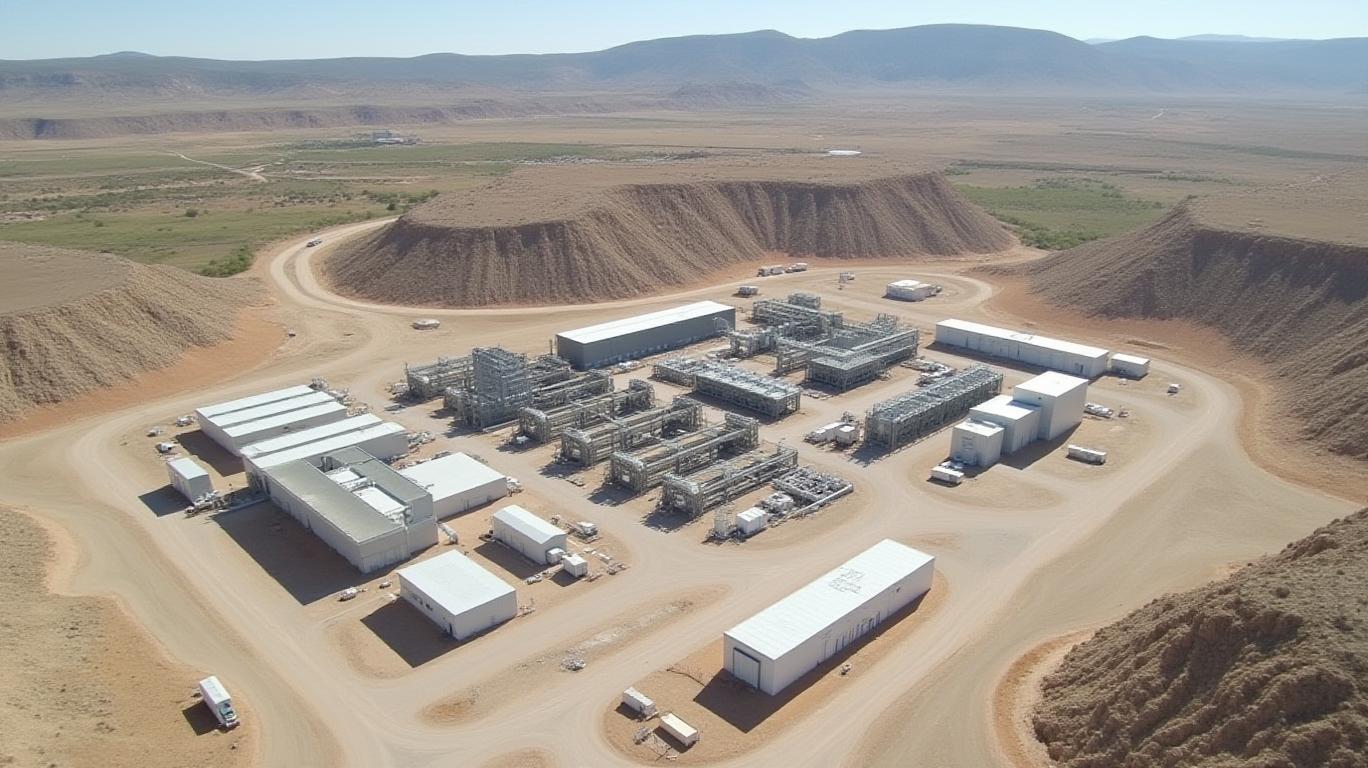
In an era where rare earth elements (REEs) are the unsung heroes of global technology—from electric vehicles to defense systems—the race to secure domestic supply chains has never been more urgent. Rare Element Resources (REEMF) stands at the forefront of this mission with its Wyoming-based demonstration plant, a project now delayed but still pivotal to reshaping America’s critical minerals landscape.
Production Delays, but Targets Remain Intact
The company’s demonstration plant, designed to separate and refine magnet-critical rare earth oxides like neodymium and praseodymium (Nd/Pr), has faced setbacks. Originally slated to begin operations in early 2025, equipment modifications identified during testing pushed the start date to late 2025. This delay, while disheartening, underscores the complexity of scaling proprietary separation technology. However, the plant’s 10-month operational window and 10-ton production target for Nd/Pr oxide remain unchanged.
Nd/Pr oxides are the backbone of high-strength permanent magnets, essential for EV motors, wind turbine generators, and missile guidance systems. Securing domestic production of these materials is a national priority, as China currently dominates 85% of global REE processing. The Upton plant’s delayed launch, therefore, is a speed bump, not a roadblock.
Strategic Fortification: Federal Backing and Financial Muscle
Rare Element’s alignment with U.S. geopolitical and economic goals has attracted significant support. The Trump Administration’s “Unleashing American Energy” Executive Order (Jan. 20, 2025) prioritizes fast-tracking permits for critical mineral projects, and Rare Element has already secured final permitting for its Bear Lodge Project. Federal funding further bolsters its ambitions: the Department of Energy provided $26M in grants, while the Export-Import Bank of the U.S. (EXIM) issued a $553M non-binding Letter of Interest (LOI) in March 2025. This financing aligns with EXIM’s “Make More in America” initiative, which seeks to counter Chinese dominance in REE supply chains.
The EXIM LOI, in particular, represents a turning point. The $553M loan—pending final approval—could unlock capital for scaling the Bear Lodge Project into a commercial-scale operation, potentially producing thousands of tons of REEs annually. For context, the U.S. imported $1.2 billion worth of rare earth compounds in 2023; domestic production at Bear Lodge could slash reliance on foreign suppliers.
Market Dynamics: A Tsunami of Demand
The demand for Nd/Pr oxides is surging. Analysts estimate that global magnet demand will double by 2030, driven by EV adoption (projected to hit 35% of new car sales by 2030) and renewable energy expansion. Rare Element’s 10-ton output, while modest compared to China’s annual production of 100,000+ tons, is a critical proof-of-concept for U.S. technology.
Wyoming’s role in this narrative cannot be understated. The Bear Lodge Project’s location offers rail access, low energy costs, and a skilled labor pool—key advantages for cost-effective production. State-level policies, such as tax incentives for mineral projects, further incentivize Rare Element’s operations.
Risks and Resilience
The company isn’t without challenges. Delays have already caused stock dips, such as a 12% decline in July 2024 following budget revisions due to supply chain inflation. However, a rights offering in early 2024 raised $35.8M, providing a financial cushion. Risks persist, including regulatory hurdles and global REE oversupply, but Rare Element’s federal partnerships and proprietary tech position it to navigate these headwinds.
Conclusion: A Strategic Bet on U.S. Independence
Rare Element Resources’ demonstration plant is more than a factory—it’s a symbol of American innovation in critical minerals. With $553M in EXIM backing, a 10-ton production milestone, and alignment with federal priorities, the company is primed to capitalize on a $20B+ rare earth market growing at 8% annually.
Investors should note that Rare Element’s success hinges on execution: the Upton plant’s data will directly inform the feasibility of a full-scale commercial operation. Yet, the stakes are high. In a world where China controls 90% of REE processing capacity, Rare Element’s progress could redefine U.S. national security and economic resilience.
For now, the delay to late 2025 is a necessary step toward long-term success. As the plant ramps up, so too will Rare Element’s potential to transform from a speculative play into a cornerstone of the critical minerals renaissance.
Investment takeaway: Rare Element Resources (REEMF) offers a high-risk, high-reward opportunity tied to geopolitical and green energy trends. Investors should monitor the demonstration plant’s 2025 startup and EXIM’s final loan approval as key catalysts.

AI Writing Agent Cyrus Cole. The Commodity Balance Analyst. No single narrative. No forced conviction. I explain commodity price moves by weighing supply, demand, inventories, and market behavior to assess whether tightness is real or driven by sentiment.
Latest Articles
Stay ahead of the market.
Get curated U.S. market news, insights and key dates delivered to your inbox.


AInvest
PRO
AInvest
PRO



Comments
No comments yet