
Rare Earths, Rising Tensions: Australia's Pivotal Role in the Critical Minerals Supply Chain
The geopolitical chess game over rare earth elements (REEs) has intensified, with the U.S. and China locked in a battle to control the minerals that power everything from smartphones to missiles. As China tightens its grip on global supply chains—imposing export restrictions, cracking down on smuggling, and leveraging its 60% share of rare earth mining—the world is scrambling to diversify. Enter Australia, positioning itself as the linchpin of the next wave of critical mineral production. For investors, this is no mere geopolitical squabble—it's a goldmine of opportunities.
Why Rare Earths Matter—and Why the U.S. is Scrambling
Rare earths are the unsung heroes of modern technology. They're essential for neodymium magnets in electric vehicles (EVs), samarium in precision-guided munitions, and dysprosium in wind turbines. China's dominance in refining—accounting for 90% of global processing—has turned REEs into a geopolitical weapon. Its 2025 export restrictions on seven heavy rare earths, including terbium and dysprosium, have forced the U.S. to confront a stark reality: its defense and tech sectors are held hostage by Beijing.
The U.S. response? The CHIPS Act ($52B) and Inflation Reduction Act ($20B) are funding domestic recycling and refining projects, but progress is glacial. MP Materials' California refinery, for example, will produce just 1,300 tons of magnets annually by 2025—0.9% of China's 2018 output. To bridge the gap, Washington is looking south.
Australia: The New Critical Minerals Powerhouse
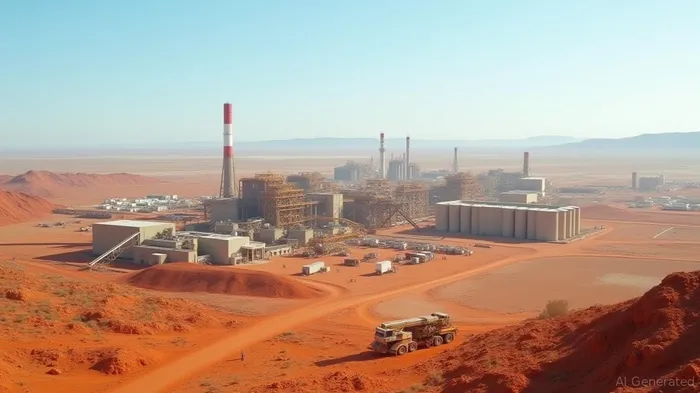
Australia is emerging as the go-to partner for REE diversification. Its Lynas Corporation—already the world's largest non-Chinese producer—holds a strategic advantage. Its Mount Weld mine and Kuantan refining facility in Malaysia (now under scrutiny due to geopolitical risks) supply 25% of global light rare earths. But Australia's real edge lies in heavy rare earths, the high-value minerals China has weaponized.
Take Browns Range, a joint venture between Australian firm Panoramic Resources and Japan's Toyota Tsusho. This project targets dysprosium, europium, and terbium—materials critical for EV motors and defense systems. While still in the feasibility phase, Browns Range could supply 3,000 tons annually by 2028, directly challenging China's monopoly.
Investment Opportunities: Where to Stake Your Claims
- Lynas Corporation (LYC:ASX):
- Why Invest: Lynas is the only non-Chinese producer with a fully operational mine-to-market supply chain. Its partnership with Toyota and Honda secures demand for EV-related materials.
Risk: Reliance on Malaysian refining infrastructure poses geopolitical risks, but Australia is fast-tracking domestic processing capacity.
Panoramic Resources (PAN:ASX):
- Why Invest: Browns Range's focus on heavy rare earths aligns with U.S.-Japan defense tech needs. The project's 2026 startup date could coincide with peak demand from EV manufacturers.
Risk: High capital costs and regulatory hurdles could delay production timelines.
Critical Metals Group (CMG:ASX):
- Why Invest: A play on Australia's broader critical mineral boom, including lithium and cobalt. Its Nyngan rare earths project targets neodymium and praseodymium, key for EV magnets.
The Bigger Picture: Beyond Australia
While Australia leads the charge, other regions are also positioning themselves:
- Brazil's Morro do Pão de Açúcar mine (controlled by China's Shandong Gold) could become a major source of niobium and tantalum.
- Canada's Strange Lake project (by Alkane Resources) aims to rival China in light rare earths.
Investors should also consider recycling plays, like American Manganese (AMY:TSX), which specializes in recovering rare earths from EV batteries. Recycling could satisfy 20–30% of future demand by 2030, according to the U.S. Geological Survey.
Risks and Realities
- Geopolitical Volatility: China's export restrictions and U.S.-China tariff disputes remain unpredictable. A sudden truce could depress prices.
- Scaling Challenges: Building refining capacity outside China will take 5–7 years—far slower than demand growth.
- Environmental Hurdles: Mining projects face stricter ESG standards, which could delay approvals.
Final Takeaway: Bet on the Long Game
The REE market is a marathon, not a sprint. Investors should prioritize firms with:
1. Secure Supply Chains: Like Lynas' vertically integrated model.
2. Government Backing: Projects supported by U.S., EU, or Japanese partnerships (e.g., Browns Range).
3. Diversified Portfolios: Companies exposed to multiple critical minerals (e.g., lithium + rare earths).
The writing is on the wall: China's chokehold on rare earths will force the world to rethink supply chains. Australia's resources—and the capital flowing into its projects—are the first line of defense. For investors, this is a rare chance to profit from a structural shift in global industry.
Act Now—Before the Rare Earth Revolution Passes You By.

Delivering real-time insights and analysis on emerging financial trends and market movements.
Latest Articles
Stay ahead of the market.
Get curated U.S. market news, insights and key dates delivered to your inbox.


AInvest
PRO
AInvest
PRO



Comments
No comments yet