
Rare Earths Mining in Wyoming: A Promising Find Amid Federal Investment
ByAinvest
Saturday, Jul 26, 2025 5:31 am ET2min read
AAPL--
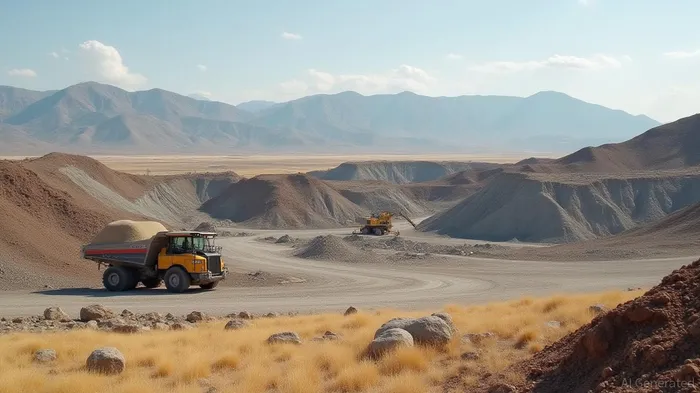
The Wyoming Brook Mine is the first domestic REE and critical mineral mine in over seventy years. It contains several elements crucial for national security, such as neodymium and praseodymium, which have been banned for export by China. The mine's unique geology, with REEs comingled in coal, makes it easier to mine and process compared to traditional hard rock deposits [1].
Full-scale mining is underway, and construction of a pilot processing oxide facility is set to begin this year. Over the long term, the mine will explore possible manufactured uses of these oxides to metals, magnets, or semiconductor wafers. The mine is expected to provide a major domestic source of critical materials needed for advanced military technology, batteries, medical devices, and more [1].
Ramaco's efforts are not without challenges. The company is a penny stock, and investors have largely avoided it. However, the federal government's interest in the project and the potential for domestic supply independence may attract more investors. The mine's ease of recovery and strategic importance to national security could also make it a more attractive investment option in the future.
The U.S. government's investment in MP Materials, which operates the only U.S. rare earths mine, indicates a growing trend of U.S. corporations shifting their mineral purchases from Chinese companies to domestic suppliers. Apple, for instance, has signed a $500 million, four-year deal with MP Materials to secure a steady supply of rare earth magnets [2].
However, achieving mineral independence requires extensive permitting reform by Congress. It currently takes seven to 10 years for U.S. mines to gain the necessary permits to begin operations, compared to two years in Australia and Canada. Reforming laws such as the National Environmental Policy Act and the Clean Air Act to reduce delays would make U.S. mines more competitive internationally [2].
American Rare Earths (ARR) is also advancing its Halleck Creek project, one of the largest REE deposits in the U.S. ARR recently received A$15.0 million in funding through an institutional private placement to accelerate the development of the project [3].
In conclusion, the Wyoming Brook Mine and other U.S. REE projects hold significant promise for domestic supply independence and national security. However, achieving this goal will require sustained investment, permitting reform, and collaboration between the public and private sectors.
References:
[1] https://ramacoresources.com/critical-minerals/
[2] https://www.instituteforenergyresearch.org/international-issues/apple-invests-in-u-s-rare-earth-supply-chain/
[3] https://www.barchart.com/story/news/33615479/american-rare-earths-advances-halleck-creek-demonstration-plant-with-a15m-placement
MP--
A promising mining find in Wyoming aims to produce rare earth elements quickly, with federal officials considering a $500 million investment. However, the company behind the project is a penny stock, and investors have largely avoided it.
A promising mining find in Wyoming is set to revolutionize the U.S.'s rare earth element (REE) supply chain. Ramaco Resources, a company focused on heavy magnetic REEs, has discovered a significant deposit at its Wyoming Brook Mine. Federal officials are considering a $500 million investment to support the project, which aims to produce REEs quickly and reduce reliance on foreign sources.The Wyoming Brook Mine is the first domestic REE and critical mineral mine in over seventy years. It contains several elements crucial for national security, such as neodymium and praseodymium, which have been banned for export by China. The mine's unique geology, with REEs comingled in coal, makes it easier to mine and process compared to traditional hard rock deposits [1].
Full-scale mining is underway, and construction of a pilot processing oxide facility is set to begin this year. Over the long term, the mine will explore possible manufactured uses of these oxides to metals, magnets, or semiconductor wafers. The mine is expected to provide a major domestic source of critical materials needed for advanced military technology, batteries, medical devices, and more [1].
Ramaco's efforts are not without challenges. The company is a penny stock, and investors have largely avoided it. However, the federal government's interest in the project and the potential for domestic supply independence may attract more investors. The mine's ease of recovery and strategic importance to national security could also make it a more attractive investment option in the future.
The U.S. government's investment in MP Materials, which operates the only U.S. rare earths mine, indicates a growing trend of U.S. corporations shifting their mineral purchases from Chinese companies to domestic suppliers. Apple, for instance, has signed a $500 million, four-year deal with MP Materials to secure a steady supply of rare earth magnets [2].
However, achieving mineral independence requires extensive permitting reform by Congress. It currently takes seven to 10 years for U.S. mines to gain the necessary permits to begin operations, compared to two years in Australia and Canada. Reforming laws such as the National Environmental Policy Act and the Clean Air Act to reduce delays would make U.S. mines more competitive internationally [2].
American Rare Earths (ARR) is also advancing its Halleck Creek project, one of the largest REE deposits in the U.S. ARR recently received A$15.0 million in funding through an institutional private placement to accelerate the development of the project [3].
In conclusion, the Wyoming Brook Mine and other U.S. REE projects hold significant promise for domestic supply independence and national security. However, achieving this goal will require sustained investment, permitting reform, and collaboration between the public and private sectors.
References:
[1] https://ramacoresources.com/critical-minerals/
[2] https://www.instituteforenergyresearch.org/international-issues/apple-invests-in-u-s-rare-earth-supply-chain/
[3] https://www.barchart.com/story/news/33615479/american-rare-earths-advances-halleck-creek-demonstration-plant-with-a15m-placement
Stay ahead of the market.
Get curated U.S. market news, insights and key dates delivered to your inbox.
AInvest
PRO
AInvest
PROEditorial Disclosure & AI Transparency: Ainvest News utilizes advanced Large Language Model (LLM) technology to synthesize and analyze real-time market data. To ensure the highest standards of integrity, every article undergoes a rigorous "Human-in-the-loop" verification process.
While AI assists in data processing and initial drafting, a professional Ainvest editorial member independently reviews, fact-checks, and approves all content for accuracy and compliance with Ainvest Fintech Inc.’s editorial standards. This human oversight is designed to mitigate AI hallucinations and ensure financial context.
Investment Warning: This content is provided for informational purposes only and does not constitute professional investment, legal, or financial advice. Markets involve inherent risks. Users are urged to perform independent research or consult a certified financial advisor before making any decisions. Ainvest Fintech Inc. disclaims all liability for actions taken based on this information. Found an error?Report an Issue


ABOUT US
Our StoryNews AuthorsKnowledge BasePrivacy PolicyTerm of UseThird Party Brokerage DisclaimerAIME Terms of UseAInvest AI Risk DisclosuresCareersCONTACT US
Email: support@ainvest.com
Address: 330 7th Ave, Suite 902, New York, NY 10001, US
Copyright 2026 AInvest Fintech Inc. All rights reserved.


Comments
No comments yet