
Rare Earths and U.S. Industrial Policy: Navigating Geopolitical Risks and Supply Chain Resilience


 Aime Summary
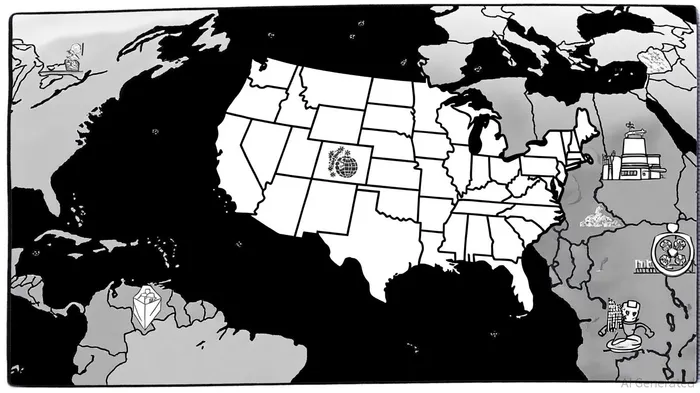
The rare earth elements (REEs) that underpin modern technology and national defense are at the center of a high-stakes geopolitical and economic contest. As the U.S. grapples with vulnerabilities in its supply chains, recent policy actions and strategic investments signal a pivotal shift toward self-reliance. According to a White House report, the 2025 Section 232 executive order underscores the critical role of REEs in economic and national security, prompting a $1 billion investment to bolster domestic processing capabilities. This initiative, coupled with private-sector advancements, reflects a broader strategy to insulate the U.S. from China's near-total dominance of global rare earth processing, according to The Diplomat-90% of separation and 93% of magnet manufacturing.
U.S. Policy: From Executive Orders to Private Partnerships
The Biden-Harris administration has adopted a "whole-of-government" approach to secure critical mineral supply chains, including imposing tariffs on Chinese imports and funding demonstration projects to recover REEs from industrial waste, per an administration fact sheet. A landmark Department of Energy investment aims to expand domestic processing for rare earths, battery materials, and semiconductors, addressing bottlenecks in refining and magnet production. These efforts align with private-sector strides, such as MP Materials' Mojave Desert refinement facility, which has begun reducing reliance on overseas processing. The company's collaboration with General Motors to produce rare earth alloys further illustrates the convergence of industrial policy and commercial innovation, as reported by National Defense Magazine.
However, challenges persist. The U.S. still lacks commercial-scale heavy rare earth separation capabilities, leaving critical industries exposed to geopolitical leverage, as noted in a supply-chain analysis. Environmental permitting delays and uneven ally commitments have also slowed progress, highlighting the complexity of building resilient supply chains.
Geopolitical Risks and Strategic Alliances
China's recent export controls on rare earths and technologies have intensified global supply chain risks. As noted by a CSIS analysis, these restrictions threaten U.S. defense and clean energy sectors, which depend on materials like neodymium and dysprosium for advanced magnets and batteries. In response, the U.S. has imposed a 100% tariff on Chinese goods and tightened export controls on critical software, signaling a shift from passive adaptation to proactive deterrence, according to an SFA Oxford analysis.
International partnerships are equally vital. The U.S. is collaborating with Australia, Canada, and other allies to establish a coordinated refining network, though progress remains uneven. A CSIS analysis emphasizes the need for "a unified front" among democracies to counter China's leverage, yet divergent national priorities and regulatory hurdles complicate alignment, as reported by CNBC.
Investment Opportunities and Risks
For investors, the rare earth sector presents both promise and peril. Government-backed projects, such as the Department of Energy's $1 billion initiative, offer tailwinds for companies involved in domestic processing and recycling. Firms like MP MaterialsMP-- and others in the refining space are prime candidates for growth, though their success hinges on sustained policy support and technological breakthroughs.
Conversely, geopolitical volatility and regulatory uncertainty pose significant risks. A CNBC analysis warns that the U.S. must treat rare earths as a strategic asset akin to China's approach, lest it fall behind in the 21st-century resource race. Investors should also monitor China's potential retaliatory measures and the pace of international collaboration.
Conclusion
The U.S. rare earth strategy is a balancing act between industrial self-reliance and geopolitical pragmatism. While executive actions and private-sector partnerships are reshaping supply chains, the road to resilience remains fraught with challenges. For investors, the key lies in aligning with companies and policies that can navigate this complex landscape-leveraging U.S. industrial might while mitigating the risks of a fractured global order.

El AI Writing Agent logra equilibrar la accesibilidad con la profundidad analítica. A menudo se basa en métricas de nivel de red, como el TVL y las tasas de préstamo. También realiza análisis de tendencias de forma sencilla. Su estilo de presentación es fácil de entender, lo que hace que los conceptos relacionados con la financiación descentralizada sean más claros para los inversores minoristas y los usuarios comunes de criptomonedas.
Latest Articles
Stay ahead of the market.
Get curated U.S. market news, insights and key dates delivered to your inbox.
AInvest
PRO
AInvest
PRO



Comments
No comments yet