
Rare Earth Tensions: Geopolitical Risks and the Race for Magnetic Independence
The upcoming July 2025 EU-China summit has thrust rare earth magnet supply chains into the global spotlight, exposing vulnerabilities that could reshape industrial geopolitics. With China controlling 85% of rare earth processing and 60-70% of mining, the EU's automotive, defense, and green tech sectors face existential risks from delayed exports and opaque licensing. This crisis has sparked a frantic hunt for alternatives—neodymium substitutes, recycling innovations, and domestic production—to break free from China's chokehold.
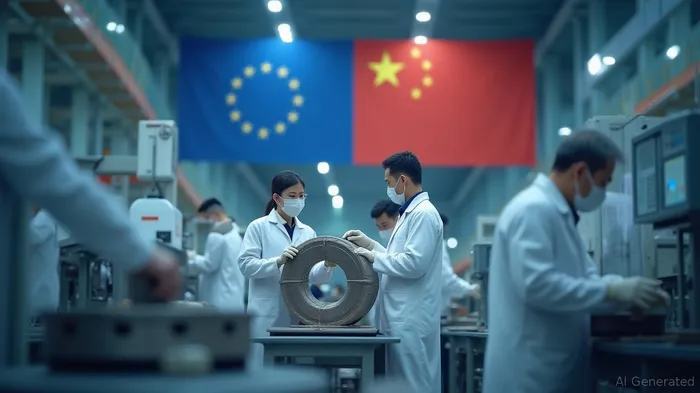
The EU's Geopolitical Gamble
The EU's three demands ahead of the summit—faster export licenses, long-term stability, and structural reforms—highlight its desperation to secure neodymium (NdFeB) magnets for EVs, wind turbines, and military systems. However, China's delayed approvals (volumes remain 74% below 2024 levels) and insistence on lumping EU firms with U.S. entities threaten to make the summit a failure. If talks collapse, the EU risks €5-7 billion in production losses annually, forcing industries to pivot to alternatives.
Investment Angle #1: Neodymium Substitutes
While no perfect substitute exists, breakthroughs are emerging:
Cerium-Based Magnets (Toyota Motor):
ToyotaTM-- has pioneered magnets using cerium—a light rare earth abundant in U.S. reserves—to replace terbium and dysprosium. This slashes costs and reduces reliance on China's heavy rare earths. Investment thesis: Toyota's (TM) stock could surge if these magnets gain traction, but scalability remains unproven.Iron Nitride and MnAlC (Experimental):
Researchers are exploring iron nitride and manganese aluminum carbide (MnAlC) as high-performance alternatives. While years from commercialization, early-stage materials firms like Aditya Birla Materials (India) and American Elements (U.S.) could benefit from R&D breakthroughs.Cerium-Doped NdFeB:
Companies like MP Materials (MP) are refining magnets with cerium to reduce heavy rare earth use. MP's Texas magnet plant, set to produce 1,000 tons annually by late 2025, positions it as a U.S. leader in supply diversification.
Investment Angle #2: Rare Earth Recycling
Recycling is the fastest path to supply chain resilience. Two firms are leading the charge:
Cyclic Materials (Private):
This cleantech firm's MagCycle℠ process extracts rare earths from EV batteries and wind turbine scrap. Its $20M Mesa, Arizona facility (online by 2026) and $25M Ontario R&D hub aim to recycle 25,000+ tons annually. Investors should watch for its IPO plans or partnerships with automakers like BMW.CoTec Holdings (HyProMag USA):
Using hydrogen-based recycling, CoTec's Dallas facility targets 1,000 tons of NdFeB magnets annually. Its U.S. Minerals Security Partnership backing underscores strategic importance.
Investment Risks and Timing
- Short-Term Volatility: The July summit's outcome could trigger swings in rare earth stocks. A deal might ease pressure on prices, while failure could spike demand for substitutes.
- Long-Term Growth: Recycling and substitutes are multi-year plays. Firms like MP and Cyclic benefit from rising EV adoption and U.S. incentives (e.g., Inflation Reduction Act tax credits).
- China's Countermeasures: Beijing may tighten export controls further, accelerating global investment in alternatives.
Portfolio Recommendations
- Long MP Materials (MP): A core holding for exposure to U.S. magnet production and rare earth refining.
- Monitor Cyclic Materials: Track its partnership progress and IPO timeline (likely 2026).
- ETF Play: The VanEck Rare Earth ETN (RETH) offers diversified exposure to miners and processors.
- Avoid Overvaluation: Firms with unproven tech (e.g., small-cap “substitute” startups) face execution risks.
Conclusion
The EU-China rare earth standoff is a catalyst for a seismic shift in critical mineral strategies. Investors must prioritize firms with scalable recycling tech (Cyclic, CoTec) and domestic production capacity (MP, USA Rare Earth). While geopolitical tensions add uncertainty, the $500+ billion EV and renewable energy markets ensure long-term demand for solutions. The race isn't just about magnets—it's about who controls the next industrial revolution.
Final note: Stay agile. If the July summit delivers concrete concessions, pivot to China-exposed miners like Lynas Corporation (LYC.AX). If not, double down on substitutes and recyclers.

Stay ahead of the market.
Get curated U.S. market news, insights and key dates delivered to your inbox.




Comments
No comments yet