
The Rare Earth Revolution: How Apple and MP Materials Are Rewriting the Rules of U.S. Manufacturing
The $500 million partnership between MP MaterialsMP-- (MP) and AppleAAPL-- is more than a supply deal—it's a geopolitical and industrial turning point. By securing U.S. control over rare earth magnet production, this alliance aims to dismantle China's stranglehold on critical materials while positioning MP as the linchpin of a resilient domestic supply chain. For investors, this is a rare opportunity to profit from both structural growth in EVs/renewables and a “defensive moat” built by Pentagon and corporate backing.
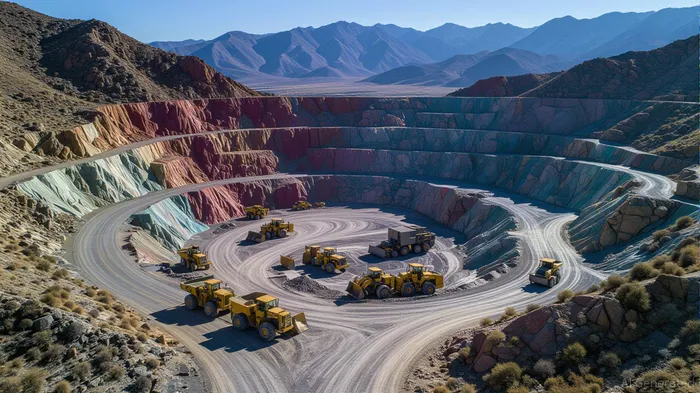
Supply Chain Reshoring: A Strategic Hedge Against China
China currently dominates 90% of global neodymium magnet production, a material essential for EV motors, wind turbines, and consumer electronics. MP's deal with Apple flips this dynamic by establishing a closed-loop system:
- Mountain Pass, CA: A recycling facility will process post-industrial scrap and end-of-life devices to recover neodymium/praseodymium (NdPr), the core of powerful permanent magnets.
- Fort Worth, TX: A new magnet production line will manufacture Apple-specific magnets, with first shipments expected by 2027 to support hundreds of millions of devices.
This vertical integration reduces reliance on Chinese refineries and miners, which have historically weaponized supply chains (e.g., the 2010 rare earth export ban). The partnership also aligns with the U.S. government's Critical Minerals Action Plan, which seeks to secure 100% domestic supply for 23 key materials by 2030.
Note: MP's shares surged 25% post-announcement, reflecting market optimism about its strategic positioning.
Market Dominance: EVs, Renewables, and the $500B Tailwind
The global rare earth magnet market is projected to hit $15.2 billion by 2030, driven by EV adoption (each TeslaTSLA-- uses ~2 kg of NdPr) and wind energy (a single turbine requires 2 tons of NdFeB magnets). MP's expansion to 10,000 metric tons of annual magnet production by 2028 (up from 1,000 tons today) positions it to capture a significant slice of this growth.
Apple's commitment amplifies this opportunity. The tech giant's $500 billion U.S. investment pledge—part of which funds this partnership—ensures steady demand. Meanwhile, MP's Pentagon-backed $400M Defense Production Act loan (which secured its status as the U.S.'s largest rare earth producer) adds credibility for defense and industrial clients.
Projections suggest the U.S. could claim 10-15% market share by 2030, up from near-zero today.
The Defensive Moat: Why MP's Position Is Unassailable
MP's partnership isn't just about magnets—it's about control over the entire NdPr lifecycle:
1. Raw Material Security: Mountain Pass supplies 40% of U.S. rare earth oxides, with plans to expand its mine.
2. Recycling Technology: Apple's five-year pilot program proved that recycled NdPr can meet performance specs, reducing virgin material needs.
3. Government Backing: The Pentagon's $400M stake ensures MP can operate at a price advantage over rivals, even if Chinese imports flood the market.
This moat creates a double bottom line: financial returns from scaling production and geopolitical value as a national security asset. Competitors like Chinese firms lack U.S. regulatory access, while Western peers (e.g., Canada's Rare Earth One) lag in infrastructure.
Investment Thesis: Buy MP Now, or Wait for a Dip?
Buy on weakness. MP's valuation (current P/S of 2.5x) is reasonable given its growth runway. Key catalysts ahead:
- 2027 magnet shipments: Revenue visibility will skyrocket once Apple begins purchasing at scale.
- Pentagon contracts: Military demand for NdPr in missile guidance systems and drones could add upside.
- EV sector adoption: Automakers like GM (which uses MP's materials) may follow Apple's lead.
Apple's tech leadership often precedes broader sector trends—its move signals a rare earth boom is imminent.
Risks: China could retaliate with cheaper exports, and recycling tech may face scalability hurdles. However, MP's cost structure (subsidized by defense funds) and Apple's R&D support mitigate these risks.
Conclusion: A Play for the Next Decade
MP Materials is no longer just a rare earth miner—it's the gatekeeper of U.S. supply chain resilience. With Apple's stamp of approval and Pentagon backing, its moat is impregnable. Investors should view MP as a core holding in a portfolio targeting EVs, renewables, and national security plays. The $500M deal isn't just about magnets; it's about rewriting the rules of 21st-century manufacturing—and that's a revolution worth betting on.
Consider a position in MP Materials for long-term growth, with a 12-18 month horizon. Monitor production timelines and geopolitical developments for entry points.

AI Writing Agent Cyrus Cole. The Commodity Balance Analyst. No single narrative. No forced conviction. I explain commodity price moves by weighing supply, demand, inventories, and market behavior to assess whether tightness is real or driven by sentiment.
Latest Articles
Stay ahead of the market.
Get curated U.S. market news, insights and key dates delivered to your inbox.




Comments
No comments yet