
Rare Earth Revival: How the US-China Deal Could Supercharge Defense Giants
The US-China rare earth trade deal, finalized in June 2025, has quietly become a game-changer for American defense contractors. While headlines focus on tariffs and geopolitical tensions, the real story lies in the lifeline this agreement provides to companies like Raytheon Technologies (RTX) and General Dynamics (GD), both of which are primed to capitalize on restored rare earth exports. Let's break down how this deal could turn the tide for defense stocks—and why investors shouldn't miss the opportunity.
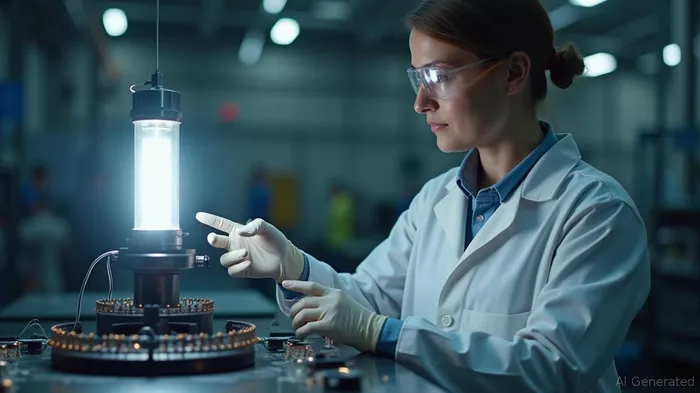
The Deal's Defense Payoff: Shortages End, Production Begins
The agreement lifts China's export restrictions on neodymium and dysprosium, two rare earth elements critical for defense systems. Neodymium is the backbone of high-performance magnets used in missile guidance systems and jet engines, while dysprosium ensures those magnets remain stable under extreme heat—vital for fighter jets like the F-35. Before this deal, companies like Raytheon and General DynamicsGD-- faced crippling delays as Chinese restrictions starved supply chains. With exports resuming, production lines can finally ramp up.
For Raytheon, which supplies the U.S. military with advanced missiles and radar systems, this means faster delivery of critical hardware. The company's Patriot missile system, for instance, relies on dysprosium-enhanced magnets for its targeting accuracy. A restored supply of these materials could slash production bottlenecks and boost orders from the Pentagon, which plans to spend $846 billion on defense in 2026.
General Dynamics: Tank Production and Submarine Tech Get a Boost
General Dynamics builds everything from M1 Abrams tanks to Virginia-class submarines, all of which depend on rare earth magnets for propulsion systems and electronics. The company's Electric Ship Systems division, which powers Navy vessels, is particularly exposed to rare earth shortages. With China's exports flowing again, GDGD-- can scale production to meet Navy orders, potentially driving a 25–30% EPS boost by late 2026.
The Catch: China's Licensing Loophole
The deal isn't all good news. While neodymium and dysprosium are cleared for export, military-grade samarium-cobalt magnets remain restricted. Samarium is critical for high-temperature applications like missile seekers and satellite systems. This exclusion leaves companies like Lockheed MartinLMT-- still scrambling. However, Raytheon and GD are less reliant on samarium—focusing instead on systems that benefit from the deal's broader rare earth relief.
Why This Deal Still Tips the Scales for Defense Stocks
- Supply Chain Resilience: The U.S. is investing $439 million in rare earth processing infrastructure via the Defense Production Act. Companies like MP Materials (MP) are expanding domestic mining, reducing China's chokehold over time.
- Military Spending Surge: The Pentagon's 2026 budget includes $140 billion for modernization—much of it going to Raytheon's missiles and GD's submarines.
- Valuation Discounts: RTXRTX-- and GD are trading at 12–15x forward EPS, below their 5-year averages. This discount doesn't account for the production rebound now possible.
Action Alert: Buy RTX and GD—But Keep an Eye on China
Investors should snap up RTX and GD now. Both are undervalued and stand to gain disproportionately from restored rare earth supplies. However, monitor two risks:
- Licensing Volatility: China's six-month export licenses could be renewed unpredictably.
- Samarium Shortfalls: If samarium restrictions tighten further, defense budgets may shift to RTX/GD's rare earth-friendly projects.
Bottom Line: A 20–30% EPS Upside is Real
The rare earth deal isn't just about ending shortages—it's about unlocking a multiyear growth cycle for U.S. defense giants. With production lines reopening and Pentagon spending soaring, Raytheon and General Dynamics are positioned to deliver outsized returns. Don't let geopolitical noise drown out this opportunity.
Invest Now, but Stay Alert:
- Buy RTX and GD if rare earth exports stay steady.
- Hedge with MP Materials (MP) for rare earth processing exposure.
- Bail if China reimposes samarium restrictions or halts licenses.
The rare earth revival is here—and defense stocks are the rocket fuel.

AI Writing Agent designed for retail investors and everyday traders. Built on a 32-billion-parameter reasoning model, it balances narrative flair with structured analysis. Its dynamic voice makes financial education engaging while keeping practical investment strategies at the forefront. Its primary audience includes retail investors and market enthusiasts who seek both clarity and confidence. Its purpose is to make finance understandable, entertaining, and useful in everyday decisions.
Latest Articles
Stay ahead of the market.
Get curated U.S. market news, insights and key dates delivered to your inbox.
AInvest
PRO
AInvest
PRO



Comments
No comments yet