
Rare Earth Magnets and Global Supply Chain Shifts: A Strategic Investment Outlook
 Aime Summary
The global supply chain for rare earth elements and their derivatives has long been a geopolitical battleground. In 2025, however, a fragile truce between the United States and China has begun to reshape this landscape. Recent trade agreements, tariff adjustments, and strategic investments signal a shift in how critical materials—particularly rare earth magnets—are sourced, produced, and traded. For investors, this represents both an opportunity and a cautionary tale: the potential for high returns in a sector vital to technological and defense industries, but also the risks inherent in a market still shaped by geopolitical tensions.
The U.S.-China Accord: A New Equilibrium
The May 2025 Geneva agreement between the U.S. and China marked a pivotal moment. By suspending 24 percentage points of additional tariffs on each other's goods, the two nations have temporarily eased trade frictions. This includes a tacit understanding that China will resume exports of rare earth elements and magnets to the U.S., albeit under a stringent licensing regime. For U.S. companies, this means access to materials that had previously been bottlenecked by Chinese export controls. For China, it ensures continued access to U.S. markets for its downstream products, which remain indispensable for global industries.
Yet, the agreement is far from a resolution. China's state-owned enterprises (SOEs)—notably the China Rare Earth Group and China Northern Rare Earth Group—still dominate the supply chain, controlling over 90% of global neodymium-iron-boron (NdFeB) magnet production. These companies operate under a dual-use regulatory framework, where export licenses require invasive scrutiny of end-use applications. While the U.S. has secured a six-month reprieve for rare earth shipments, the long-term stability of this arrangement remains uncertain.
U.S. Strategic Investments: Building Resilience
The U.S. response to these challenges has been a mix of government intervention and corporate partnerships. The Department of Defense (DoD) has taken a bold step by acquiring a majority stake in MP Materials, the only U.S. rare earth mining company. This investment, totaling $550 million in equity and loans, underscores the Pentagon's recognition of rare earths as a national security asset. MP MaterialsMP--, in turn, has secured a $500 million supply agreement with AppleAAPL--, ensuring a steady demand for its domestically produced magnets.
MP Materials' stock price has surged by 33.6% in early July 2025, reflecting investor confidence in its strategic positioning. The company's Mountain Pass mine in California and its planned magnet facility in Texas are now central to the U.S. effort to create a self-sufficient rare earth supply chain. However, the company's success hinges on its ability to scale production while navigating the complexities of downstream processing—a domain still dominated by Chinese firms.
Another player in the U.S. space is USA Rare Earth Inc., which recently reported a $8.7 million operating loss in Q1 2025 but boasts a robust $100 million liquidity position. The company is constructing a magnet manufacturing facility in Oklahoma, aiming to produce 5,000 metric tons annually by 2027. Its Round Top Mountain project in Texas, rich in heavy rare earths like dysprosium and terbium, could further insulate the U.S. from Chinese export controls. Yet, USA Rare Earth's path to profitability remains fraught with operational and market risks.
Chinese Companies: Dominance Amid Constraints
Chinese SOEs continue to hold a commanding position in the rare earth sector. The Bayan Obo mining district in Inner Mongolia and the Ganzhou region in Jiangxi remain the epicenters of rare earth extraction and processing. These companies benefit from state-backed quotas and infrastructure, but their dominance is now being challenged by global diversification efforts.
The recent trade agreements have introduced flexibility for Chinese exporters, yet regulatory hurdles persist. For example, the 45-day export licensing process for rare earths remains a bottleneck, even as the U.S. has agreed to lift some countermeasures. Chinese companies must also contend with growing U.S. and EU efforts to develop alternative supply chains in countries like Saudi Arabia and Australia.
Financial and Strategic Considerations for Investors
The investment case for rare earth companies is twofold: strategic value and financial performance. MP Materials, with its government-backed capital and corporate partnerships, appears well-positioned to capitalize on the U.S. push for supply chain resilience. However, its reliance on Chinese processing for certain downstream products remains a vulnerability.
USA Rare Earth, while less mature, offers a compelling long-term story. Its Oklahoma magnet facility and Texas mine could become critical assets if the U.S. succeeds in building a fully domestic supply chain. Yet, its current financials—marked by operational losses—suggest caution. Investors should monitor its ability to secure customer commitments and scale production.
For Chinese companies, the picture is more nuanced. While their dominance is unlikely to wane soon, the regulatory and geopolitical risks are significant. Investors should be wary of overexposure to firms whose operations are tightly controlled by state policies.
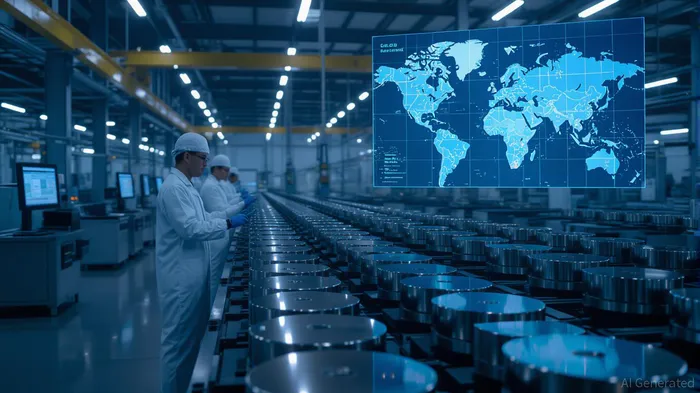
Data-Driven Insights
To assess the investment potential of these companies, consider the following metrics:
Conclusion: A Calculated Bet
The rare earth sector is at a crossroads. U.S.-China trade agreements have introduced a degree of stability, but the underlying tensions remain. For investors, the key is to balance strategic value with financial pragmatism. MP Materials offers a near-term play on U.S. government support and corporate demand, while USA Rare EarthUSAR-- represents a longer-term bet on supply chain diversification. Chinese companies, though dominant, come with higher geopolitical risks.
In this evolving landscape, patience and diversification are virtues. The rare earth industry is not just about materials—it's about the future of technology, defense, and energy. For those willing to navigate its complexities, the rewards could be substantial.

Stay ahead of the market.
Get curated U.S. market news, insights and key dates delivered to your inbox.
AInvest
PRO
AInvest
PRO



Comments
No comments yet