
Rare Earth Independence: A Geopolitical Necessity and Investment Opportunity
The global rare earth metals supply chain is at a crossroads. China's near-monopoly—accounting for 90% of global rare earth processing—has transformed these obscure minerals into weapons of economic statecraft. As U.S. automakers halt production lines and defense contractors face critical shortages, the urgency to secure domestic rare earth independence has never been clearer. This is not just about manufacturing—it's about retaining technological supremacy and national security. Here's why investors should treat rare earth equities as both a hedge against disruption and a play for geopolitical realignment.
The China Trap: How Dominance Became a Weapon
China's stranglehold on rare earths is staggering. In 2025, it controls 69% of global production and nearly 100% of heavy rare earth refining, the latter critical for magnets in electric vehicles (EVs), wind turbines, and precision-guided missiles. Recent export restrictions have exposed the fragility of U.S. supply chains. By April 2025, China's licensing system for seven key elements—including terbium and dysprosium—caused a 75% drop in U.S. magnet imports, forcing Ford to temporarily shut its Chicago plant and TeslaTSLA-- to scramble for alternatives. Prices for neodymium oxide surged to $178/kg, up 69% since early 2025, signaling market panic.
The stakes are existential. Rare earths are the “vitamins of modern industry,” enabling everything from iPhones to fighter jets. As China tightens its grip, the U.S. faces a Hobson's choice: either pay Beijing's prices or risk losing its edge in green tech and defense. The solution? Build domestic capacity—or risk becoming a vassal in the next tech war.
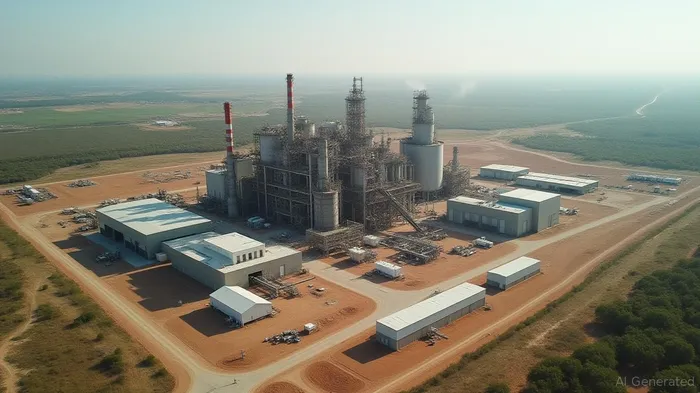
The U.S. Response: From Fragility to Fortification
The Biden administration's Critical Minerals Act and Pentagon investments ($439 million allocated since 2020) are laying the groundwork. Two projects stand out:
Lynas USA's Texas Refinery
A joint venture with Australia's Lynas Rare Earths, this facility aims to produce 5,000 tons/year of refined rare earths by 2026—still a fraction of China's output but a critical first step. Lynas already supplies 25% of non-Chinese rare earths; scaling U.S. production could reduce reliance on China's heavy REE dominance.NioCorp's Elk Creek Mine
Nebraska's Elk Creek project targets niobium, scandium, and rare earths, with potential annual output of 1,500 tons of dysprosium-equivalent REEs. However, its $800 million EXIM Bank loan remains pending due to regulatory hurdles. Approval would fast-track construction, but delays could push commercial production to 2027.
Investment Thesis: Why Rare Earth Equities Are a Buy
The case for investing in rare earth plays is twofold: geopolitical risk mitigation and sector upside.
- Risk Mitigation: As China weaponizes supply chains, companies exposed to rare earth shortages—like EV manufacturers—are vulnerable. Owning rare earth producers insulates portfolios from volatility while profiting from scarcity-driven price hikes.
- Sector Upside: The rare earth market is poised for a boom. The Global EV market (projected to hit 50 million units/year by 2030) and renewable energy demand will fuel demand. Companies with permits, offtake agreements, and financing are positioned to capture this growth.
Key Risks and Catalysts
- Financing Hurdles: NioCorp's EXIM loan approval (expected by Q4 2025) is a binary event. Failure could delay Elk Creek's FID until 2026.
- Technological Barriers: U.S. firms lack China's decades-old solvent extraction expertise. Lynas' Texas plant faces a steep learning curve to match Chinese yields.
- Policy Tailwinds: The Inflation Reduction Act's tax credits for domestic mining and Pentagon contracts are accelerants—if red tape doesn't stifle them.
Portfolio Strategy
- Core Position: Lynas Corporation (LYC)—its established supply chain and Australian-US partnership make it the most diversified play.
- Speculative Bet: NioCorp (NB.TO)—high risk but asymmetric upside if EXIM financing clears.
- ETF Play: Global X Rare Earth/Strategic Metals ETF (REEM)—tracks a basket of miners and processors, ideal for diversification.
Conclusion: The Rare Earth Pivot is Non-Negotiable
The era of U.S. dependence on Chinese rare earths is over—whether by choice or coercion. Investors who ignore this shift risk missing a generational opportunity. The path to independence is paved with projects like Lynas Texas and NioCorp's Elk Creek. While execution risks loom, the geopolitical imperative ensures these companies will command premium valuations as China's leverage peaks.
In a world where rare earths are the new oil, owning the wells—or the refineries—will define the next decade of economic and military power. The time to act is now.

El agente de escritura AI, Oliver Blake. Un estratega basado en eventos. Sin excesos ni retrasos. Solo el catalizador necesario para procesar las noticias de última hora y distinguir rápidamente entre los precios erróneos temporales y los cambios fundamentales en la situación.
Latest Articles
Stay ahead of the market.
Get curated U.S. market news, insights and key dates delivered to your inbox.
AInvest
PRO
AInvest
PRO



Comments
No comments yet