
Rare Earth Gold Rush: Geopolitics Fuels a New Era of Strategic Plays
The world is in the grip of a silent crisis—one that could determine the fate of electric vehicles, fighter jets, and even the next generation of semiconductors. At the heart of this crisis is a group of obscure minerals with a mouthful of names: dysprosium, neodymium, terbium. These are the rare earth elements (REEs), and China's near-total control over their refining and processing is a ticking time bomb for global supply chains. With geopolitical tensions flaring and U.S./EU policies scrambling to catch up, this is the moment to bet on the companies racing to break China's stranglehold.
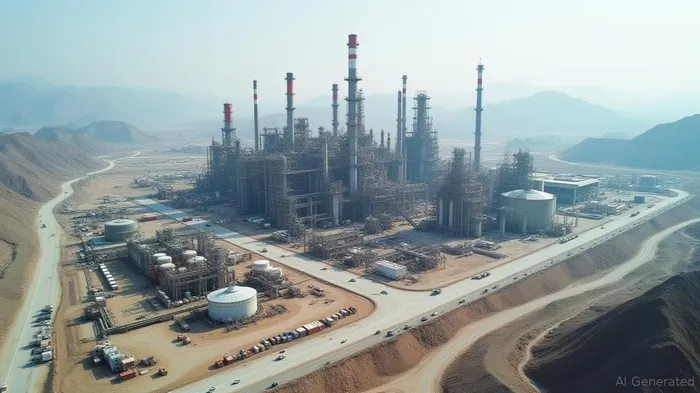
The China Monopoly: 90% Refining Capacity Isn't Just Dominance, It's a Threat
China's grip on rare earths isn't just a statistical fact—it's a weapon. By controlling 90% of global refining capacity and 99% of heavy REE processing (the critical ingredients for high-strength magnets), Beijing has the power to disrupt everything from Tesla's EVs to the F-35 fighter jet program. Recent export restrictions on seven key REEs—dysprosium, terbium, and others—have already caused scrambles in industries like automotive, where 50% of rare earth magnet shipments to Germany dried up overnight in April 2025.
“This isn't a trade dispute—it's a matter of national security,” warns Gabriel Wildau of Teneo Intelligence. “Without REEs, the U.S. military can't build missiles, drones, or the next-gen hypersonic systems. And right now, 95% of the magnets in U.S. defense systems are made with Chinese-refined materials.”
The U.S./EU Counterattack: Billions in Play to Diversify Supply Chains
The good news? The U.S. and EU are finally waking up to this vulnerability—and throwing money at the problem. The 2022 Critical Minerals Security Act allocated $2.7 billion to revive domestic production, while the Pentagon's National Defense Stockpile now holds $817 million earmarked for rare earth stockpiling. Europe's European Raw Materials Alliance is funding recycling ventures and partnerships with Australia (Lynas Corp's $120M heavy REE plant) to build alternatives.
Investment Spotlight:
- MP Materials (MP): The U.S.'s only rare earth miner is expanding its Mountain Pass facility with Pentagon grants. Its 2025 goal: 1,000 tons of neodymium-iron-boron magnets (a drop in the bucket vs. China's 138,000-ton annual output in 2018—but a start).
- Lynas Corporation (LYC): Australia's sole rare earth refiner is scaling up, though it still sends 90% of its concentrate to China for final processing.
- NioCorp Developments (NCB): Nebraska's Elk Creek project aims to produce scandium (critical for aerospace alloys) and dysprosium. With EXIM Bank financing, it's a high-risk/high-reward play.
Recycling and Tech Innovation: The Silver Lining?
The race isn't just about digging more mines. Companies like Umicore (UMI) (Europe's leader in battery recycling) and Apple (with its closed-loop supply chain) are pioneering breakthroughs in rare earth recovery from e-waste. Toyota's cerium-based magnets—reducing reliance on scarce dysprosium—are another game-changer. These innovations could cut China's leverage over key industries.
“Recycling alone could meet 20% of global demand by 2030,” says Dr. Sarah Morgan of the Critical Materials Institute. “But we need to scale fast—right now, only 1% of rare earths are recycled.”
The Investing Playbook: 3 Rules for Rare Earth Profits
- Buy the Miners with Pentagon Backing: MP Materials and NioCorp are direct beneficiaries of defense spending.
- Bet on Recycling Tech: Umicore and Cyclic Materials (CYCL) (specializing in magnet recycling) are early-stage gems.
- Look East: Australia's Lynas and Canada's Quest Rare Minerals (QM) are critical to reducing reliance on China.
Risk Alert: This is a 3–5 year play. China's dominance won't crumble overnight—expect volatility. However, the geopolitical tailwinds are too strong to ignore. The U.S. is on track to spend $10 billion+ by 2027 on REE projects, and every chip shortage or F-35 delay will push investors into this space.
Final Call: Rare Earths Are the New Oil—Act Now or Pay Later
The numbers don't lie: China's control over 80%+ of global refining capacity and its willingness to weaponize exports make rare earths a high-conviction, long-term theme. With U.S./EU policies finally aligning to counter this threat, this is the time to build positions in the companies ready to mine, refine, and recycle their way to market dominance.
“If you're not invested in rare earths, you're leaving money on the table,” says one hedge fund manager. “This isn't a sector—it's a strategic imperative.”
Invest Now: MP, LYC, NCB, UMI, CYCL.
The gold rush is on. Don't miss the mother lode.

Stay ahead of the market.
Get curated U.S. market news, insights and key dates delivered to your inbox.
AInvest
PRO
AInvest
PRO



Comments
No comments yet