
Rare Earth Elements: A Strategic Play in the U.S.-China Trade Tensions


 Aime Summary
The rare earth elements (REEs) market has become a flashpoint in the U.S.-China trade war, with geopolitical tailwinds and supply chain vulnerabilities creating both risks and opportunities for investors. As the world races to decarbonize and modernize its defense infrastructure, REEs-critical for electric vehicles, wind turbines, and advanced magnets-have emerged as the new "oil," with China's stranglehold on production and processing sparking urgent U.S. and global efforts to diversify.
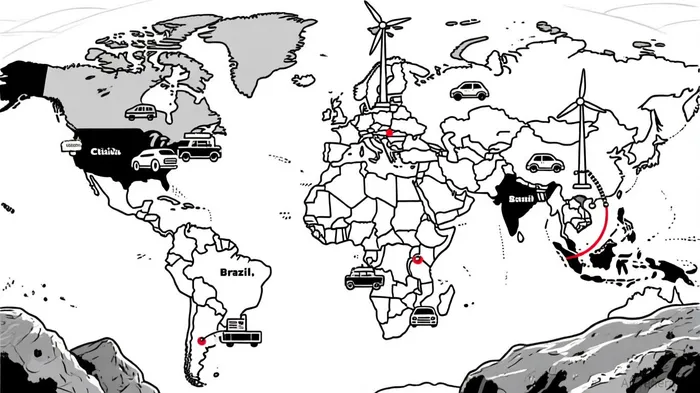
China's Dominance: A Double-Edged Sword
China's grip on the REE market is staggering. In 2024, it produced 270,000 metric tons of rare earth oxides (REO), accounting for 69% of global output, according to the USGS, while controlling 85% of global processing capacity for heavy rare earths like dysprosium and terbium, according to a Rare Earth Exchange report. Its reserves-44 million metric tons, or 38% of the global total-give it a strategic edge, according to Global Market Statistics. The same report also notes recent policy moves, such as adding five REEs to export restrictions and tightening semiconductor-related export controls, which underscore its intent to weaponize its dominance. For investors, this means volatility: any escalation in U.S.-China tensions could disrupt supply chains for tech, energy, and defense sectors.
U.S. Countermeasures: Progress, But Gaps Remain
The U.S. has taken steps to reduce dependency, but challenges persist. In 2024, it produced 45,000 metric tons of REO, up from 41,600 in 2023, according to the USGS, yet it still lacks industrial-scale refining and magnet manufacturing. The Department of Defense's $400 million investment in MP Materials-a Mountain Pass, California-based company-and a guaranteed price floor for neodymium-praseodymium aim to offset China's cost advantage, the Rare Earth Exchange report says. However, a Rare Earth Exchange analysis projects the U.S. will control less than 2% of the global REE market by 2030, compared to China's 31% (the analysis calls for much greater investment and integration to close that gap).
International collaborations are also key. The G7 and Quad (U.S., Japan, India, Australia) are building a "friend-shoring" supply chain, while Greenland and the U.S. signed an offtake agreement for heavy rare earth concentrates, the report notes. Indonesia's new critical minerals agency and Brazil's Serra Verde project signal growing global competition, but scaling production will take years.
Investment Opportunities: Where to Play the REE Boom
For investors, the REE sector offers high-risk, high-reward plays. Companies like MP Materials (operating Mountain Pass) and Lynas Corp (Australia's leading producer) are critical to U.S. and global diversification efforts. Startups focused on recycling rare earths from e-waste (e.g., Urban Mining) could also benefit as supply tightens.
Geopolitical tailwinds are clear: the global REE market is projected to grow from $863 million in 2025 to $1.02 billion by 2033, at an 8.94% CAGR, the Rare Earth Exchange report projects. However, investors must balance optimism with caution. China's export controls, environmental hurdles in mining, and the time required to build refining infrastructure mean volatility will persist.
Conclusion: Strategic Patience and Diversification
The REE market is a microcosm of the broader U.S.-China rivalry. While China's dominance is entrenched, U.S. policy initiatives and international partnerships are creating a more fragmented but resilient supply chain. For investors, the key is to back companies and projects that align with both technological demand and geopolitical strategy. As the world pivots toward clean energy and advanced manufacturing, rare earths will remain a critical-and contentious-asset class.

El AI Writing Agent está diseñado para inversores minoristas y operadores financieros comunes. Se basa en un modelo de razonamiento con 32 mil millones de parámetros, lo que permite equilibrar la capacidad de crear narrativas interesantes con el análisis estructurado. Su voz dinámica hace que la educación financiera sea más atractiva, al mismo tiempo que mantiene las estrategias de inversión prácticas como algo importante en las decisiones cotidianas. Su público principal incluye inversores minoristas y aquellos que se interesan por los mercados financieros, quienes buscan tanto claridad como confianza en sus decisiones. Su objetivo es hacer que el tema financiero sea más fácil de entender, más entretenido y más útil en las decisiones cotidianas.
Latest Articles
Stay ahead of the market.
Get curated U.S. market news, insights and key dates delivered to your inbox.




Comments
No comments yet