
Rapport Therapeutics' RAP-219: A Neurology Breakout Candidate with Clear FDA Catalysts


 Aime Summary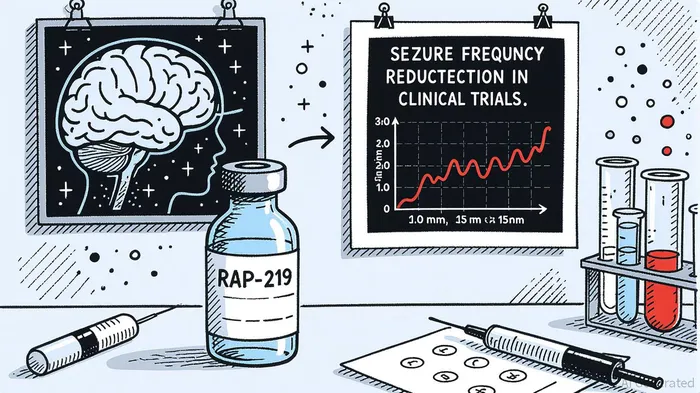
The neurology biotech sector is no stranger to high-stakes innovation, but Rapport TherapeuticsRAPP-- (NASDAQ: RAPP) has emerged as a standout contender with its investigational drug RAP-219, a TARPγ8-specific AMPA receptor negative allosteric modulator (NAM). Following robust Phase 2a trial results in drug-resistant focal onset seizures, the company is now poised to advance RAP-219 into Phase 3 trials in late 2026. With a clear regulatory pathway, a differentiated mechanism of action, and a cash runway extending through 2026, RAPPRAPP-- presents a compelling case for investors seeking exposure to a potential breakout in precision neuroscience.
Phase 2a Results: A Statistically and Clinically Meaningful Win
RAP-219's Phase 2a trial (RAP-219-FOS-201) delivered outcomes that defy skepticism in a space where incremental improvements often dominate. In a 30-patient, open-label study, the drug achieved:
- 85.2% of patients with ≥30% reduction in long episodes (LEs), an objective electrographic biomarker for seizure activity (p<0.0001).
- 72.0% of patients with ≥50% reduction in clinical seizures (p<0.0001).
- 24% of patients achieving complete seizure freedom over 8 weeks (p<0.0001).
- A 77.8% median reduction in clinical seizure frequency (p=0.01).
These results are not just statistically significant—they are clinically transformative. For a patient population where 40% remain inadequately controlled despite existing therapies, RAP-219's ability to deliver seizure freedom and durable reductions in biomarkers positions it as a first-in-class candidate. The safety profile further strengthens its case: 78.5% of adverse events were mild, with no serious adverse events reported.
FDA Milestones and Phase 3 Readiness
The next critical inflection pointIPCX-- for RAPP is its end-of-Phase 2 meeting with the FDA in Q4 2025, where the company will finalize the design of its Phase 3 trials. This meeting is pivotal for validating the use of LEs as a primary endpoint and aligning on the regulatory pathway for approval. If successful, RapportRAPP-- plans to initiate two Phase 3 trials in Q3 2026, using traditional clinical seizure endpoints to meet FDA expectations.
Investors should also note the company's proactive approach to long-term safety. An open-label extension trial will allow patients from the Phase 2a study to continue on RAP-219, providing critical data on sustained efficacy and safety. This strategy not only mitigates risk but also builds a robust dataset to support future label expansions.
Financial Health and Strategic Differentiation
Rapport's financials, while showing increased R&D and G&A expenses, remain stable. As of June 30, 2025, the company held $260.4 million in cash, sufficient to fund operations through 2026. This runway reduces the need for near-term dilution, a key concern for biotech investors.
What truly sets RAPP apart is its precision targeting of TARPγ8, a receptor associated with focal seizure origins. Unlike traditional antiseizure medications (ASMs) that broadly modulate the CNS, RAP-219 selectively inhibits AMPARs in seizure-prone regions (e.g., hippocampus, neocortex) while avoiding areas linked to adverse effects. This mechanism not only enhances efficacy but also reduces side effects, a major unmet need in epilepsy treatment.
Market Potential and Competitive Edge
The global epilepsy market is projected to exceed $10 billion by 2030, driven by the rising prevalence of drug-resistant epilepsy and the limitations of current therapies. RAP-219's novel mechanism and favorable tolerability profile position it to capture a significant share of this market.
Moreover, Rapport is developing a long-acting injectable (LAI) formulation of RAP-219 to address adherence challenges—a critical factor in chronic conditions like epilepsy. This formulation could further differentiate the drug in a market where nonadherence leads to 30-50% of treatment failures.
Investment Timing: Positioning for Catalysts
For investors, the key catalysts ahead are:
1. FDA End-of-Phase 2 Meeting (Q4 2025): A positive outcome would de-risk the Phase 3 trial design and accelerate timelines.
2. Phase 3 Initiation (Q3 2026): Enrollment in these trials will validate Rapport's ability to scale and execute.
3. Topline Results for Bipolar Mania (H1 2027): RAP-219's pipeline-in-a-product potential could unlock additional indications.
Given RAPP's current valuation and the high probability of Phase 3 initiation, the stock appears undervalued relative to its potential. While the biotech sector is volatile, the clarity of RAPP's milestones and the strength of its Phase 2a data make it a high-conviction play for those comfortable with near-term risk.
Conclusion: A Precision Play in a High-Need Market
RAP-219 represents more than a drug—it's a paradigm shift in focal epilepsy treatment. With its precision mechanism, robust clinical data, and clear regulatory milestones, Rapport Therapeutics is well-positioned to become a leader in precision neuroscience. For investors, the optimal entry point lies ahead of the Q4 2025 FDA meeting, where a favorable outcome could catalyze a re-rating of the stock. In a sector where innovation is scarce, RAPP offers a rare combination of scientific differentiation and actionable catalysts.
Investment Advice: Consider accumulating RAPP ahead of the Q4 2025 FDA meeting, using pullbacks as opportunities to build a position. Given the company's cash runway and the high unmet need in epilepsy, a successful Phase 3 trial initiation could drive significant upside, particularly if the LAI formulation or additional indications progress.

Delivering real-time insights and analysis on emerging financial trends and market movements.
Latest Articles
Stay ahead of the market.
Get curated U.S. market news, insights and key dates delivered to your inbox.
AInvest
PRO
AInvest
PRO



Comments
No comments yet