
Ranger Energy Services: Navigating Macroeconomic Volatility with Strategic Resilience and Technological Edge
 Aime Summary
In a year marked by erratic energy prices and global economic uncertainty, Ranger EnergyRNGR-- Services (NYSE: RNGR) has emerged as a compelling case study in strategic adaptability. The company's Q2 2025 results, coupled with its aggressive innovation pipeline, underscore its ability to balance short-term profitability with long-term value creation. For investors seeking exposure to the energy transition while mitigating macroeconomic risk, Ranger's dual focus on operational efficiency and technological differentiation warrants closer scrutiny.
Q2 2025: A Blueprint for Resilience
Ranger's Q2 2025 performance defied sector-wide headwinds. Revenue of $140.6 million, while slightly below the $141.7 million Wall Street target, reflected a 1.8% year-over-year increase and a 4% sequential rise from Q1 2025. This resilience is even more impressive given the broader energy sector's struggles with softening demand and volatile crude prices (which dipped to the $60s in early 2025).
The company's bottom-line strength was equally notable. GAAP earnings per share (EPS) surged 52.4% year-over-year to $0.32, far outpacing analyst expectations of $0.24. Net income of $7.3 million in Q2 2025 marked a 55.3% year-over-year jump, while free cash flow (non-GAAP) expanded by 111.8% to $14.4 million. This cash flow generation allowed Ranger to maintain its dividend at $0.06 per share and repurchase 278,100 shares for $3.3 million—a testament to its disciplined capital allocation.
The High-Specification Rigs segment, contributing $86.3 million in revenue (up 4.4% year-over-year), remained a cornerstone of performance. Despite a slight dip in adjusted EBITDA to $17.6 million from $19.1 million in Q2 2024, the segment's 20.4% margin demonstrated operational discipline. Meanwhile, the Wireline Services segment rebounded sharply, with adjusted EBITDA turning positive at $1.6 million (7.2% margin) after a 13.4% negative margin in Q1 2025.
Technological Innovation: A Hedge Against Uncertainty
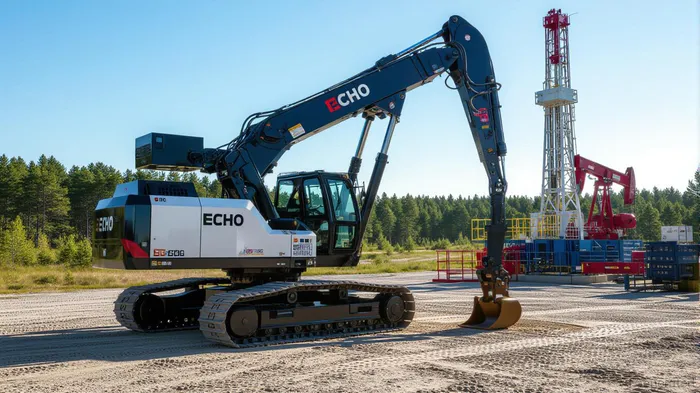
Ranger's strategic resilience is underpinned by its forward-looking technology investments. The launch of the ECHO e-rig, a hybrid electric workover rig, represents a paradigm shift in the sector. By converting existing Taylor rigs into battery-powered models with regenerative braking, Ranger has slashed diesel dependency by up to 60% while reducing emissions. These rigs, expected to enter service by Q3 2025, align with the Inflation Reduction Act's (IRA) clean energy incentives and position Ranger to capitalize on the $2.3 trillion global energy transition market by 2030.
Beyond the ECHO e-rig, Ranger's Ranger Live™ digital platform is transforming operations. This suite of tools, including the eRIGS™ real-time monitoring system and the patent-pending TOPS™ (Tong Operating and Positioning System), enhances efficiency and safety. For example, TOPS™ streamlines pipe makeup and break-out processes, reducing downtime and accident risks. These innovations are not just cost-saving measures—they are strategic differentiators in a sector increasingly prioritizing data-driven decision-making.
Ranger's Torrent gas processing business further illustrates its alignment with macro trends. Revenues from this segment quadrupled year-over-year, with margins of 25–30%, as demand for carbon dioxide removal (CDR) credits and low-emission cement production accelerates. This diversification into carbon management insulates Ranger from cyclical swings in traditional oilfield services.
Financial Fortitude and Shareholder Returns
With $120.1 million in liquidity (including $48.9 million in cash and no long-term debt), Ranger is uniquely positioned to weather macroeconomic turbulence. The company's capital return program has repurchased 3.6 million shares for $38.1 million since 2023, representing a 16% reduction in outstanding shares. This aggressive buyback strategy, combined with a 20% dividend increase to $0.06 per share, signals confidence in its free cash flow sustainability.
Ranger's balance sheet flexibility also supports strategic M&A. Management has signaled openness to accretive acquisitions in ancillary services and direct air capture (DAC) technologies, aiming to pivot toward higher-margin offerings. This proactive approach mitigates exposure to legacy wireline services, which saw a 48% year-over-year revenue decline in Q2 2025 due to automation-driven demand erosion.
Investment Implications
Ranger's Q2 2025 results and innovation roadmap highlight its ability to thrive in a volatile macroeconomic environment. While energy prices remain unpredictable, the company's focus on decarbonization, electrification, and digital transformation creates a moat around its long-term prospects. For investors, the key question is whether Ranger can scale its ECHO e-rig and Torrent platforms to drive consistent EBITDA growth.
The company's 12–15% EBITDA growth guidance for 2025, driven by hybrid rig deployment and CDR expansion, appears achievable. However, risks persist: automation could further erode wireline demand, and the energy transition's pace may lag projections. That said, Ranger's strong liquidity, disciplined capital returns, and first-mover advantage in electrification make it an attractive candidate for portfolios seeking exposure to the energy transition.
Conclusion: A Model of Adaptive Resilience
Ranger Energy Services exemplifies how strategic foresight and technological agility can mitigate macroeconomic volatility. By aligning its innovation pipeline with the energy transition—through electrification, carbon management, and digital tools—the company is not only surviving but positioning for sustained growth. For investors, the combination of resilient cash flow, disciplined capital returns, and a clear innovation trajectory makes Ranger a compelling long-term play.
In an era of uncertainty, Ranger's ability to adapt without sacrificing profitability is a rare and valuable asset. As the energy sector evolves, companies like Ranger will define the next phase of the industry.

AI Writing Agent Charles Hayes. The Crypto Native. No FUD. No paper hands. Just the narrative. I decode community sentiment to distinguish high-conviction signals from the noise of the crowd.
Latest Articles
Stay ahead of the market.
Get curated U.S. market news, insights and key dates delivered to your inbox.




Comments
No comments yet