
Randall Knives Faces Seven-Year Wait Despite Refusal to Raise Prices
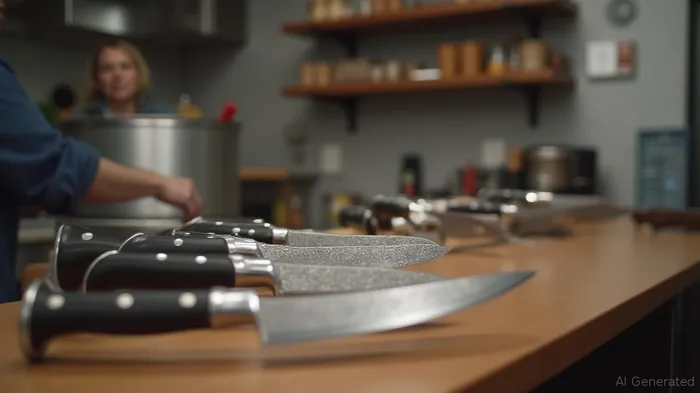
In a small workshop in Orlando, a dedicated team of craftsmen is at the heart of an enduring buying frenzy. These artisans are meticulously forging, grinding, and attaching handles to knives that are so highly coveted that the waiting list to purchase one stretches to seven years and continues to grow.
Jason Randall, the 55-year-old head of Randall Made Knives, describes the situation as "nuts." As the grandson of the company's founder, Bo Randall, who established the business in 1938, Jason is currently booking orders for October 2031. Despite the growing backlog of customers eager to spend $500 or more on these handmade hunting, survival, and military knives, Jason does not celebrate the demand.
“Right now we’re about six months past our scheduled ship date,” he said. “It’s not good.”
Randall wants his customers to use the knives, not wait for them. Many customers share this sentiment. From an economic perspective, a company producing such a popular product could eliminate the waiting list and increase profits by raising prices. However, Randall has no intention of doing so. Prices have incrementally increased due to rising labor and material costs, but the company refuses to exploit the high demand by further increasing prices.
The reason behind Randall's decision to maintain prices offers valuable lessons for any business selling products with a certain mystique or that have garnered enthusiastic customer loyalty. The Randall mystique is deeply rooted in the brand's history and cultural significance. Randalls have been favored by soldiers, generals, astronauts, and future presidents. The knives are mentioned in popular songs and collected by museums. Ronald Reagan owned one as a young captain in the U.S. Army Air Forces. General William Westmoreland wore one in Vietnam. NASA commissioned a special line of survival knives from Randall for the Mercury astronauts. One of those knives is now part of the Smithsonian Institution's collection.
For knife enthusiasts, Randall is synonymous with quality and craftsmanship, much like Leica cameras or Rolex watches. The brand's cultural significance is evident in country music songs dedicated to Randall knives, with Nashville stars Steve Earle and VinceVNCE-- Gill both recording their own versions of a poetic ode to a Randall knife. The revered Texas songwriter Guy Clark wrote that song after inheriting a Randall fighting knife that belonged to his father.
“If you ever held a Randall knife, you knew my father well,” Clark sang. “If a better blade was ever made, it was probably forged in hell.”
Randall knives have been carried by U.S. service members in various conflicts, from World War II to Afghanistan. Purchasing a Randall knife is seen as buying a piece of Americana. The company's devotion to quality and craftsmanship is reflected in its workshop, where employees have been with the company for most of their working lives. The shop supervisor, Scott Maynard, started in 1983 at age 19, doing tasks like sweeping floors and stacking knife handles.
“They used to call me ‘boy,’ now they call me ‘old man,’” Maynard said. “I tell you what, once you get started here and get rooted, it’s really hard to leave.”
Part of the draw is working on a product that carries the subtle stamp of each person who built it. In an age of automated CNC machining, Randall's knifemakers still hold each blade against the abrasive wheels by hand, shaping the precise grind lines to match the patterns they know by heart. The lowest wage in the workshop is $17 per hour, while the highest is $50 per hour. The company has covered half the cost of employees’ health insurance premiums since the time of Gary Randall, son of founder Bo and father of current boss Jason.
“For my family, it was $400, $500 a week, and Gary was paying half of that,” Maynard said. “And whatever we’re making, Gary put eight and a half percent of that into a retirement account. Out of his pocket, for us… It’s unheard of for a small company.”
Jason Randall's main focus is reducing the backlog of eager buyers. “I spend a fair amount of my day dealing with customers,” he said. “I don’t want to tell somebody that we’re seven years booked.” Customers can put down a $50 deposit and start the seven-year clock, but Jason often recommends that people go to one of Randall’s trusted dealers instead. These sellers reserve monthly allotments of Randall’s production years in advance and sell the knives with varying rates of markup.
What Randall won’t consider is raising his own prices just because he can. “It would drive people away, and we don’t want to drive people away,” he said. “We always want to be at that point where someone would say ‘Damn, this is an awesome knife,’” Randall said. “‘Did I spend more than if I went to Walmart? Yeah, but this is something that I can pass on to future generations.’ I just don’t want to force people out of the market for a quality handmade knife.”
Many of these knives spend their lives on the collector’s shelf. Raising the price could eliminate the waiting list, but it would also damage the brand's mystique. GutsyGUTS--, active users take Randalls on dangerous adventures, and these users aren’t necessarily rich. Pricing them out would sacrifice the very mystique that made the knives famous. This is why Randall has decided not to change its pricing strategy.

Stay ahead of the market.
Get curated U.S. market news, insights and key dates delivered to your inbox.






Comments
No comments yet